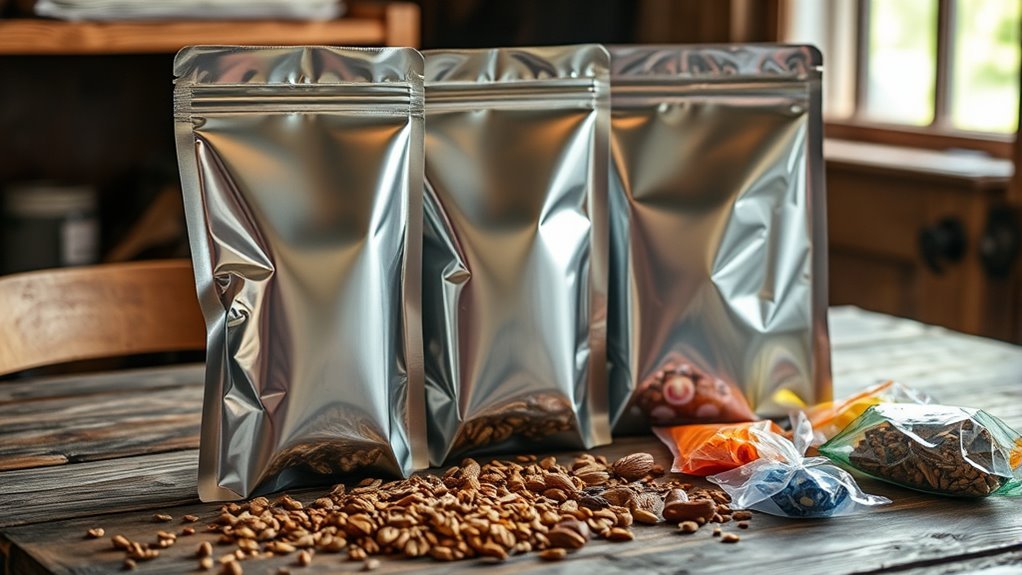
What Are Mylar Bags for Food Storage?
You use Mylar bags for food storage because they create a strong, airtight, and lightproof seal that keeps your food fresh much longer. These bags are made from layers of Mylar film, aluminum foil, and polyethylene.
This special combination blocks oxygen, moisture, and light — all the things that cause spoilage, mold, and nutrient loss.
What’s really cool is when you pair Mylar bags with oxygen absorbers. Together, they offer way better protection than most other containers.
So if you’re looking to store food for the long haul, these bags are definitely worth considering. Keep reading to find out exactly why they’re the go-to choice for long-term food storage!
Key Takeaways
- Mylar bags are multilayer laminate bags made with Mylar, aluminum foil, and polyethylene for food preservation. They create airtight, moisture- and oxygen-resistant seals to protect food from spoilage and extend shelf life.
- The aluminum foil layer blocks light, which helps prevent nutrient loss and food rancidity during storage. This means your food stays fresher for longer.
- Mylar bags are durable and puncture-resistant. They’re perfect for long-term dry food storage, especially when used with oxygen absorbers.
- Plus, they offer superior protection against mold, pests, and environmental damage compared to traditional storage containers. So, they’re a great choice if you want to keep your food safe and fresh.
What Are Mylar Bags Made Of and How Do They Work?
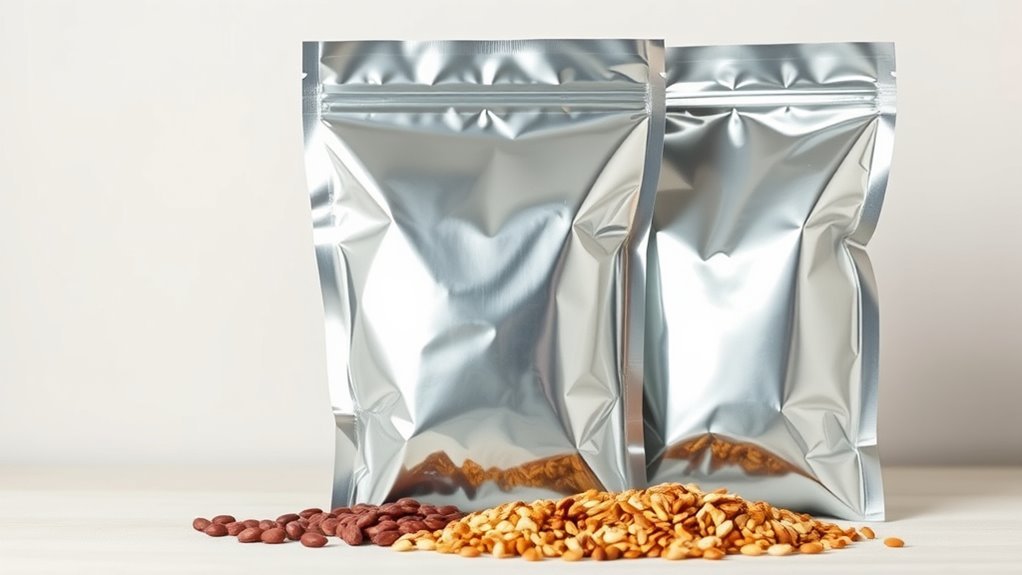
Although you might think Mylar bags are simple, they actually consist of multiple layers designed to protect your food. These bags feature a multilayer laminate combining Mylar, aluminum foil, and food-grade polyethylene.
The Mylar outer layer offers excellent puncture resistance and tensile strength, while the aluminum foil acts as a complete light barrier to prevent spoilage. Together, these layers create a 7-layer barrier with an impressively low oxygen transmission rate, reducing oxygen and moisture exposure.
The food-grade polyethylene provides a reliable moisture barrier and helps form an airtight seal when you squeeze out excess air. This airtight environment is essential for preserving dry foods by blocking light, oxygen, and moisture.
Benefits of Using Mylar Bags for Long-Term Food Storage
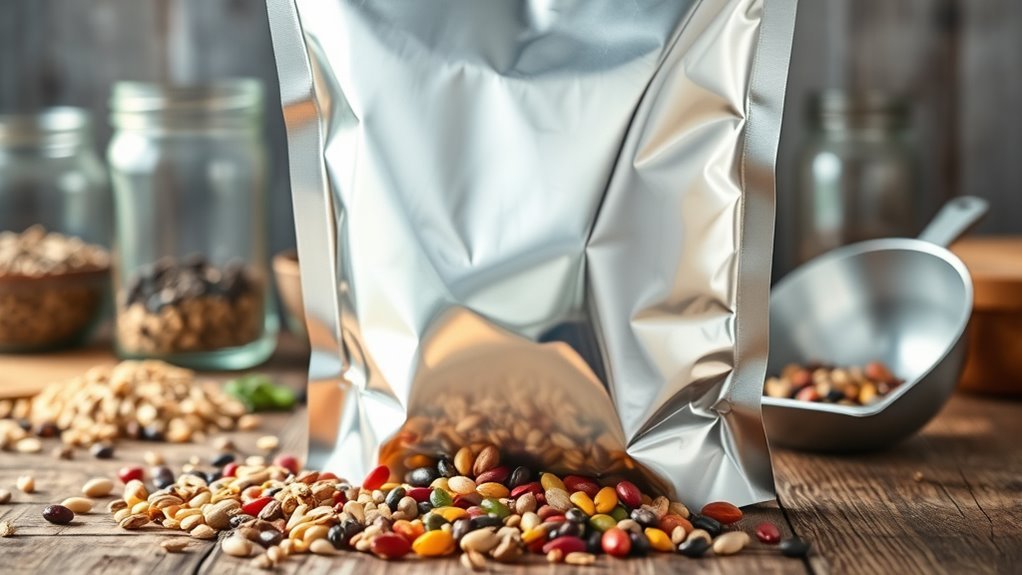
When you choose Mylar bags for long-term food storage, you gain a reliable way to protect your food from oxygen, moisture, and light—all key factors that cause spoilage. These bags offer exceptional food preservation thanks to their multi-layer oxygen barrier and moisture protection.
Here are four benefits of using Mylar bags:
- They create an airtight, vacuum seal when combined with oxygen absorbers, extending your food’s shelf life.
- Their puncture-resistant, thick foil laminate ensures durability during storage and handling.
- Mylar bags block light, which helps prevent nutrient degradation and rancidity.
- Compared to buckets or vacuum seal bags, they provide superior protection against mold and pests.
Using Mylar bags means your stored food stays fresh and safe for decades. It’s a smart choice if you want peace of mind about your food storage.
Frequently Asked Questions
What Foods Cannot Be Stored in Mylar Bags?
You shouldn’t store high-moisture foods like fresh fruits, vegetables, oily nuts, or full-fat dairy in Mylar bags. These can spoil or mold quickly, ruining the bag’s seal and reducing your food’s shelf life.
It’s best to stick with dry goods when using Mylar bags. Think grains, beans, and dehydrated foods—they last longer and stay fresh. Keeping moisture out is key to making the most of your Mylar storage.
Is It a Good Idea to Store Food in Mylar Bags?
Yes, storing food in Mylar bags is a smart choice if you want long-term preservation.
Just make sure you use quality bags, oxygen absorbers, and seal them properly to keep moisture, oxygen, and pests out.
Are Mylar Bags Better Than Ziploc Bags?
You might think Ziploc bags are easier, but Mylar bags are better for long-term storage. They block oxygen, light, and moisture, keeping your food fresh for decades—something Ziploc bags just can’t match.
Honestly, if you’re storing food for a few weeks, Ziploc bags work fine. But for anything longer, Mylar bags are the way to go. They really do a better job at preserving your stuff.
How Long Will Food Last in Mylar Bags?
You can expect food in properly sealed Mylar bags with oxygen absorbers to last 10 to 30 years, depending on storage conditions, bag quality, and food type.
Keep them cool, dry, and dark for best results. This really helps preserve the food’s quality over time.
Conclusion
Using Mylar bags for food storage is a smart move to keep your food fresh much longer. Did you know that when stored properly in Mylar bags with oxygen absorbers, dried foods can last 25 years or more? That’s decades of preserved flavor and nutrition!
By choosing Mylar bags, you’re protecting your food from moisture, light, and air. This ensures you always have reliable, long-lasting supplies on hand. It’s a simple step with big benefits.
So, if you want to keep your pantry stocked with safe, fresh food, Mylar bags for food storage are the way to go. They help maintain quality and extend shelf life, making them an essential tool for anyone serious about food preservation.