How to Identify the Organelle That Provides Temporary Food Storage
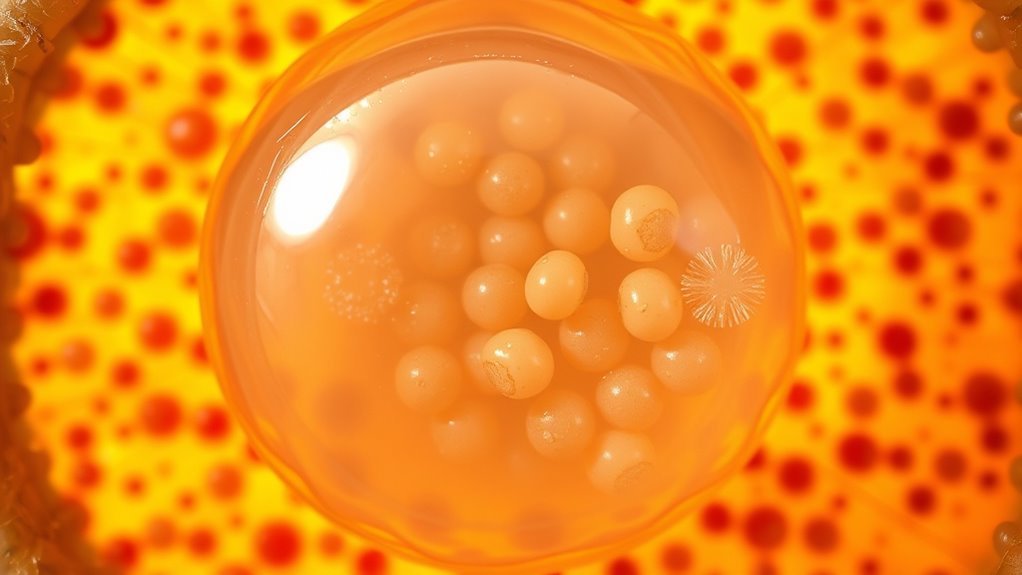
You can identify the organelle that provides temporary food storage by looking for the vacuole. This is a membrane-bound compartment found in the cell’s cytoplasm.
It’s designed to safely hold water, nutrients, and waste.
In plant cells, the vacuole is large and central. It helps maintain the cell’s structure and stores nutrients.
But in animal cells, you’ll find smaller and multiple vacuoles that store food and waste for a short time.
Keep exploring, and you’ll discover how the vacuole’s role changes between different types of cells. It’s pretty interesting to see how this organelle adapts depending on where it’s found!
Key Takeaways
- Look for a membrane-bound organelle within the cytoplasm that serves as a storage compartment.
- Identify organelles that store temporary food, water, and nutrients inside the cell.
- In animal cells, find smaller, numerous vacuoles involved in temporary food storage.
- In plant cells, the large central vacuole primarily stores water but also nutrients and food.
- Confirm the organelle maintains safe containment of food substances for later use by the cell.
Characteristics and Functions of Vacuoles
Although vacuoles vary in size and function across cell types, they consistently act as essential storage compartments within the cytoplasm. You’ll find vacuoles as membrane-bound organelles that securely store water, nutrients, and waste materials.
Vacuoles are vital membrane-bound storage units within cells, holding water, nutrients, and waste safely.
In plant cells, the central vacuole dominates, sometimes occupying up to 90% of the cell’s volume, which gives it remarkable storage capacity. This storage ability plays a critical role in maintaining turgor pressure, keeping the cell rigid and structurally supported.
By sequestering waste and excess substances, vacuoles help prevent toxicity and ensure the cell stays healthy. Additionally, vacuoles hold vital nutrients like sugars and enzymes needed for metabolic functions.
Understanding how the vacuole manages storage and regulates internal conditions clarifies why it’s so crucial for cell survival. It’s pretty fascinating how such a simple structure can have such a big impact!
Differences Between Plant and Animal Cell Vacuoles
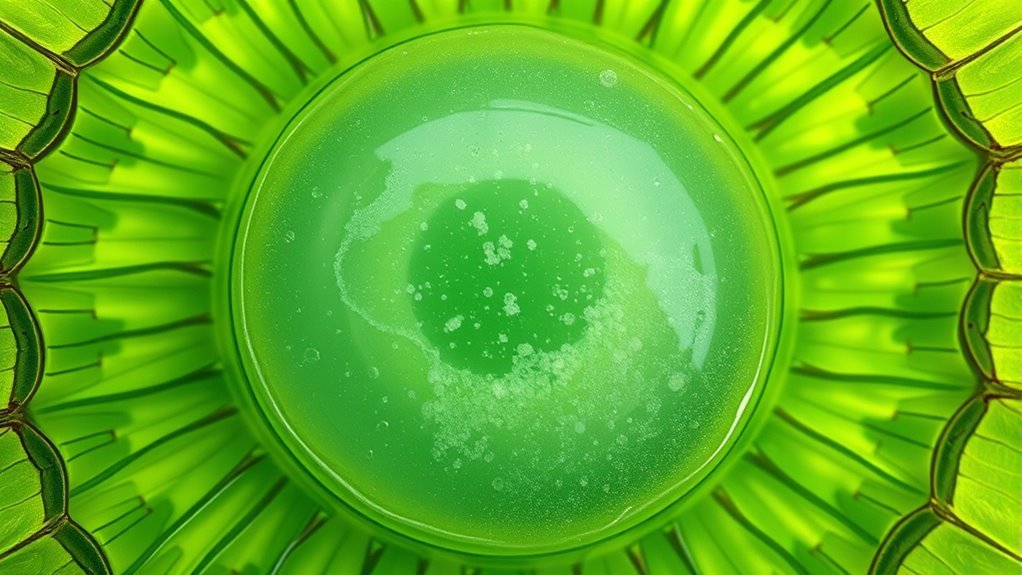
When you compare plant and animal cells, you’ll notice their vacuoles differ markedly in size and function. In plant cells, vacuoles are large, often occupying 30-90% of the cell’s volume. The central vacuole stores water, nutrients, and waste products, playing a key role in maintaining cell turgor and structural support.
This size supports important cellular functions like internal pressure and upright growth. In contrast, animal cells have smaller, more numerous vacuoles primarily used for temporary storage of food, water, or waste. These vacuoles don’t substantially affect cell rigidity.
Understanding this size and function difference helps you identify how vacuoles in plant and animal cells uniquely contribute to their respective cellular functions. It’s pretty neat how these little differences make a big impact depending on the cell type!
Frequently Asked Questions
What Organelle Provides Temporary Storage of Food?
The organelle that provides temporary food storage is the vacuole. You’ll find small vacuoles in animal cells and a large central vacuole in plant cells.
Both types store nutrients and break down food when needed. So, they really help keep things running smoothly inside the cell.
Which Organelle Is Used as Temporary Storage for Water, Waste Products, Food, and Other Cellular Materials?
Like a trusty pantry, the vacuole stores water, waste, food, and other materials temporarily.
You’ll find it in both plant and animal cells, regulating pressure and keeping the cell’s environment balanced and stable.
What Organelle Provides Storage for the Cell?
You’ll find that the vacuole provides storage for the cell. It holds food, water, and waste temporarily.
This is especially prominent in plant cells, where a large central vacuole helps maintain pressure and stores nutrients efficiently. It’s like the cell’s own storage closet!
Which Organelle Is Responsible for Storage of Food Particles, Waste, and Water?
Think of the vacuole as your cell’s pantry—it stores food particles, waste, and water securely.
You’ll spot it as a large, membrane-bound sac, keeping everything organized and ready for use when needed.
Conclusion
When you spot a vacuole, think of it as a tiny pantry within the cell, storing food like a trusted keeper of energy. In plant cells, it’s a grand reservoir, while in animal cells, it’s more like a modest lunchbox.
Recognizing this organelle means understanding how life preserves its fuel, even if just for a moment. So next time you look inside a cell, see the vacuole as the symbol of temporary nourishment and survival.
In essence, the vacuole is the organelle that provides temporary food storage. It plays a crucial role in maintaining energy reserves within the cell. Whether in plants or animals, spotting the vacuole helps you identify how cells manage and store nutrients for future use. This understanding of the vacuole’s function highlights its importance in cellular survival and energy management.