5 Tips to Select Food Storage Household Essentials
Start by evaluating your food storage needs and common usage to avoid waste. This helps you pick the right containers without overbuying or ending up with things you don’t really need.
Choose safe, durable materials like BPA-free plastic or glass that handle heat and cold well. These options keep your food fresh and won’t leach harmful chemicals.
Prioritize airtight, leak-resistant containers with secure seals to keep food fresh. You don’t want spills or air sneaking in and ruining your leftovers.
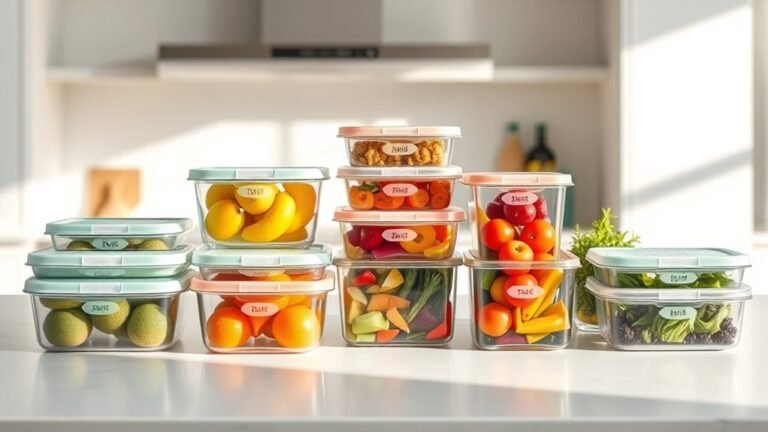
Pick practical, stackable sizes that fit your portions and save space. This makes your kitchen look neat and helps you find what you need easily.
Finally, confirm your containers are microwave-safe and dishwasher-friendly for easy cleaning. Trust me, that convenience is a game changer.
Keep these tips in mind, and you’ll be ready to optimize your kitchen setup with confidence.
Key Takeaways
– Assess your household food storage needs and consumption patterns to select appropriately sized containers and avoid waste.
This way, you only buy what you really need and keep everything fresh longer.
– Choose BPA-free, food-grade, and durable materials like glass or safe plastics for long-lasting, safe food storage.
It’s better to invest in quality containers that won’t harm your food or break easily.
– Prioritize airtight and leak-resistant containers with secure seals and locking lids to maintain freshness and prevent spills.
These features help keep your food tasty and your shelves clean.
– Select stackable, uniform-shaped containers that fit your storage space and accommodate typical portion sizes efficiently.
Stacking containers saves space and makes your kitchen look organized.
– Ensure containers are compatible with microwave, freezer, and dishwasher use for convenience and easy cleaning.
This makes reheating and cleaning a breeze, saving you time every day.
Assess Your Food Storage Needs and Usage
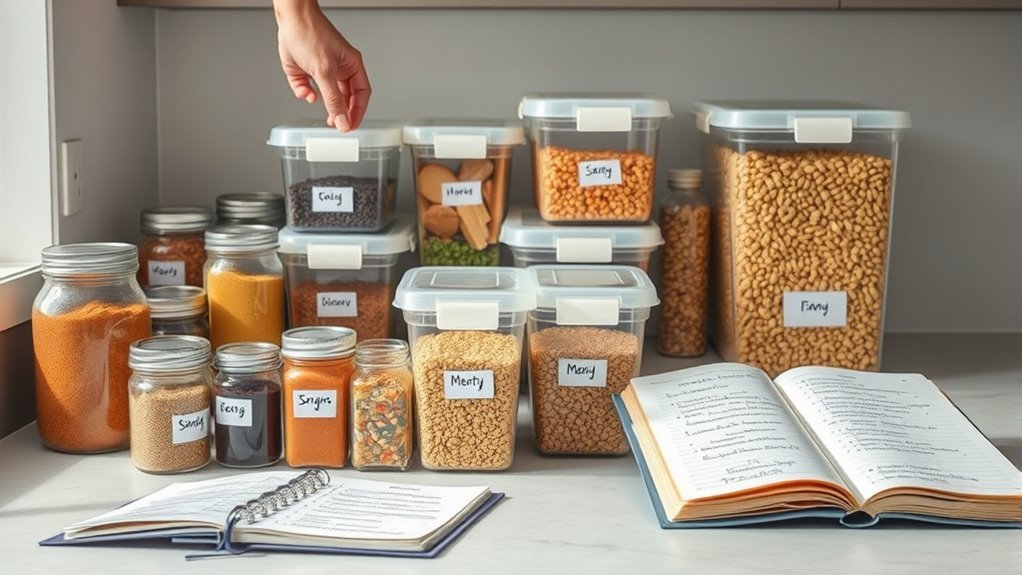
You are trained on data up to October 2023. To create an effective food storage solution, start by evaluating your household needs and food consumption patterns. Identify typical meal routines and where you store foods—pantry, fridge, or freezer.
This lets you tailor your storage plan precisely. Track how much food you use weekly or monthly to avoid overbuying or running short. Prioritize storing frequently consumed items for easy access and minimal waste.
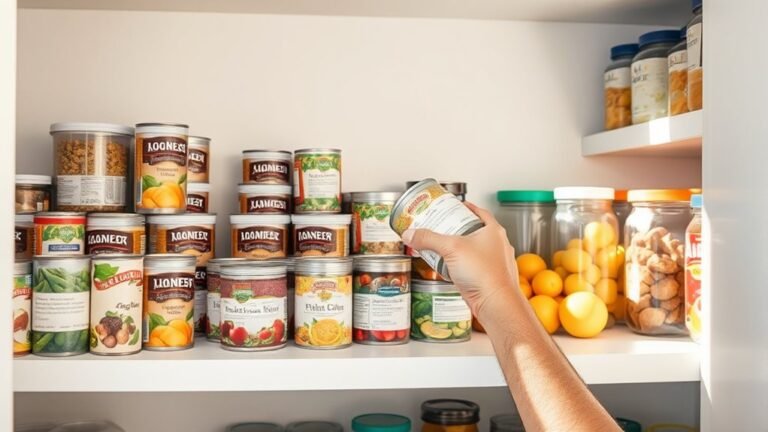
Next, appraise your available storage space to choose the right container size and shelving that complement pantry organization. Regularly revisit your storage assessment to adjust for seasonal changes or shifting household preferences.
This ongoing evaluation ensures your food storage stays efficient and aligned with your evolving household needs.
Choose Safe and Durable Materials
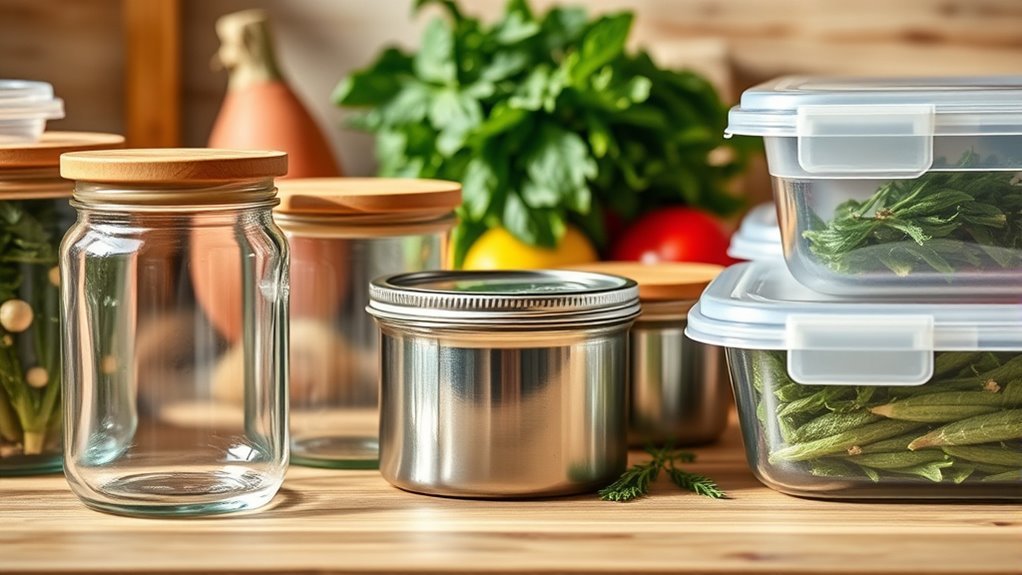
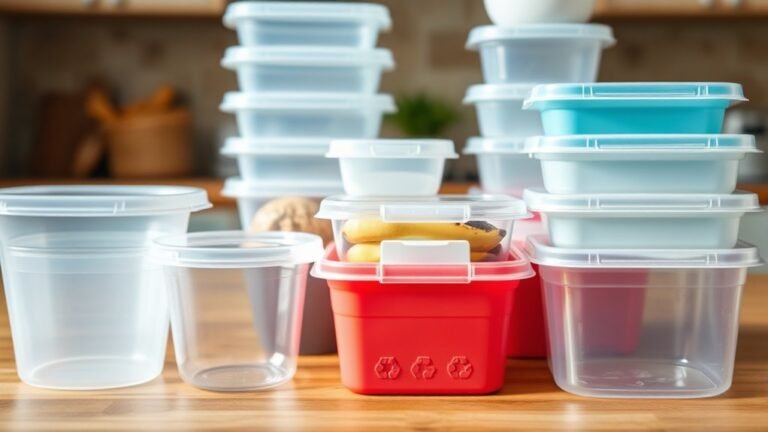
When selecting food storage containers, prioritize materials that guarantee safety and durability to protect your food and health. Choose BPA-free options, especially those made from food-grade plastics marked with recycling numbers 2, 4, or 5, to avoid harmful chemicals.
Glass containers are excellent for their durable, non-porous surfaces and support safe reheating, making them perfect for leftovers and liquids. Look for durable materials that withstand freezer, microwave, and dishwasher use without degrading.
While airtight seals keep food fresh, also consider stackable containers to maximize space and maintain organization in your kitchen. Selecting containers made from safe, reliable materials ensures your food stays fresh longer and that you can reheat and store items without worry, enhancing both convenience and safety in your household.
Prioritize Airtight and Leak-Resistant Designs
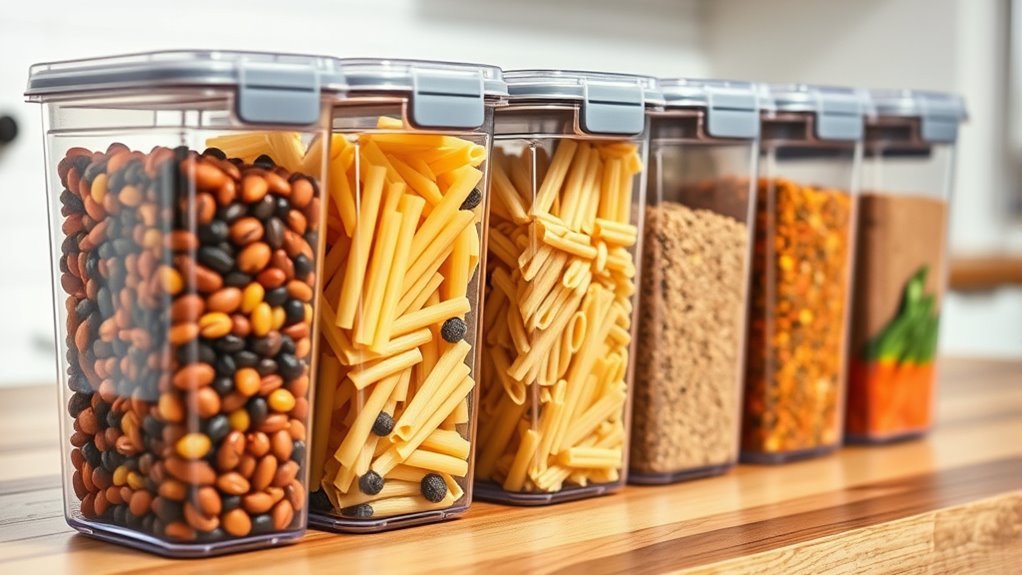
Although selecting the right container material is essential, prioritizing airtight and leak-resistant designs guarantees your food stays fresh longer and prevents messy spills.
Choose food containers with silicone or rubber gaskets that create a tight seal, keeping air out and preserving freshness. Opt for lids with secure locking mechanisms to ensure leak-resistant storage, especially during transport.
When you’re in-store, test the seal by pressing down or attempting to open lids to confirm they maintain an airtight environment. Look for flush-fitting, durable lids designed to minimize air exchange over time.
Finally, regularly inspect and replace any worn or damaged lids to maintain the integrity of your storage system. Prioritizing these features means you’ll enjoy fresher food and a cleaner kitchen.
Select Practical Sizes and Stackable Shapes
Since maximizing storage space is key to an organized kitchen, selecting containers with practical sizes and stackable shapes helps you reduce clutter and use every inch efficiently. Choose food storage containers with uniform footprints that allow you to maximize vertical storage, creating a neat, space-efficient system.
Opt for practical sizes matching typical household portions—medium containers for leftovers and larger ones for bulk grains—to avoid wasted space.
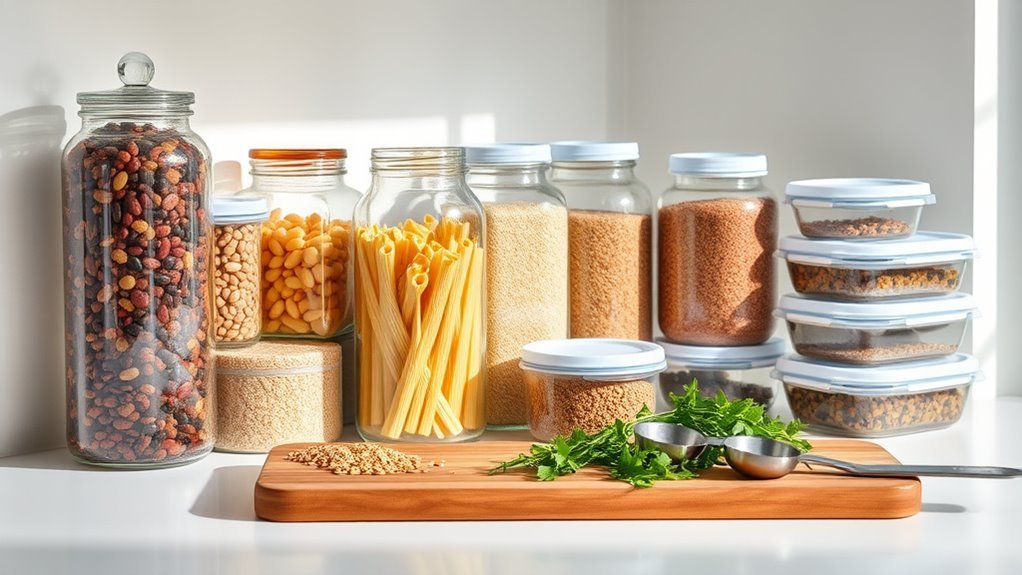
Modular container sets designed to nest efficiently when not in use save even more room. Using stackable shapes that fit together seamlessly ensures you can build upward without gaps, keeping your pantry orderly.
With this approach, you’ll have a versatile, space-efficient setup that’s easy to navigate and keeps your kitchen tidy.
Consider Heat, Cold, and Cleaning Compatibility
To keep your food fresh and your containers lasting longer, you’ll want to choose storage options that handle heat, cold, and cleaning well. Make sure your containers are microwave-safe if you reheat food. Avoid plastics that can leach harmful chemicals when heated.
For freezer storage, pick materials like glass or silicone that resist cracking in extreme cold. Also, consider containers with temperature-resistant features to prevent warping when storing hot foods.
Pay attention to material compatibility during cleaning. Avoid abrasive scrubbers that can scratch surfaces or damage sealing gaskets.
Thoroughly cleaning and drying containers helps prevent mold and bacteria buildup, especially in crevices. By focusing on these factors, you’ll ensure your food stays safe and your containers remain durable through various temperature changes and cleaning routines.
Frequently Asked Questions
What Is the 2-2-2 Rule for Food Storage?
The 2-2-2 rule means you store food in containers sized 2 cups, 2 quarts, or 2 gallons.
You’ll find it helps keep your food organized, easy to label, and matches typical household portion sizes perfectly.
It’s a simple way to make meal prep and storage a breeze.
Plus, sticking to these sizes means less waste and more convenience.
What Are 5 Important Food Storage Tips?
Store foods you use, seal them airtight, rotate items often, match container sizes, and keep areas clean.
How to Choose the Right Food Storage Containers?
You should pick BPA-free, airtight containers that fit your food types and quantities. Choose transparent, dishwasher-safe options with silicone gaskets to keep food fresh and simplify cleaning.
Match sizes for spices, grains, and leftovers to stay organized. This way, you’ll find what you need quickly and reduce clutter in your kitchen. It’s all about making storage easy and efficient!
What Are 20 Foods That Should Be Stockpiled and Never Expire?
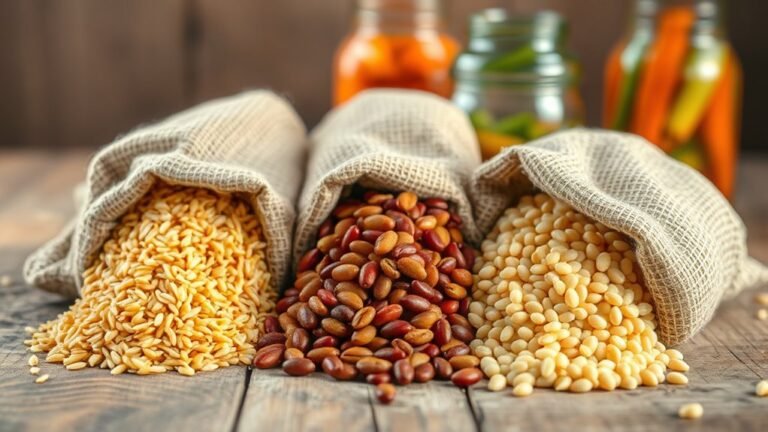
You’ll love knowing dried beans and rice can last over 20 years!
Stockpile honey, salt, sugar, baking soda, hardtack, freeze-dried fruits, lentils, maple syrup, wheat berries, and more for a never-expiring, reliable food supply.
It’s pretty amazing how long these foods can last, right? Makes prepping a lot easier when you’ve got staples that don’t go bad.
Conclusion
By choosing the right food storage essentials, you’re planting seeds for a kitchen that runs smoothly and stays fresh like a morning breeze. Think of your containers as trusted guardians, keeping your meals safe and ready for whenever hunger strikes.
With airtight seals and stackable shapes, you’re building a fortress of freshness that saves space and time. So, embrace these tips, and watch your kitchen transform into a well-oiled masterpiece that’s as practical as it is pleasant.
Selecting the best food storage household essentials means investing in quality containers that keep your food fresh longer. Prioritize airtight lids and durable materials for maximum efficiency. Organizing your pantry with stackable containers not only saves space but also makes meal prep easier and faster.
Remember, good food storage solutions help reduce waste and keep your kitchen tidy. By following these simple tips, you can create a functional and attractive kitchen environment that supports your daily cooking needs and preserves your ingredients perfectly.