10 Tips on How to Store Glass Food Storage Containers
To store your glass food storage containers safely and neatly, start by making sure they’re completely clean and dry before stacking. This helps prevent any sticky residue or moisture that could cause damage or odors.
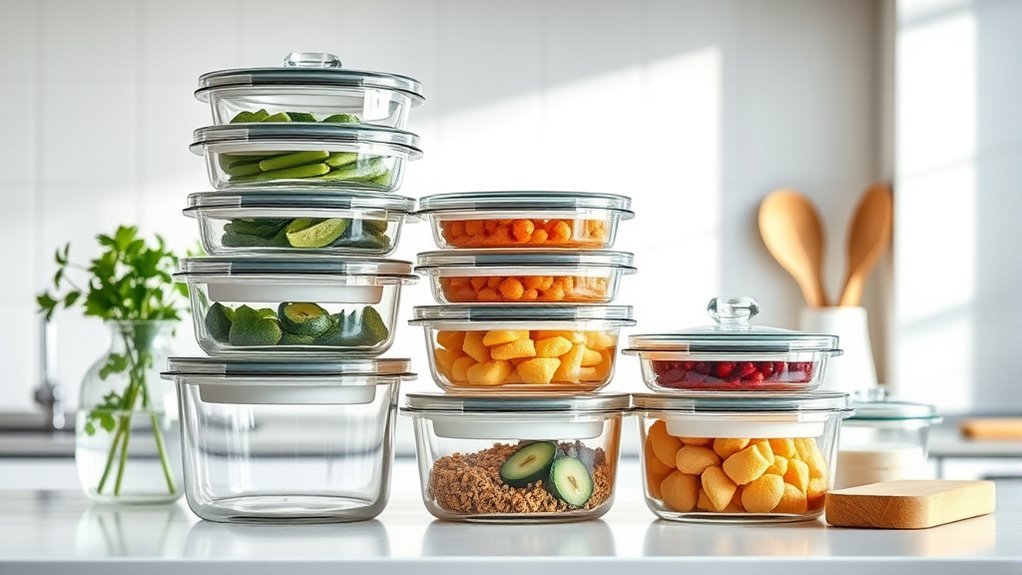
Use containers of similar sizes and nest smaller ones inside larger ones to save space. It’s a simple trick that keeps your cabinets looking tidy and organized.
Store lids separately in organizers, so you’re not scrambling to find the right one when you need it. Arrange everything by shape for easy access—you’ll thank yourself later during busy meal prep.
Protect your glass containers with drawer liners or soft cloths to prevent chips and cracks. And try to avoid lazy Susans; they might seem convenient but often cause accidents and clutter instead.
Keep your storage organized and clutter-free by tidying up regularly. When you do this, you’ll discover even better ways to manage your kitchen space and keep those glass containers in perfect condition.
Key Takeaways
- Wash and dry glass containers and lids thoroughly before storing to prevent bacterial growth and odors.
- Nest smaller containers inside larger ones and stack lids separately to maximize cabinet space and organization.
- Store containers in a cool, dry place away from direct sunlight to avoid glass deterioration and warping.
- Use drawer liners or soft cloths in storage areas to cushion containers and prevent chips or cracks.
- Label containers and lids clearly with waterproof labels for quick identification and easy matching.
Clean and Dry Containers Thoroughly Before Storing
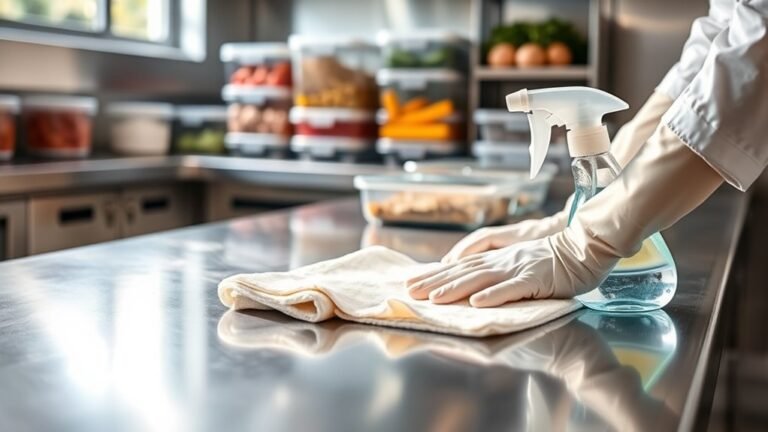
Before you store glass food containers, make sure you wash them thoroughly with warm, soapy water and dry them completely. Keeping your containers clean and dry is essential to prevent mold, mildew, and unpleasant odors.
Thoroughly wash and dry glass containers before storing to prevent mold, mildew, and odors.
Use a clean, lint-free towel to dry each container or let them air dry fully. Don’t forget to check the lids too—make sure they’re dry and free of water spots before storing.
Trapped moisture can lead to bacterial growth, so avoid stacking containers with wet parts. Also, steer clear of storing your glass containers in damp or humid areas because excess moisture can damage the glass over time.
Make it a habit to regularly inspect your stored containers and wipe them down if you spot any residual moisture. This way, you’ll keep a fresh, clean, and dry storage environment.
Use Uniform Container Sizes for Efficient Stacking
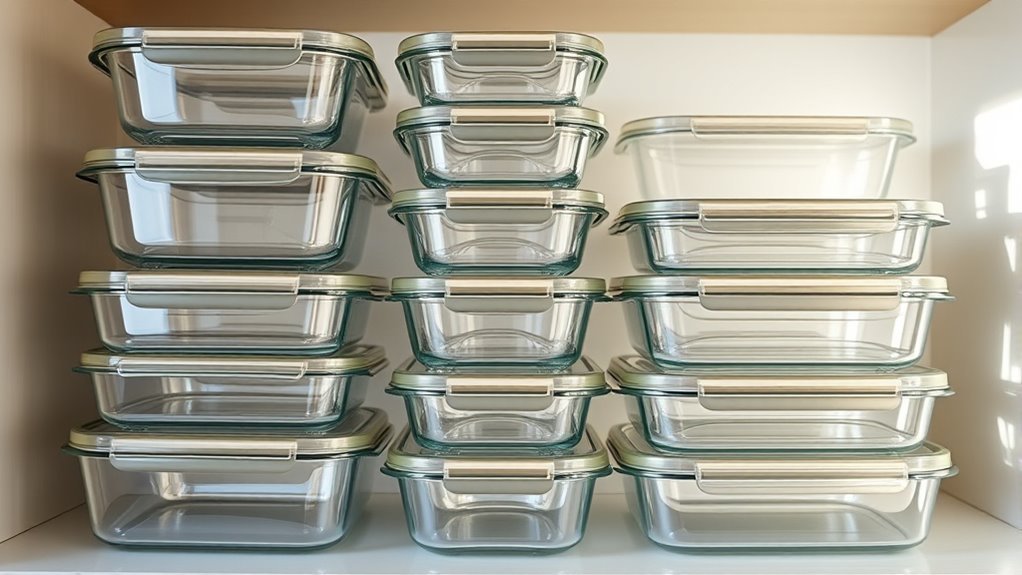
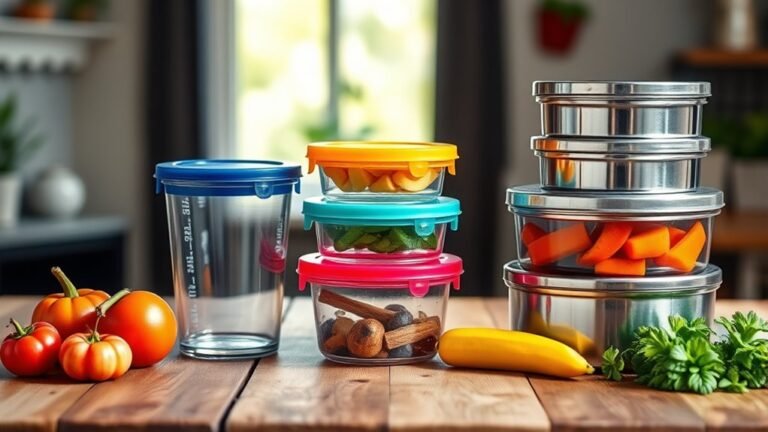
When you use glass containers of the same size, you can stack them neatly and save valuable cabinet space. This uniformity not only keeps your storage area organized but also makes it easier to find matching lids quickly.
Benefits of Uniformity
Choosing uniform glass food containers lets you stack them neatly, making the most of your cabinet and drawer space. When your storage containers share the same size and shape, you can nest them effortlessly, cutting down on clutter and unused gaps.
This consistency also makes it simpler to keep lids and bases paired, so you won’t waste time searching. Uniform containers improve stability too, preventing stacks from toppling over and keeping your storage safer.
Plus, they help you manage your inventory quickly—identifying what you have at a glance. By sticking to a set of standard containers, you streamline your kitchen organization, making storage more efficient and your daily routine smoother.
Space-Saving Techniques
Uniform container sizes don’t just keep your kitchen tidy—they also let you stack containers efficiently to save valuable space. When you choose stackable containers with matching lids and bases, you maximize vertical space and reduce gaps.
This means you can nest smaller containers within larger ones, making the most of your drawers and cabinets. Using drawer dividers alongside uniform containers keeps everything orderly and easy to access.
Consistent dimensions streamline your storage, so you won’t waste time searching for mismatched pieces. Plus, stable stacks prevent accidents or spills.
Nest Smaller Containers Inside Larger Ones
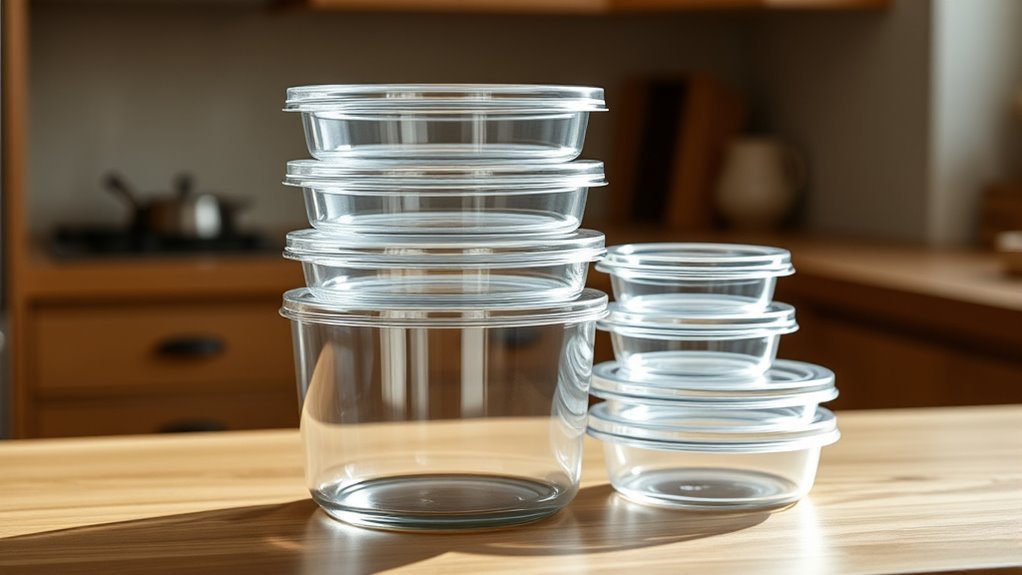
Although nesting smaller glass containers inside larger ones requires a bit of care, it saves you valuable cabinet space and keeps your kitchen organized. When nesting, make sure each smaller container is completely dry to prevent mold or unpleasant odors.
Group containers by shape and size to create a stable, organized stack that’s easy to access. This nesting method streamlines your storage, reducing clutter and making the most of your cabinet space.
Avoid nesting lids inside the containers, as this can cause damage and complicate retrieval. To maintain a tidy storage system, regularly check and reorganize your nested containers.
Store Lids Separately in Designated Organizers
When you store lids separately in designated organizers, you’ll find it much easier to locate the right one quickly. Use a dedicated basket or file sorter to organize food storage lids by size or type.
Keep them upright and arranged from smallest to largest to reduce clutter and speed up retrieval. Separating lids from containers prevents stacking issues and mismatches.
Regularly review and reorganize your lid storage to maintain order. Trust me, it makes a big difference when you’re in a hurry!
| Organizer Type | Arrangement Method | Benefit |
|---|---|---|
| Basket | Upright, size sorted | Easy access and less mess |
| File Sorter | Categorized by type | Quick lid identification |
| Dedicated Bin | Separate from containers | Prevents stacking issues |
Arrange Containers by Shape and Size
Since organizing your glass food containers by shape and size makes stacking easier, you’ll save space and find what you need faster. Start by grouping containers and lids by shape—square, rectangular, or round—to streamline stacking and maximize efficiency.
Organizing glass containers by shape and size simplifies stacking, saving space and speeding up finding what you need.
Within each shape category, arrange containers from largest to smallest to enhance vertical storage and quick access. Keep similar-sized food storage containers together to avoid confusion and misplacement.
Store matching lids vertically or in separate containers near their bases to pair them swiftly. Consider using clear bins or dividers to separate different shapes and sizes, maintaining a neat system.
This approach not only optimizes your storage space but also simplifies retrieval, keeping your kitchen organized and functional. It really makes a difference when you’re in a hurry!
Utilize Vertical Storage Solutions Like Tiered Shelves
To make the most of your kitchen space, use tiered shelves to store glass food containers vertically. Tiered shelves maximize vertical storage by creating multiple layers without stacking containers directly, which protects them from chipping or cracking.
Adjustable tiered shelving units let you customize the height between levels to fit different container sizes, optimizing every inch of space. By organizing containers on tiered shelves, you keep lids and containers visible and easily accessible, cutting down on the hassle of moving items around.
Installing these racks inside cabinets or pantries creates a neat, clear system that makes finding and retrieving your glass containers quick and simple. Utilizing vertical storage with tiered shelves is a smart, efficient way to keep your kitchen organized and your glassware safe.
Label Containers and Lids for Easy Identification
Although organizing glass food containers can be a challenge, labeling each container and lid with clear, waterproof labels makes identification quick and hassle-free. When you label containers, you save time and avoid mismatched lids.
Labeling glass containers with clear, waterproof tags simplifies identification and prevents the frustration of mismatched lids.
Here’s how to get started:
- Use a consistent labeling system, like color codes or numbers, to keep your containers organized and easy to find.
- Place labels on the front or top of containers so you can quickly spot what you need when stored in cabinets or drawers.
- Regularly update your labels to reflect new contents or replace faded ones, ensuring everything stays clear and neat.
Protect Glass Containers With Drawer Liners or Cloth
You can prevent scratches and chips by placing drawer liners or cloth between your glass containers. These cushions absorb impact and keep containers from bumping into each other.
Using non-slip liners also helps keep everything stable, reducing the chance of damage. It’s a simple step that makes a big difference!
Prevent Scratches and Chips
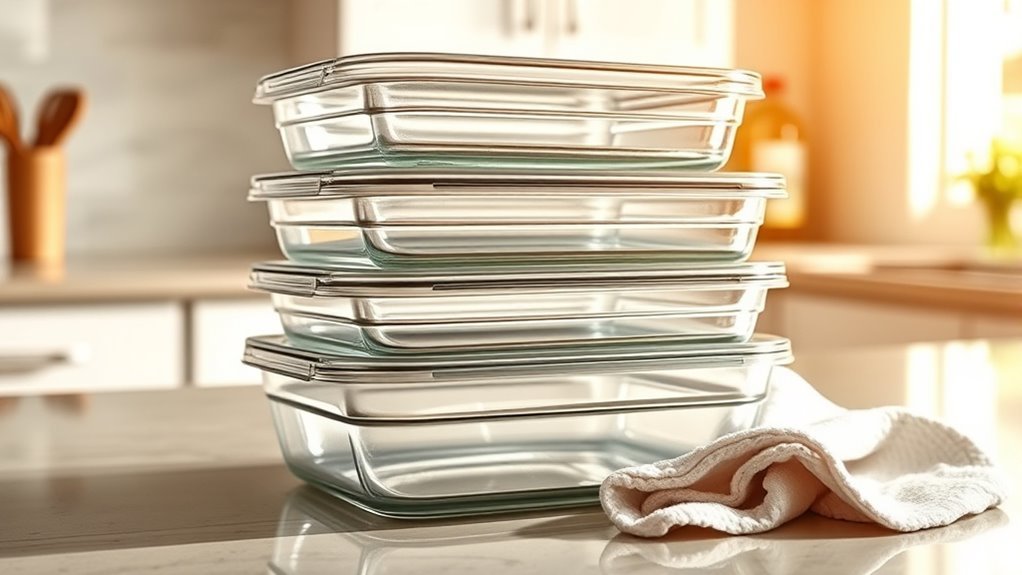
When storing glass food containers, placing drawer liners or soft cloths between them helps you prevent scratches and chips by cushioning their contact. This simple step keeps your glass and lids in great shape.
To further protect your containers, try using non-abrasive materials like felt or silicone liners. These help absorb minor impacts and keep glass surfaces from rubbing against each other.
Also, replace any sharp or hard objects, such as metal lids or utensils, in the storage area. Doing so reduces the risk of accidental glass damage.
And don’t forget to regularly check and swap out worn liners. That way, you maintain an effective barrier that guards against chips and scratches.
Cushion Against Impact
Preventing scratches and chips goes hand in hand with cushioning your glass containers against impact. To cushion effectively, lay drawer liners or soft cloths at the bottom of your storage drawers. These provide a padded surface that absorbs the impact from accidental knocks, reducing the risk of chips and cracks.
You can also use non-slip shelf liners to further soften the base and prevent sliding. For extra protection, wrap individual glass containers in bubble wrap or foam sleeves before storing. Place heavier containers at the bottom or center to minimize falls and damage.
Don’t forget to regularly inspect and replace worn or compressed liners to maintain their cushioning ability. Taking these steps ensures your glass food containers stay safe and intact. It’s a simple way to keep your kitchenware looking great!
Avoid Using Lazy Susans for Container Storage
Although Lazy Susans might seem convenient, they often make it harder to access containers at the back and cause items to topple when you spin the tray.
If you want smarter storage ideas, consider alternatives like drawers, which offer better organization and easy visibility.
Here are three reasons to avoid Lazy Susans for glass container storage:
- They limit space efficiency due to their circular design, wasting valuable storage area.
- Containers frequently topple or fall when you rotate the tray, risking breakage.
- Lazy Susans can accumulate dust and food debris, making cleaning difficult.
Using drawers or stackable bins keeps your glass containers orderly, easy to reach, and safer.
Regularly Declutter and Reorganize Storage Areas
Since glass containers can quickly accumulate and clutter your storage space, you should regularly declutter and reorganize to keep everything manageable and accessible. Set a monthly or quarterly schedule to assess your collection, discarding broken, mismatched, or unused pieces.
Remove any containers or lids showing damage, discoloration, or odor to maintain hygiene. After cleaning, reorganize your containers by grouping them according to size, shape, and how often you use them.
Use clear bins or assign specific sections within your cabinets to streamline this process. By making declutter and organize sessions a habit, you’ll prevent clutter buildup and ensure your glass containers remain easy to find and use.
This way, you’ll maintain an efficient and tidy kitchen storage area without the hassle.
Frequently Asked Questions
Should Containers Be Stored With Lids on or Off?
You should store containers with lids off to let them dry faster, avoid mold, and prevent dust buildup.
Plus, keeping lids separate helps stop warping, saves space, and makes finding the right lid quicker and easier.
What Are 5 Important Food Storage Tips?
You’ll want to keep your food’s best friends close: airtight containers, upright storage, and neat lids. Avoid precarious stacking, stay vigilant for cracks, and clean regularly—these little habits keep your meals fresh and safe.
It’s all about keeping things tidy and secure. When containers seal tightly, your food stays fresher longer.
Plus, storing items upright helps prevent spills and keeps everything organized. And don’t forget to check for cracks or damage—those can let in air and bacteria.
Regular cleaning is a must, too. It might seem small, but it really makes a big difference in food safety and taste.
Is It Better to Store Your Food in Glass Containers?
Yes, you’ll find glass containers better for storing food because they’re durable, don’t absorb odors, and are safer without chemicals leaching.
Plus, they’re microwave and dishwasher safe, making reheating and cleaning much easier for you.
How to Store Glass Containers Without Chipping?
You don’t want your glass containers to shatter like a thousand fireworks! Always stack them with paper towels or soft cloths in between.
Using padded liners can help, too. Store them carefully in low-traffic, stable spots to avoid chipping.
Taking these simple steps can really save your containers and keep them looking great!
Conclusion
Storing glass food containers might seem tricky, but with these tips, you’ll save space and keep them safe. You might worry that separating lids is extra work, but organizing them in designated holders actually speeds up your meal prep by making everything easy to find.
By staying consistent with your system and regularly decluttering, you’ll prevent clutter and protect your glassware. This approach makes your kitchen more efficient and stress-free.
Give it a try—you’ll notice the difference! Properly storing glass food storage containers not only saves space but also extends their lifespan. With a good organization system, your kitchen will be tidier and your cooking routine smoother. So, next time you put away your glass containers, remember these tips to keep everything neat and accessible.