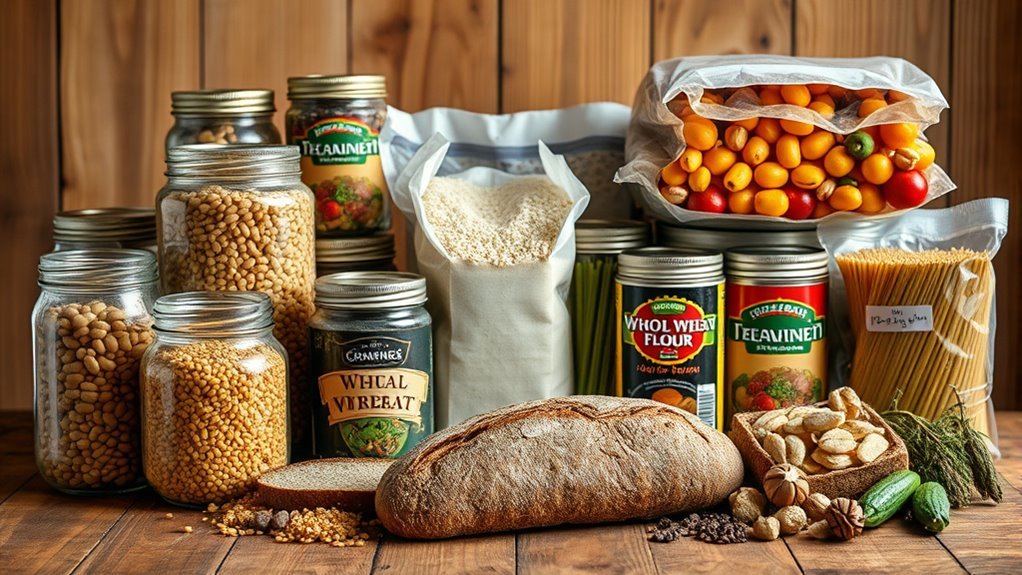
10 Foods Suitable for Long-Term Storage
You’ll want to stock up on foods like white rice, dried beans, lentils, powdered milk, and canned vegetables and fruits for long-term storage. These staples last for years when kept cool and airtight, making them perfect for emergency preparedness or simply reducing grocery trips.
Honey and salt? They can stay good indefinitely if stored properly. Freeze-dried meats are another excellent choice—they offer decades of nutrition in a compact form, which is great for saving space.
Pasta and maple syrup also keep well with the right conditions. Keeping these basics on hand ensures you’re prepared for whatever comes your way.
And trust me, there’s more to uncover about how to store them best to maximize shelf life and taste!
Key Takeaways
– White rice, dried beans, and lentils last over 20 years when stored airtight in cool, dry, dark conditions with oxygen absorbers.
It’s pretty amazing how long these staples can keep if you store them right.
– Freeze-dried meats maintain flavor and nutrition for 25-30 years if kept sealed and stored properly.
So, if you’re thinking about long-term protein options, these are a solid choice.
– Honey and salt resist spoilage indefinitely when stored in airtight, cool, and dry environments.
Basically, these two can last forever without going bad.
– Powdered milk lasts 12-24 months airtight at 70°F, while canned vegetables and fruits last 2-5 and 1-4 years respectively.
Keep in mind, the shelf life for these is shorter, so plan to use them sooner.
– Dried pasta stored airtight in cool, dark places lasts 2-3 years; whole wheat pasta has a shorter shelf life of 1-2 years.
So, regular pasta keeps a bit longer than whole wheat when stored properly.
Rice
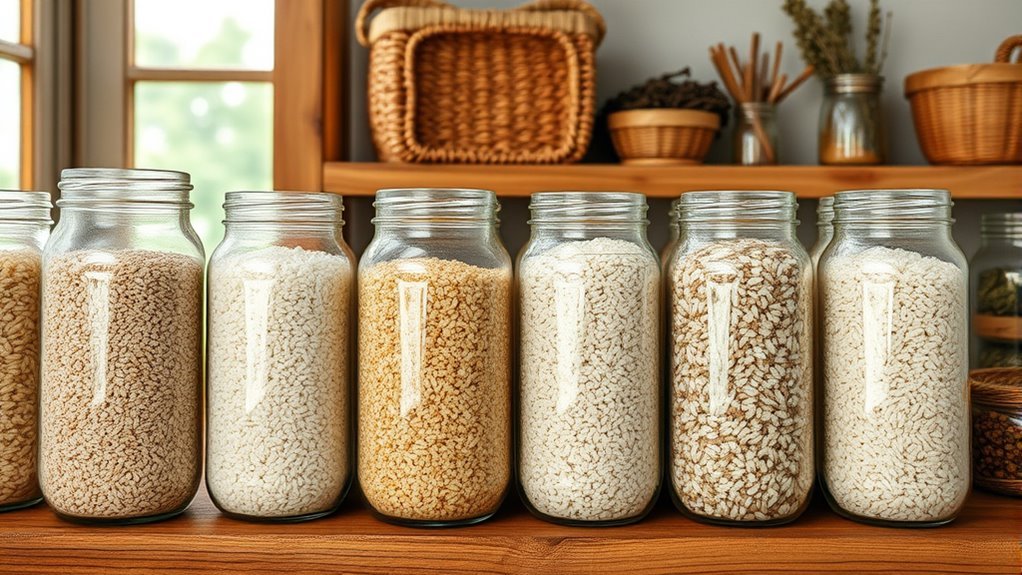
When you store white rice in airtight containers in a cool, dry place, it can last indefinitely. This makes rice a top choice for long-term storage ideas. Using airtight containers helps keep moisture, pests, and oxygen out, preserving the rice’s quality.
For an even longer shelf life, consider sealing long-grain varieties like jasmine or basmati in oxygen-free packaging. This can extend freshness up to 30 years. Adding oxygen absorbers in Mylar bags is another excellent method to prevent spoilage and insect infestation.
Just remember, brown rice isn’t suitable for long-term storage due to its natural oils that turn rancid within a year. So, stick with white rice and use proper storage techniques to ensure you have a reliable food supply for years to come.
Dried Beans and Lentils
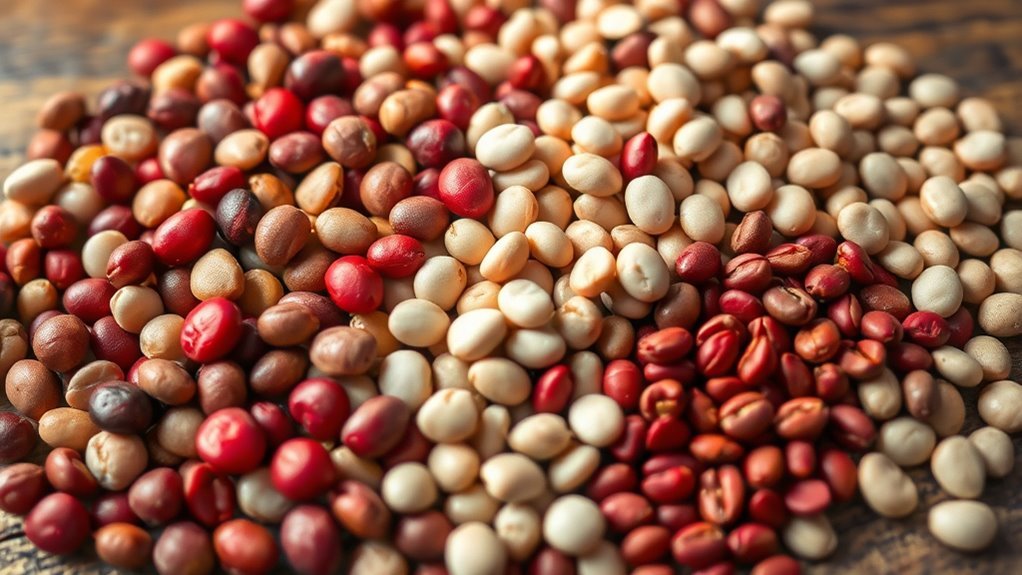
Although dried beans and lentils require some preparation before cooking, their exceptional shelf life and nutritional value make them indispensable for long-term storage.
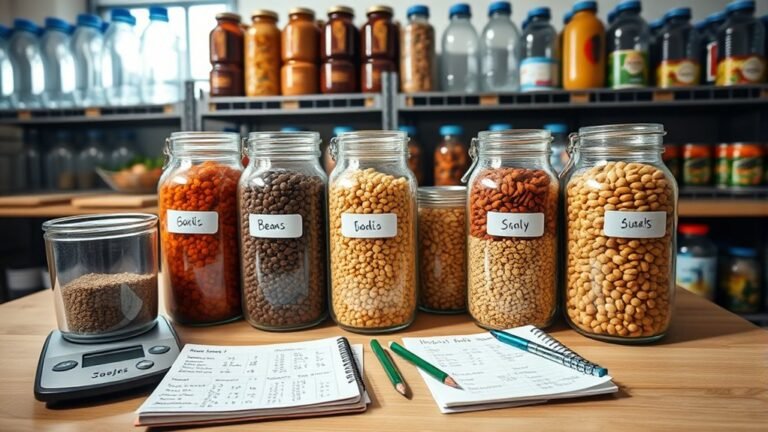
When stored in airtight, moisture-proof containers, dried beans can last over 20 years. To maximize their benefits, remember these tips:
- Store dried beans and lentils in sealed, moisture-proof containers like Mylar bags with oxygen absorbers.
- Keep them in a cool, dark place to maintain freshness and prevent spoilage.
- Rinse and soak thoroughly before cooking to reduce time and improve digestibility.
- Include them as a protein- and fiber-rich staple in your long-term food supplies.
Powdered Milk
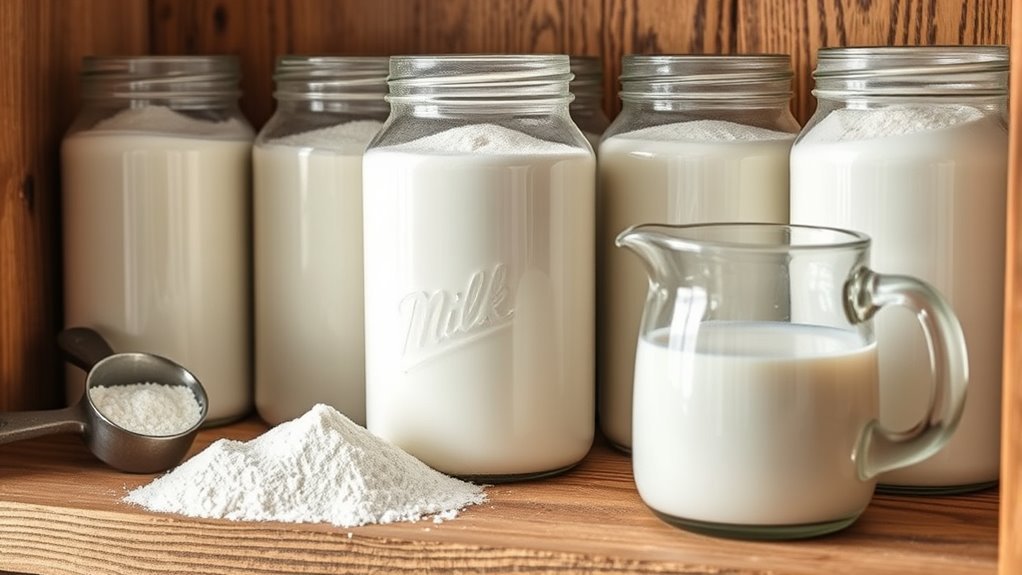
How can you guarantee a reliable dairy supply during emergencies? Powdered milk is your go-to for long-term storage. When stored airtight at around 70°F, powdered milk can last 12 to 24 months, making it ideal for emergency food supplies.
You’ll want to keep it in a cool, dark, dry place to extend its shelf life and protect it from moisture and pests. Even past expiration dates, properly stored powdered milk remains safe to consume, though quality may slowly decline.
You can easily reconstitute it with water for drinking, cooking, or baking, giving you a versatile dairy option when fresh milk isn’t available. Including powdered milk in your food storage ensures you won’t run out of essential nutrients during unexpected situations.
Canned Vegetables and Fruits
Powdered milk offers a reliable dairy option, but you’ll also want to stock up on canned vegetables and fruits to round out your emergency food supply. These canned goods provide essential nutrients and have an impressive shelf life when stored properly.
Keep these tips in mind:
- Store canned vegetables like tomatoes, peas, and corn in a cool, dark place to last 2-5 years.
- Canned fruits such as peaches and pineapple can maintain quality for 1-4 years unopened.
- Pickled vegetables and relishes often remain safe beyond their best-by dates if seals are intact.
- Always check for bulging, leaks, or rust to ensure safety before consumption.
Proper storage conditions will extend the shelf life of your canned goods, helping you maintain a nutritious emergency food supply. So, it’s worth keeping an eye on where and how you store them!
Honey
Honey offers an exceptional long-term storage option because it naturally resists spoilage and can last indefinitely when kept in a cool, dark, airtight container. Its low moisture content and natural antibacterial properties give honey a remarkable shelf life, preventing bacterial and mold growth.
When you store honey properly, it retains its flavor and nutritional value for decades or even centuries. Over time, honey might crystallize, but you can easily restore it to liquid form by gently warming it without overheating.
This makes honey not only a delicious natural sweetener but also a valuable component for food preservation. Including honey in your emergency supplies ensures you have a reliable, long-lasting food source that’s both nutritious and effective for preservation.
Salt
You can store salt indefinitely as long as you keep it in a cool, dry place away from moisture.
Iodized salt works best when you keep it in its original packaging to avoid clumping and contamination.
Not only does salt have a long shelf life, but it also enhances flavor and helps preserve other foods during storage. Pretty handy, right?
Storage Conditions
Although salt doesn’t spoil, you should store it in a cool, dry place to keep it free-flowing and prevent clumping. Proper storage conditions are key to maintaining salt’s quality over time.
Use airtight containers or keep salt in its original packaging to block moisture and humidity. Avoid heat sources, which can cause salt to absorb moisture and stick together.
Follow these tips for ideal salt storage:
- Store salt away from humidity to prevent clumping.
- Use airtight containers to maintain dryness and prevent contamination.
- Keep salt in a cool environment, away from stoves or direct sunlight.
- For iodized salt, proper storage ensures it retains potency over long shelf lives.
Shelf Life
When you store salt in a cool, dry place with airtight containers, it can last indefinitely without spoiling. Salt’s shelf life is exceptional because it contains no moisture or organic material, so it resists pests, mold, and bacteria.
Using airtight containers prevents contamination and clumping, preserving quality. Even iodized salt retains its nutritional benefits over time if stored properly. Since salt doesn’t spoil, expiration dates are more about packaging than safety.
Here’s a quick look:
| Storage Method | Shelf Life |
|---|---|
| Original packaging | Indefinite |
| Airtight containers | Indefinite |
| Open container | Risk of clumping |
| Moist environment | Reduced quality |
Stick to airtight containers and a dry environment to keep your salt fresh forever.
Culinary Uses
How does salt enhance your cooking beyond just flavor? Salt plays a vital role in preserving canned foods and dried fruits, extending their usability in your pantry. It doesn’t just season; it protects and improves texture and appearance.
Here’s how salt elevates your culinary experience:
- Enhances natural flavors by balancing and intensifying taste.
- Preserves canned foods by preventing bacterial growth.
- Maintains the texture of dried fruits, keeping them chewy and fresh.
- Supports iodine intake with iodized salt, essential during long-term storage when fresh produce is limited.
Keep your salt in airtight containers to avoid clumping and moisture absorption. Since it has an indefinite shelf life and needs no refrigeration, salt remains a reliable, versatile staple in your kitchen for both flavor and food safety.
Pasta
You’ll find that dried pasta can last 2 to 3 years, or even longer if you store it right in airtight containers with oxygen absorbers.
Keeping it cool, dark, and dry helps preserve its quality and nutritional value as a calorie-dense energy source. Just remember, whole wheat pasta has a shorter shelf life due to its higher oil content.
Shelf Life Duration
Wondering how long pasta can last in your pantry? The shelf life of pasta depends on its type and storage, but with proper care, it can stay fresh for quite a while.
Here’s what you need to know about pasta’s shelf life duration:
- Dried pasta typically lasts up to 3 years on your shelf when kept cool and dry.
- Whole wheat or whole grain pasta has a shorter shelf life, around 1-2 years, due to higher oil content.
- Storing pasta in airtight containers or vacuum-sealed packaging can extend its shelf life beyond typical durations.
- Once opened, consume pasta within 6-12 months for the best taste and texture.
Pay attention to your storage method to maximize pasta’s shelf life and keep it fresh. It really makes a difference!
Storage Conditions
Understanding pasta’s shelf life is just part of the equation; how you store it plays a big role in keeping it fresh. You should always keep pasta in an airtight container or vacuum-sealed bag to block moisture and pests.
Storing it in a cool, dry, and dark place—ideally below 70°F—helps maintain its quality and extends shelf life. Using oxygen absorbers inside sealed pouches can further prevent insect eggs from hatching and keep pasta fresh longer.
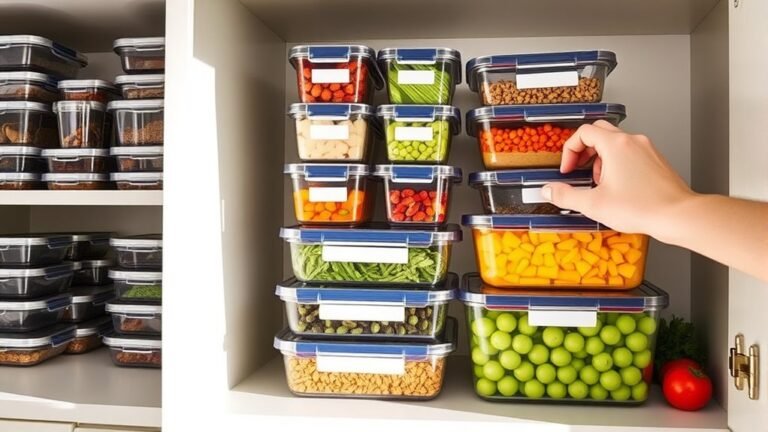
Make sure to label your containers with the purchase date and pasta type, so you can rotate your stock efficiently. When stored properly under these conditions, dried pasta can last up to three years or even longer, making it an excellent choice for long-term storage.
Nutritional Value
Although pasta primarily serves as a reliable carbohydrate source, choosing whole wheat or fortified varieties boosts your intake of fiber and essential nutrients, making it a smarter option for long-term storage and nutrition.
When selecting dried foods for your long-term food storage, consider pasta’s nutritional value carefully. Here’s why pasta is a great choice:
- It provides sustained energy thanks to complex carbohydrates.
- Whole wheat pasta adds fiber, aiding digestion.
- Fortified pasta supplies added vitamins and minerals.
- Combining pasta with canned proteins and vegetables offers balanced meals.
Stored properly in airtight containers, pasta stays pest-free and maintains its quality for up to three years.
Plus, its ease of preparation with just boiling water makes it ideal for emergency situations, ensuring you get essential nutrients even when resources are limited.
Freeze-Dried Meats
When you need a reliable protein source for long-term storage, freeze-dried meats like beef, chicken, and turkey offer exceptional shelf life and convenience. These freeze-dried meats can last 25 to 30 years when stored in cool, dry conditions, making them perfect for long-term food storage.
Freeze-dried meats like beef, chicken, and turkey last 25-30 years, ideal for long-term protein storage.
You’ll appreciate that they retain most of their original flavor, texture, and nutritional value. To keep them safe from spoilage and pests, store them in airtight packaging with oxygen absorbers.
Freeze-dried meats are lightweight and compact, ideal for emergencies or outdoor adventures. When it’s time to eat, just rehydrate with water or cook them directly for quick, nutritious meals.
This makes freeze-dried meats a smart and practical choice for your emergency food supply.
Cornstarch
You can store cornstarch indefinitely if you keep it in a cool, dry, airtight container to prevent moisture and pests.
It’s a handy thickening agent for sauces and desserts, so having some on hand is smart. Just make sure it’s away from strong odors, since it easily absorbs smells from other foods.
Shelf Life Potential
How long can you expect cornstarch to last in your long-term storage? When stored properly, cornstarch has an almost indefinite shelf life. Its resistance to spoilage means you don’t need to worry about expiration dates like with other foods.
The main issue is moisture exposure, which can cause clumping or hardening but not spoilage. To maximize shelf life, consider these points:
- Store cornstarch in a cool, dry, and dark environment.
- Use airtight containers to prevent moisture infiltration.
- Incorporate oxygen absorbers in sealed packaging to preserve quality.
- Regularly check storage conditions to avoid humidity exposure.
Storage Recommendations
Although cornstarch can last indefinitely, proper storage is key to maintaining its quality. To keep it stored correctly, place cornstarch in an airtight container or tightly sealed original packaging. This prevents moisture and pests from compromising its texture.
Store the container in a cool, dry place away from direct light and strong odors. Cornstarch easily absorbs smells over time, so keeping it away from strong scents is important.
Regularly check your storage area to ensure conditions remain ideal, and inspect the cornstarch for any off smells or lumps. If you notice any changes, it’s best to replace it.
Common Uses
Where can you find a simple solution to thicken sauces, soups, and desserts without altering flavor? Cornstarch is your go-to ingredient.
Thanks to its versatility and indefinite shelf life when kept in an airtight container, it’s perfect for long-term storage and emergency food supplies. You’ll appreciate how lightweight and compact it is, fitting neatly into your pantry.
Use cornstarch to thicken gravies and sauces for a smooth texture. It also adds body to soups without changing the taste.
Plus, it improves the consistency of puddings and custards and creates crispy coatings for fried foods.
Just make sure to store cornstarch in a cool, dry place away from moisture and pests. That way, it maintains its quality for decades.
This makes it an indispensable staple in your emergency food kit.
Maple Syrup
Why should you consider maple syrup for long-term food storage? Maple syrup offers impressive shelf stability thanks to its high sugar content and natural antibacterial properties, which help prevent spoilage.
When stored in a cool, dark, airtight container away from direct sunlight, unopened maple syrup can last indefinitely without losing flavor or quality. This makes it an excellent sweetener to keep on hand for emergencies.
Once opened, you should refrigerate it to maintain its quality, and it will stay good for about a year. By including maple syrup in your long-term storage, you ensure access to a natural, flavorful sweetener that maintains its color, consistency, and taste over time.
Frequently Asked Questions
What Is the Best Food to Keep for Long-Term Storage?
You’ll want to keep freeze-dried meals, white rice, and dried legumes for long-term storage. They last decades if stored properly in airtight, moisture-proof containers.
This way, your food stays safe, nutritious, and ready when you need it. It’s all about keeping things sealed tight and dry.
What Should I Stock up on if WW3 Happens?
Imagine your pantry filled with sturdy cans of tuna, bags of white rice, and jars of honey glistening in the dim light. You’ll want these long-lasting essentials, purified water, and spices to keep survival comfortable and flavors alive.
It’s all about having foods that won’t spoil quickly and can give you energy. Plus, a little seasoning goes a long way when you’re stuck eating the same stuff day after day.
What Foods Have a 20-Year Shelf Life?
You’ll want to stock white rice, dried beans, lentils, wheat berries, and freeze-dried fruits or meals.
Stored airtight with oxygen absorbers, these foods can last 20 years or more.
This way, you’re ensuring long-term food security without much hassle.
What Are 10 Foods That Never Expire?
Think of these foods as your kitchen’s immortals: honey, white rice, jasmine rice, basmati rice, salt, sugar, pure vanilla extract, hard liquor, dried beans, and powdered milk.
Keep them sealed, and they’ll never expire on you.
Pretty cool, right? It’s like having a little emergency stash that can last forever. Just make sure to store them properly, and they’ll be good to go whenever you need them.
Conclusion
When you stock up on foods like rice, dried beans, and honey, you’re preparing for anything life throws at you. These staples last a long time and can be a real lifesaver during emergencies.
Imagine Sarah, who kept a supply of freeze-dried meats and canned veggies during a severe storm. Her family stayed nourished without stress for weeks. Having these long-lasting foods meant they didn’t have to worry about meals when the power was out.
By choosing these long-term storage foods, you’re not just storing food—you’re securing peace of mind. Start building your pantry with these reliable options today, and you’ll thank yourself when unexpected situations arise. Long-term food storage isn’t just smart; it’s essential for staying prepared and keeping your family safe.