Are Mylar Bags Safe for Food Storage?
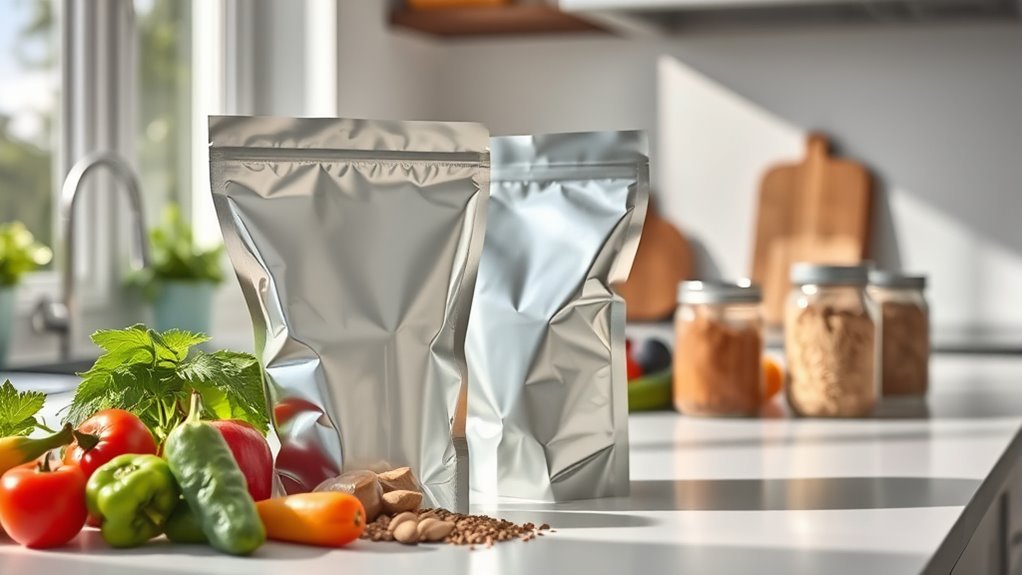
You can safely store food in certified food-grade Mylar bags as long as you seal them properly to keep out moisture, oxygen, and light. These bags use a metalized layer that prevents spoilage and nutrient loss, preserving freshness for years.
Mylar bags are a popular choice for long-term food storage because they create an excellent barrier against elements that cause food to go bad.
However, avoid storing hot, acidic, or high-moisture foods in them, and don’t expose bags to extreme temperatures.
If you want to know when Mylar bags work best and when to skip them, keep exploring for more details. There’s a bit more to learn about their best uses and limitations, so stay tuned!
Key Takeaways
- Mylar bags with food-grade certification ensure no harmful chemicals leach into stored food, guaranteeing safety. Their multilayer design blocks oxygen, light, and moisture, which helps keep food fresh and prevents spoilage.
- When properly sealed, Mylar bags provide effective moisture protection and prevent contamination during long-term storage. This makes them great for keeping food safe over time.
- However, they’re not suitable for hot, acidic, oily, or high-moisture foods. These types of foods can damage the bag’s integrity and affect safety.
- Also, it’s important to avoid exposing Mylar bags to high temperatures and humidity. Doing so helps preserve the bag’s barrier properties and ensures your food stays safe.
Why Mylar Bags Keep Your Food Fresh and Safe
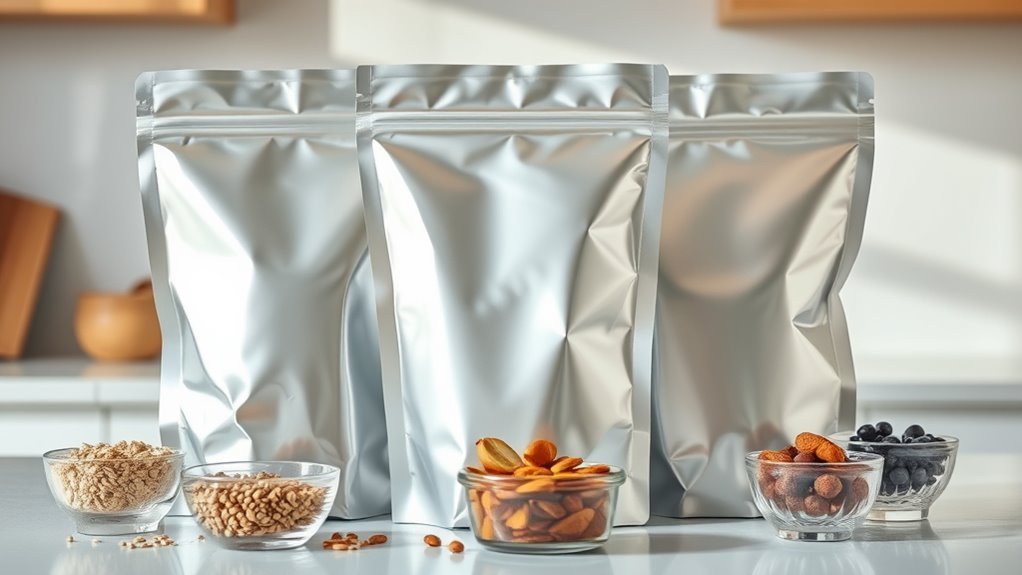
Because Mylar bags combine food-safe PET film with a metalized aluminum layer, they create a strong barrier against oxygen, light, and moisture that keeps your food fresh for years. This aluminum layer acts as an oxygen barrier, preventing oxidation that leads to spoilage and nutrient loss.
Mylar bags use a metalized aluminum layer to block oxygen, light, and moisture, preserving food freshness for years.
When you use certified food-grade Mylar bags, you guarantee no harmful chemicals leach into your food during long-term storage. Proper sealing is essential; only sealed bags maintain effective moisture protection and prevent contamination.
By controlling storage conditions and sealing your Mylar bags correctly, you slow down degradation, preserving nutrients and food quality. The multilayer design keeps food isolated from reactive metals, ensuring safety and integrity.
With these features, you depend on Mylar bags for reliable, safe food storage that extends shelf life considerably while maintaining freshness.
When You Should Avoid Using Mylar Bags for Food Storage
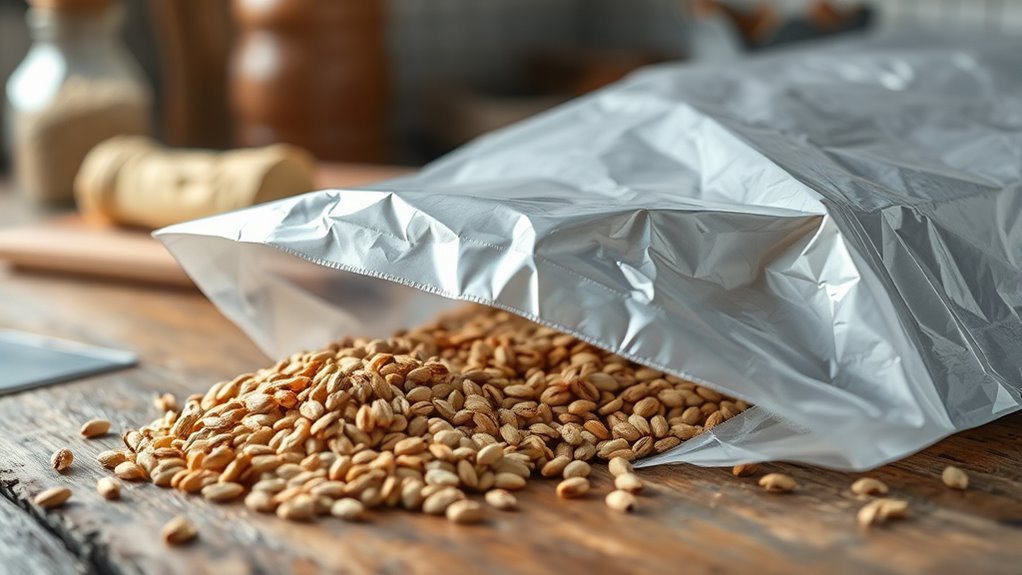
While Mylar bags offer excellent protection for many types of food, there are certain situations where you should avoid using them. For instance, storing hot foods or acidic foods above 65°C can weaken the bag and increase contamination risks.
Also, high moisture and oily foods promote bacterial growth, making Mylar bags unsuitable for these items. Additionally, using non-food-grade or damaged bags can introduce harmful substances into your food.
Consider these key points before using Mylar bags:
- Avoid short-term storage of fresh produce or items needing refrigeration, as Mylar bags alone don’t provide adequate temperature control.
- Don’t expose Mylar bags to high temperatures, high humidity, or direct environmental exposure, which can degrade their integrity and safety.
- Refrain from storing perishable or highly moist foods in Mylar bags to prevent spoilage despite the barrier.
Frequently Asked Questions
Why Did Amazon Ban Mylar Bags?
Amazon banned Mylar bags because many sellers misled buyers with uncertified, non-food-grade bags that posed safety risks. They want to protect you from counterfeit, low-quality products.
These bags often don’t meet FDA or EU food-contact standards. So, it’s really about keeping you safe and ensuring you get the quality you expect.
What Foods Cannot Be Stored in Mylar Bags?
You shouldn’t store fresh fruits, vegetables, oily or greasy foods, perishable dairy, seafood, or highly acidic items in Mylar bags. These foods can cause spoilage, degrade the bag, or need refrigeration for safety and freshness.
Seriously, Mylar bags just aren’t designed for these kinds of foods. It’s better to keep them in containers that can handle moisture and acidity or just pop them in the fridge. That way, you’ll keep your food fresh and your storage safe.
What Are the Disadvantages of Mylar Bags?
You’ll find Mylar bags can tear easily, especially if they’re thin or handled roughly. Poor sealing lets in air and moisture, which is a big problem.
Also, using non-food-grade bags risks chemical contamination. That can compromise your food’s safety and longevity. So, it’s really important to choose the right type of Mylar bag for storing your food.
How Long Can Food Stay in Mylar Bags?
Imagine opening a crisp, sealed Mylar bag years later; your food can last 10 to 30 years if you’ve packed it right with oxygen absorbers.
Freeze-dried or dehydrated foods stay fresh even longer in cool, dark storage. It’s pretty amazing how well these methods work to preserve your food over time.
Conclusion
You might think storing food in Mylar bags is always the best choice, but it’s not that simple. While Mylar bags keep your food fresh by blocking air and moisture, they’re not ideal for everything—moist or oily foods can spoil faster inside them.
So, you can trust Mylar for dry goods, but don’t rely on it blindly. Knowing when to use them makes all the difference in keeping your food truly safe.
In short, Mylar bags are great for long-term storage of dry foods like grains, beans, and dehydrated items. However, for moist or oily foods, other storage methods might be safer. Understanding the pros and cons of Mylar bags ensures your food stays fresh and safe. Always consider the type of food before choosing Mylar bags for food storage to get the best results.