How to Build Food Storage in 3 Easy Steps
To build food storage in three easy steps, start by picking a cool, dry, and accessible spot. Think of places like a pantry or a closet shelf—somewhere away from heat and humidity. This helps keep your food fresh longer and prevents spoilage.
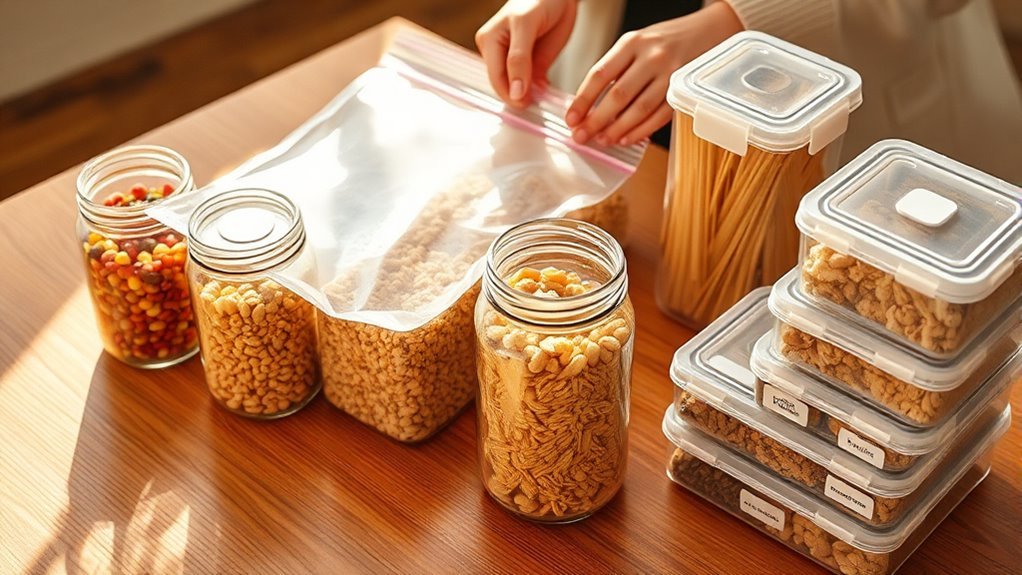
Next, use airtight containers to store your items. Planning your layout is key here. Organize so you can easily rotate food, following the “first in, first out” rule. This way, nothing goes to waste, and you always use the oldest items first.
Finally, keep a simple tracking list to update your inventory regularly. This helps prevent waste and keeps you aware of what you have on hand. Stick with these steps, and you’ll soon find tips for effortless organization and maintaining freshness. It’s easier than you think!
Key Takeaways
– Choose a cool, dry, and accessible location away from heat, humidity, and direct sunlight for optimal food storage conditions.
This helps keep your food fresh longer and prevents spoilage.
– Measure your storage space precisely, including clearance, to plan container sizes and layout that maximize organization and access.
Knowing your space well makes it easier to keep things neat and easy to find.
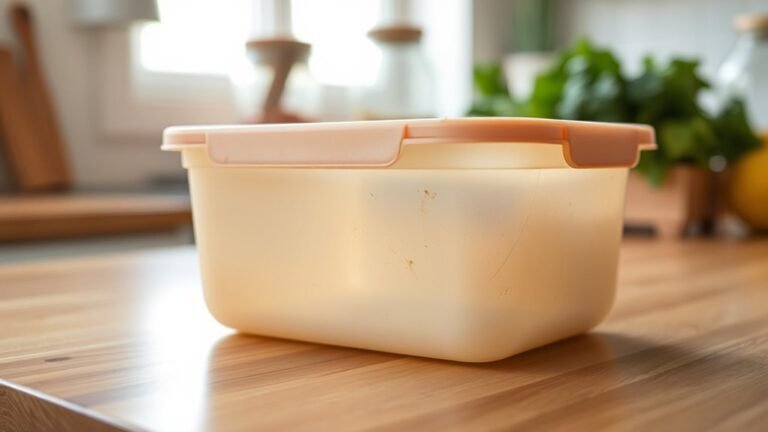
– Use airtight, sealed containers like glass jars or metal bins to protect food from moisture, pests, and spoilage.
These containers really help keep your food safe and tasty.
– Implement a “first in, first out” rotation system by placing new items behind older ones and labeling with dates.
This way, you’ll use older food before it expires and reduce waste.
– Maintain and update a detailed inventory list regularly to track quantities, expiration dates, and storage locations.
Keeping it up-to-date means you always know what you have, so nothing gets forgotten or wasted.
Find the Best Spot for Your Food Storage and Measure It
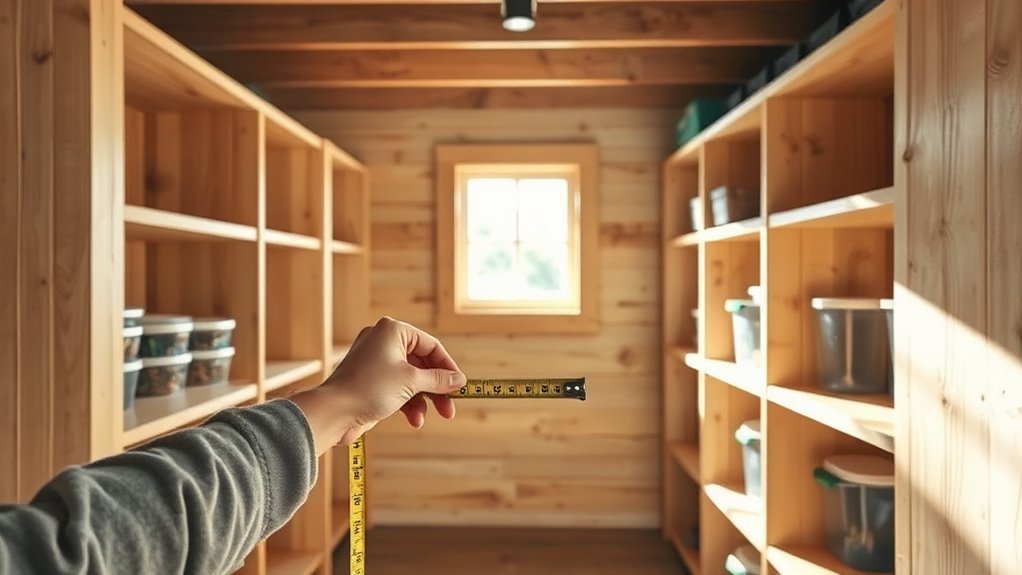
When choosing a location for your food storage, pick a cool, dry area away from heat and humidity to keep your supplies fresh for longer. Avoid places near stoves or sunny windows, as temperature extremes can spoil your Meal Prep ingredients.
Choose a cool, dry spot away from heat and sunlight to keep your food fresh longer.
Look for spaces like pantries, closet shelves, or under-bed bins that offer easy access to rotate your stock. Measure the space carefully—width, depth, and height—so you can fit storage tubs, boxes, or shelves with clearance for lids and airflow.
Use dead space wisely but make sure you can reach containers without hassle. Store food in sealed glass containers or metal bins to protect against pests and preserve freshness.
This setup keeps your food organized and ready for efficient Meal Prep. Easy, right?
Set Up a Food Storage System That Keeps Food Fresh and Rotated

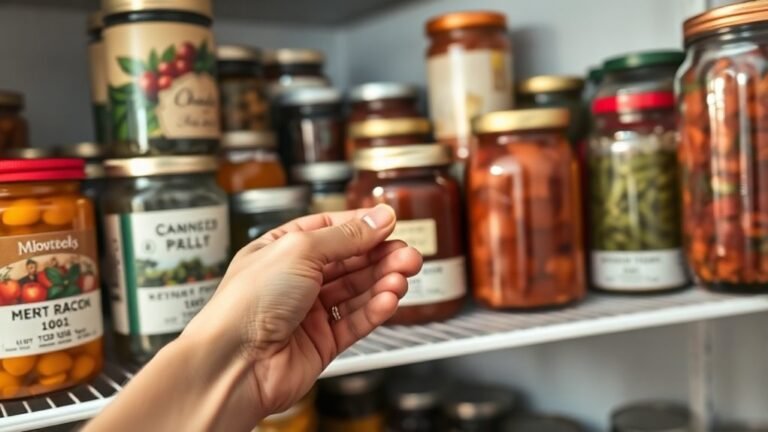
After choosing the perfect spot and measuring your space, it’s time to organize your food so it stays fresh and easy to use. To build a food storage system that keeps food fresh and rotated, apply the “first in, first out” rule by placing new items behind older ones, keeping the oldest stock visible.
Use labeled bins or shelves with buy/pack dates, plus a simple inventory list to track quantities and expiration dates. Store dry goods in airtight containers to prevent moisture and pests, and keep temperature-sensitive items away from heat or sunlight.
Don’t forget freezer storage for perishable items. It’s a great way to extend the life of foods you won’t use right away.
Make it a habit to review your inventory monthly. Pull near-date foods into meals to reduce waste.
This approach ensures you use items before their quality drops and helps you maintain a fresh, organized food supply. It really makes a difference in keeping things easy and efficient!
Make Tracking and Adjusting Your Food Storage Simple and Routine

Although managing your food storage might seem overwhelming, keeping a simple, up-to-date tracking system makes it easy to know what you have and what you need. Use a single list—either a paper note inside your closet door or a note app—and update it every 2–4 weeks.
Record each item’s quantity, purchase date, “eat-by” month, and storage location. Before buying more, check your list to avoid duplicates.
Organize your stockpile into zones and track totals in categories like pantry staples or freezer meals to spot gaps quickly. If you want reminders or updates, consider sharing your list via email address with family members.
| Item | Location |
|---|---|
| Canned Beans | Pantry Shelf 1 |
| Rice | Under-bed Tub 2 |
| Frozen Veggies | Freezer Bin 3 |
| Pasta | Closet Shelf 2 |
| Canned Tuna | Pantry Shelf 3 |
Frequently Asked Questions
What Types of Foods Are Best for Long-Term Storage?
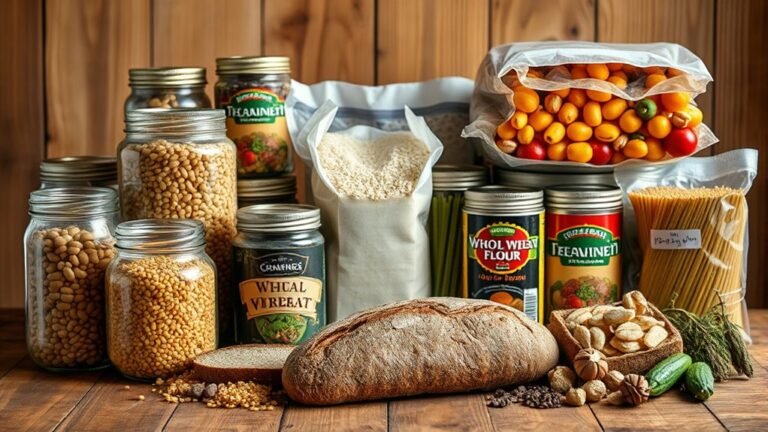
You’ll want to store dry goods like rice, beans, pasta, and powdered milk. Canned vegetables, freeze-dried fruits, and dehydrated meats also last long.
Don’t forget honey and salt—they never spoil and keep well. They’re super handy to have around for the long haul!
How Can I Protect Food From Pests and Moisture?
Don’t let pests and moisture crash the party—seal your food in airtight containers with oxygen absorbers. Store them off the ground, use bay leaves or diatomaceous earth, and keep storage areas cool, dry, and well-ventilated.
It’s really about creating the right environment. Keeping things sealed tight and in the right spot makes all the difference. Plus, those natural pest repellents like bay leaves are an easy bonus!
What Containers Are Safest for Food Storage?
You should use airtight, BPA-free plastic containers, glass jars with tight seals, or heavy-duty Mylar bags with oxygen absorbers. These options keep food fresh, block moisture, and protect against pests effectively.
It’s really all about keeping your food safe and tasty for as long as possible. So, choosing the right container makes a big difference!
How Often Should I Replace Stored Food?
You should replace stored food every 6 to 12 months, depending on the type. Rotate your stock regularly, checking expiration dates and signs of spoilage.
This helps keep your food fresh and safe for consumption. It’s a simple habit that can save you from eating food past its prime. Just take a little time to inspect your supplies every now and then!
Can I Store Food Without Refrigeration or Freezing?
Of course, you can store food without refrigeration—just invent a time machine or become a vampire!
Seriously, dry, canned, or vacuum-sealed foods stay safe without cooling, so use those methods and skip the ice age drama.
Conclusion
You might worry that building a food storage system feels overwhelming, but it’s easier than you think. Just picture opening a neat, organized space where everything’s easy to find and fresh.
By choosing the right spot, setting up a simple rotation, and tracking what you have, you’ll save time and reduce waste.
Once you get into the routine, managing your food storage becomes second nature—and your future self will thank you every time you open that pantry. Building food storage in 3 easy steps helps create a system that keeps your food fresh longer and your kitchen clutter-free. With the right location, a smart rotation method, and careful inventory tracking, you’ll enjoy less stress and more efficiency every day. Trust me, once you start, maintaining your food storage will feel natural and rewarding.