What Is Room Temperature for Food Storage?
You can consider room temperature for food storage as roughly between 68°F and 74°F (20-23°C). This range helps slow harmful bacterial growth and keeps some foods fresh.
However, you should avoid leaving perishable items out longer than two hours since bacteria multiply quickly in warmer conditions.
Non-perishables like bread do well at room temperature if stored properly. Understanding these basics guarantees your food stays safe and tasty.
Keep exploring to learn how storage choices impact food quality and safety.
Key Takeaways
- Room temperature for food storage typically ranges from 68°F to 74°F (20°C to 23°C). This range can change a bit depending on your indoor environment and the surrounding conditions.
- Foods like bread and some fruits, which aren’t perishable, can usually be stored safely at room temperature. But when it comes to perishable foods, you shouldn’t leave them out for more than 2 hours. That’s because bacteria can start growing pretty fast.
- Storing food at the right room temperature helps keep its quality intact. Still, if you’re dealing with perishables, refrigeration is really important to keep things safe and fresh.
Understanding Room Temperature and Food Safety
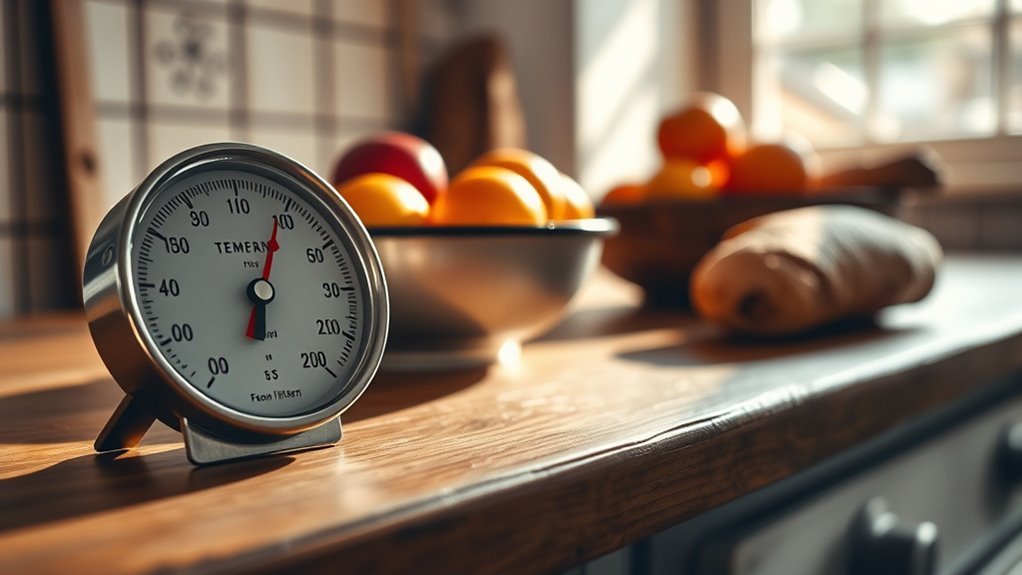
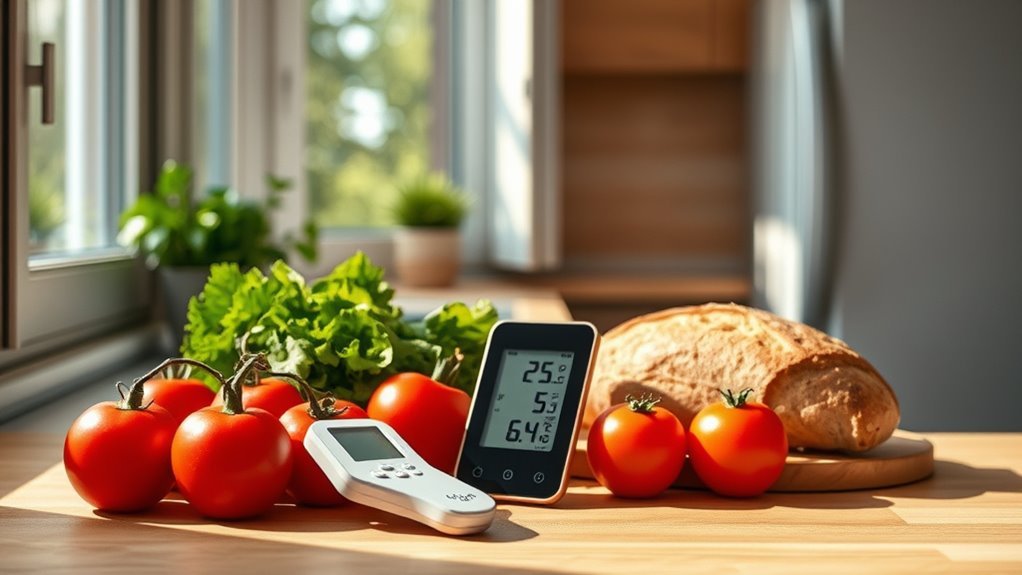
Although “room temperature” commonly refers to indoor conditions around 68-74°F (20-23°C), it varies depending on your environment and comfort.
When it comes to food safety, this range is critical because perishable foods stored at ambient temperature can quickly encourage spoilage bacteria growth. You can’t rely on room temperature for safe storage since bacteria multiply rapidly between 40°F and 140°F—the “danger zone.”
That’s why keeping perishable foods in the refrigerator, maintaining a refrigerator temperature below 40°F, is essential. Using a food thermometer helps you monitor proper temperature control and avoid foodborne illness.
Understanding that “room temperature” isn’t a fixed standard but varies helps you make safer choices when handling and storing food. Don’t underestimate how ambient temperature impacts spoilage and safety.
Best Practices for Storing Foods at Room Temperature
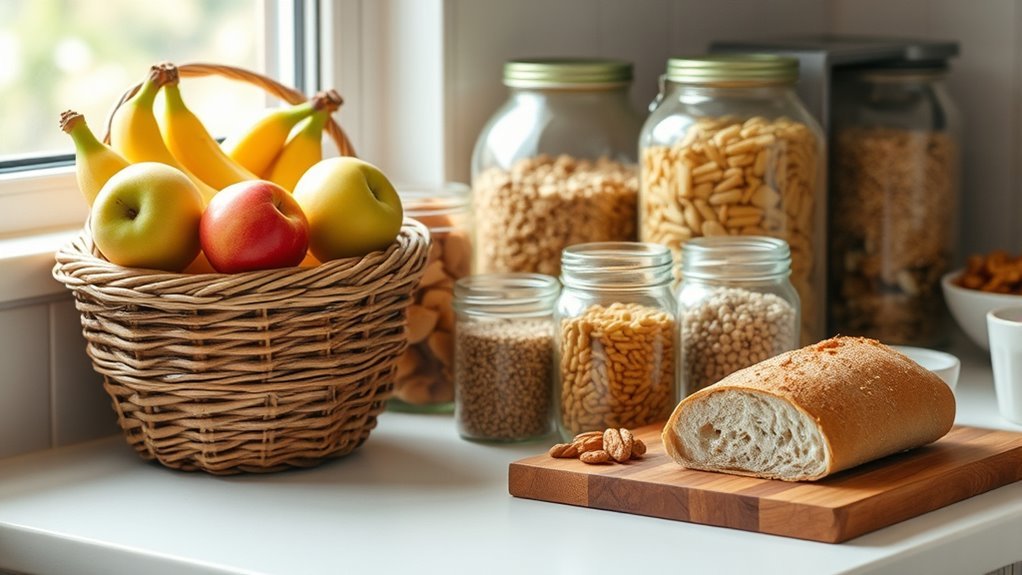
Room temperature, generally between 68°F and 74°F, suits some foods better than others. When storing food at room temperature, avoid leaving perishable foods out for more than two hours to maintain food safety.
Items like bread and certain fruits can be safely stored in a cool, dry, well-ventilated area for several days. To keep food cold and prevent spoilage, perishable items should be stored in the refrigerator as soon as possible.
Remember, food stored in the freezer or refrigerator maintains a safe internal temperature that limits bacterial growth. When storing food, always monitor the environment and prioritize keeping food in the refrigerator to reduce risk.
Proper food storage at room temperature helps preserve quality while preventing contamination and spoilage. So, it’s a good idea to be mindful about where and how you keep your food.
Frequently Asked Questions
Can Food Be Stored at 45 Degrees?
You shouldn’t store food at 45°F for long because it risks spoilage and bacteria growth. If you do, consume it quickly.
Always aim for 40°F or below to keep your food safe and fresh. That way, you’re less likely to run into any problems.
What Is the 2-2-2 Rule for Food Storage?
You’d hate wasting food but risk illness if you delay.
The 2-2-2 rule tells you to refrigerate perishables within 2 hours, or 1 hour above 90°F.
And make sure to consume leftovers within 2 to 4 days.
Is 72 Degrees Considered Room Temperature?
Yes, 72 degrees is considered room temperature. You’ll find it comfortable and standard in many homes.
It’s ideal for activities like food preparation or storage that require stable, moderate indoor conditions. So, it’s a great baseline to keep things cozy and efficient.
Is 40 Degrees Cold Enough to Store Food?
Yes, 40 degrees Fahrenheit is cold enough to store food safely. You’ll slow bacteria growth and reduce spoilage risks.
Just make sure your fridge stays at or below 40°F by checking with a thermometer regularly. That way, you’re keeping things fresh and safe!
Conclusion
Now that you know what room temperature really means for food storage, you can keep your kitchen safe and your meals fresh. Remember, leaving food out too long is like playing with fire—it can quickly turn a tasty treat into a health risk.
So, trust your instincts, follow best practices, and don’t let your food hang out where bacteria can throw a party. Staying aware of the ideal room temperature for food storage helps prevent foodborne illnesses.
Stay smart, stay safe, and enjoy every bite! By managing room temperature properly, you ensure your food stays fresh and your kitchen stays healthy.