What Are the Safest Food Storage Containers?
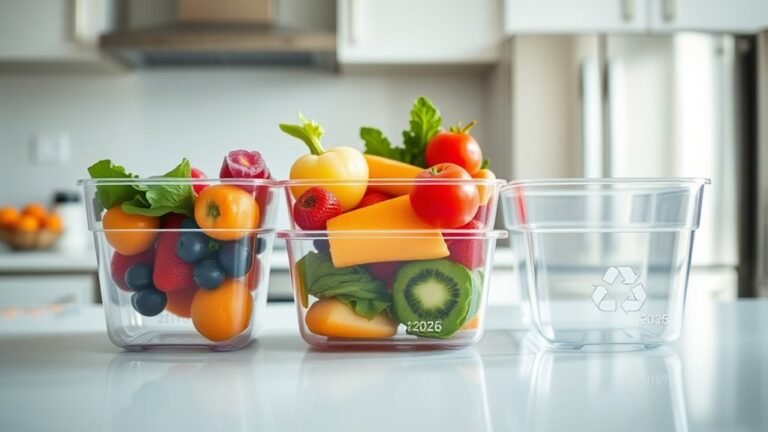
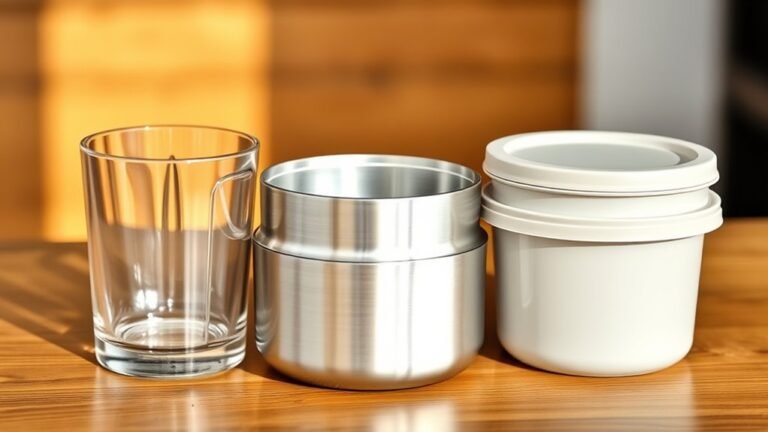
You want food storage containers made from non-toxic, temperature-resistant materials like borosilicate glass or stainless steel to keep your meals safe and fresh. These materials are great because they don’t leach harmful chemicals into your food. Plus, they handle heat well, so you can use them in the microwave or oven without worry.
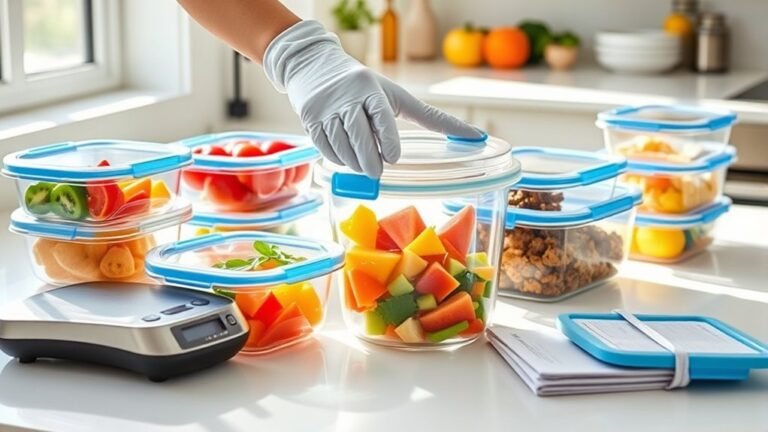
Look for airtight, leakproof lids with secure seals to prevent spills and contamination. It’s a real game-changer when you can trust your container won’t leak in your bag or fridge.
Microwave and dishwasher-safe options add convenience, making cleanup and reheating a breeze.
Durable, impact-resistant containers are a smart pick too since they can handle drops and daily use without breaking. Brands like Pyrex and Lille Home offer trusted choices that combine safety with practicality.
Understanding these key features helps you pick the best containers for your kitchen needs and safety.
Key Takeaways
- Choose containers made from glass, stainless steel, or silicone to avoid harmful chemicals and microplastics. These materials are safer for your health and the environment.
- Use airtight, leakproof lids with secure seals to maintain freshness and prevent spills. This way, your food stays tasty and your fridge stays clean.
- Opt for microwave-safe and dishwasher-safe containers for convenience and safety. It makes reheating and cleaning a breeze without worrying about harmful chemicals.
- Select impact-resistant, durable materials to withstand drops and temperature changes. This helps your containers last longer and keeps your food safe.
- Prefer trusted brands like Pyrex, Rubbermaid Brilliance, or Lille Home for reliable, non-toxic storage options. You can trust these brands to deliver quality and safety.
Criteria for Choosing Safe Food Storage Containers
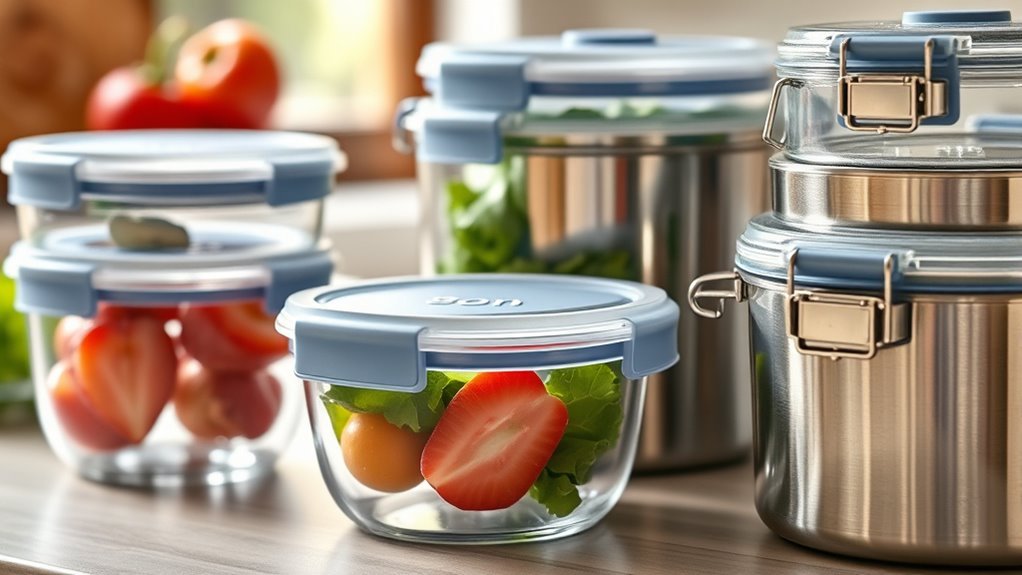
When choosing food storage containers, you should prioritize materials like glass, stainless steel, or silicone since they won’t leach harmful chemicals or microplastics into your food. Look for safe materials that are non-toxic and temperature resistant, so you can use them in the microwave or dishwasher without worry.
Secure lids with wide-channel gaskets ensure a leakproof seal, preventing spills during transport. Choosing impact-resistant containers made from these durable materials helps them withstand drops and temperature changes without cracking or warping.
Opt for containers that are both microwave safe and dishwasher safe to reduce handling and contamination risks. By focusing on these criteria—glass or stainless steel bodies, secure lids, and robust, non-toxic construction—you’ll keep your food safe and fresh while making storage hassle-free.
Top-Rated Safe Food Storage Options
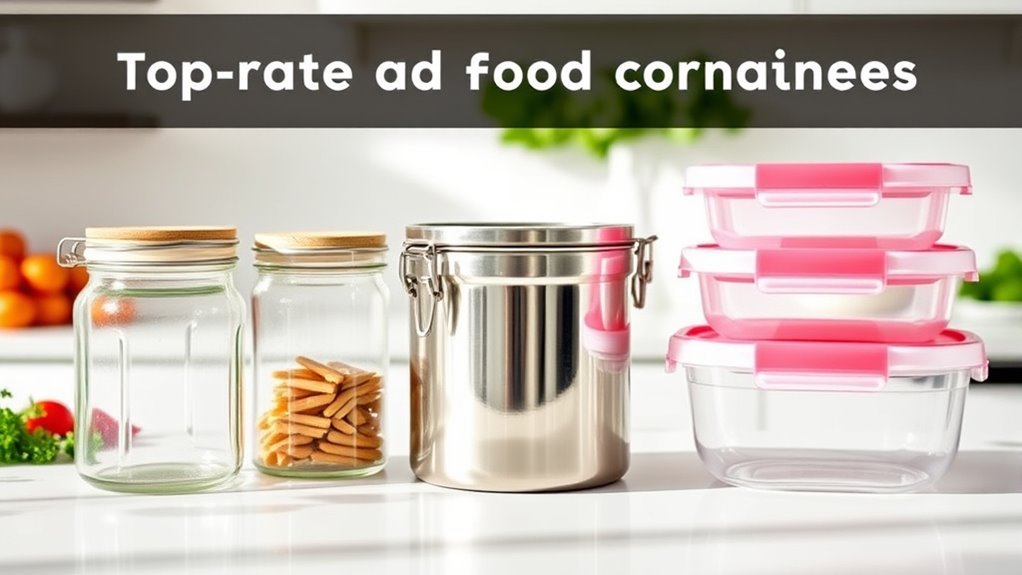
Choosing the right material and design sets the foundation for safe food storage. But knowing which brands and types stand out can make your decision easier.
Selecting the right materials and trusted brands is key to ensuring safe and reliable food storage.
When prioritizing food safety, consider these top-rated options:
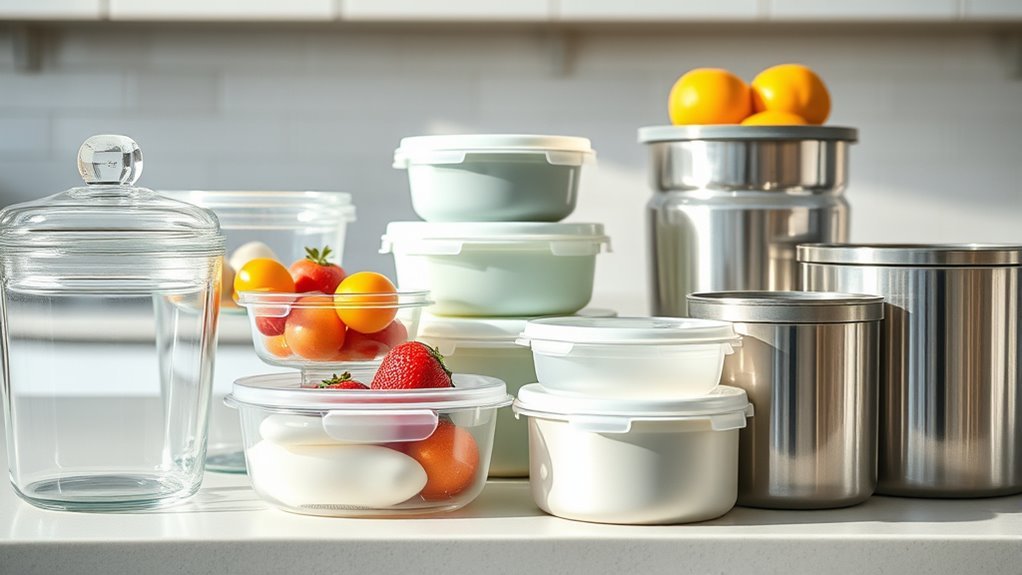
- Glass containers like Pyrex and Rubbermaid Brilliance use borosilicate glass with airtight lids. They offer leakproof, oven-safe storage with excellent seal quality.
- Stainless steel containers, such as Lille Home, provide durable, high-impact resistance alternatives to plastic containers. They’re perfect for everyday use.
- Hybrid storage systems combine glass or stainless steel with secure lids. This maximizes versatility and safety by reducing chemical exposure and enhancing seal quality.
You’ll find these choices help maintain freshness while avoiding common risks associated with plastic containers. So, they’re smart picks for safe, reliable food storage.
Frequently Asked Questions
What Is the Safest Material for Food Storage Containers?
The safest material for food storage containers is glass, especially borosilicate glass. You’ll avoid chemical leaching, stains, and odors.
Plus, it’s durable and microwave-safe, making it your best choice for healthy, worry-free food storage.
What Are the Healthiest Food Storage Containers?
You’ll find glass, ceramic, silicone, and stainless steel containers the healthiest choices since they don’t leach chemicals or toxins.
Avoid plastics, even BPA-free ones, to reduce exposure to harmful substances and microplastics in your food. It’s better to stick with materials that keep your food safe and pure.
What Are the Best Non-Toxic Food Storage Containers?
You’ll want glass, stainless steel, silicone, or ceramic containers for the best non-toxic storage. They won’t leach harmful chemicals, handle heat well, and keep your food safe without exposing you to toxins or microplastics.
Plus, these materials are super durable and easy to clean. So, you’re not just protecting your food but also making life a bit easier. It’s a win-win!
Is It Better to Store Food in Plastic or Metal?
Choosing between plastic and metal is like picking armor for your food—metal, especially stainless steel, shields better by resisting chemicals and damage.
You’ll keep your meals safer, fresher, and free from unwanted toxins.
Conclusion
So, if you’re aiming to avoid turning your leftovers into a science experiment, choosing safe food storage containers isn’t just a good idea—it’s survival. Sure, you *could* store your salad in a mystery plastic that leaks BPA like it’s auditioning for a toxic waste commercial.
Or, you could pick trusted options that keep your food fresh and your body happy. Your future self (and your taste buds) will thank you—unless you enjoy crunchy chemicals for lunch!
When it comes to the safest food storage containers, materials like glass, stainless steel, and BPA-free plastics are your best bets. They don’t leach harmful chemicals into your food, keeping both your meals and health intact. Investing in these safe food storage containers means fewer worries about toxins and more confidence in what you’re eating.
So next time you pack leftovers, remember: choosing the right container is a simple step toward protecting your health and preserving your food’s flavor. Safe food storage containers aren’t just containers—they’re peace of mind.