How to Safely Use Aluminum Foil for Food Storage
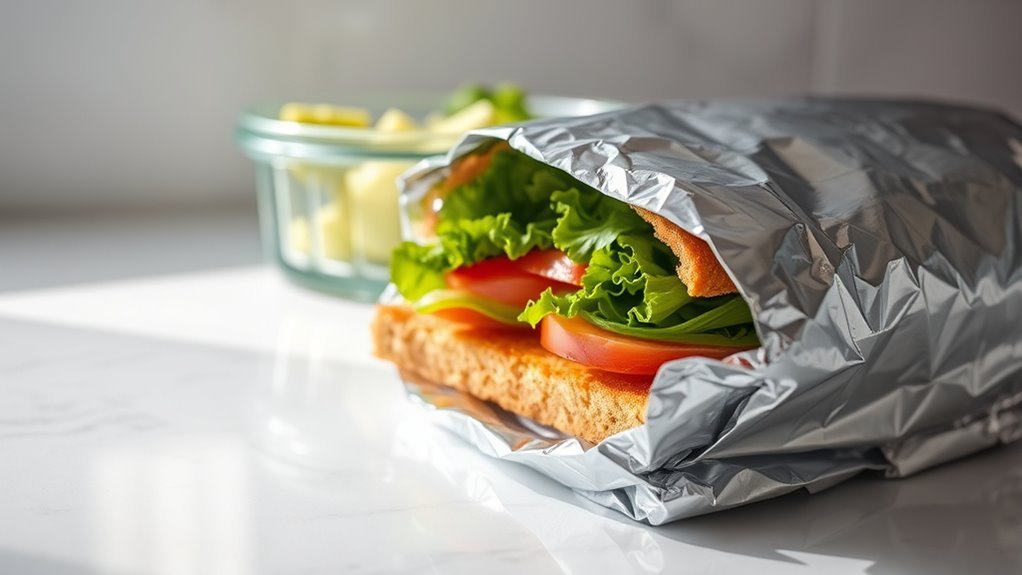
You can safely use aluminum foil for food storage by tightly pressing it against your food to create an airtight seal. This helps keep your food fresh and prevents exposure to air, which can cause spoilage.
Just make sure to avoid wrapping acidic or salty foods directly in foil, as this can cause aluminum to leach into your food.
It’s best to limit storage time to a couple of days when using foil. For longer freshness, consider double-wrapping your food or placing it inside airtight containers.
Also, always check the foil for any tears before using it to avoid contamination.
And remember, never microwave food wrapped in aluminum foil—it’s a big no-no. If you want to keep your food fresh and safe, you’ll find plenty more useful tips ahead.
Key Takeaways
– Press foil tightly against food and use the shiny side inward to create an airtight, heat-reflective seal for better food preservation.
This helps keep your food fresh longer and locks in moisture.
– Avoid wrapping acidic or salty foods directly in foil to prevent aluminum leaching and potential health risks.
Instead, use parchment paper or a container for those kinds of foods.
– Limit foil use for food storage to no more than two days, then transfer leftovers to airtight containers.
That way, you reduce the chance of any unwanted flavors or contamination.
– Inspect foil for tears or punctures before use to ensure safe and effective wrapping.
Small holes can let air or bacteria in, which defeats the purpose.
– Combine foil with plastic wrap or airtight containers to extend freshness and reduce contamination risk.
This double layer keeps your food safe and tasty for longer.
Best Practices for Wrapping and Storing Food With Aluminum Foil
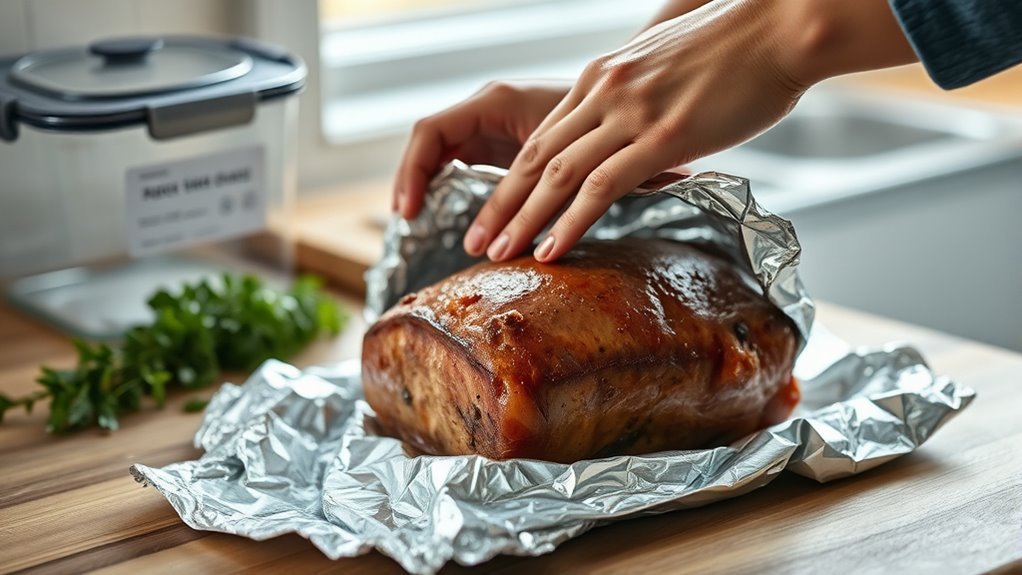
When you wrap food in aluminum foil, make sure to press it tightly against the surface to create airtight seals. This helps reduce exposure to air and bacteria.
Use aluminum foil’s shiny side inward when wrapping hot foods. It reflects heat and keeps them warm during transport or serving.
For effective food storage, avoid wrapping highly acidic or salty foods directly in foil. This can cause aluminum to leach into the food and affect the taste.
To maintain quality during longer storage, consider double-wrapping or layering foil with plastic wrap. You could also place the wrapped food in an airtight container.
Always label and date your foil-wrapped items. This way, you can track freshness and ensure proper rotation.
Following these food safety tips helps you get the most out of aluminum foil for wrapping and storage. It’s simple but makes a big difference!
Health and Safety Considerations When Using Aluminum Foil
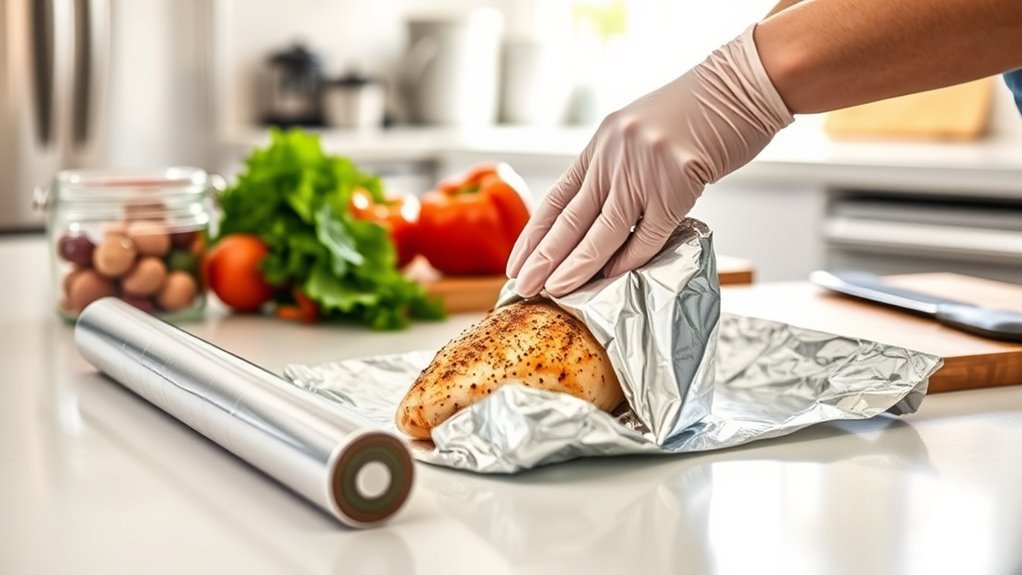
Proper wrapping and storage with aluminum foil set the stage for safe food handling, but it’s important to also consider health and safety factors tied to its use. Aluminum foil can leach into food, especially when in contact with acidic foods like tomatoes or citrus.
Aluminum foil aids safe food handling but may leach into acidic foods like tomatoes or citrus.
To reduce foil leaching, avoid wrapping these directly in foil. For short-term storage, wrap your food tightly but limit foil use to no more than two days. After that, transfer leftovers to airtight storage containers to maintain freshness and prevent contamination.
Never use aluminum foil in microwaves, as this increases chemical transfer risks. Always inspect foil for tears or punctures to ensure foil safety and comply with health standards.
Following these steps helps you protect your food and your health effectively.
Frequently Asked Questions
Is Storing Food in Aluminum Foil Safe?
Yes, storing food in aluminum foil is safe if you avoid acidic or salty foods and don’t keep it wrapped for more than two days.
Wrap food tightly and use alternative containers for long-term storage.
It’s pretty simple, just keep those tricky foods out of the foil and you’re good to go!
Does Aluminum Foil Give off Toxins When Heated?
Think of aluminum foil as a cautious friend—it can release toxins when heated, especially above 150°C or with acidic foods.
You shouldn’t overheat or store hot, salty dishes in foil to keep your meals safe. Just a little heads-up can go a long way!
What Side of the Aluminum Foil Should Touch Your Food?
You should let the shiny side of aluminum foil touch your food if you want to keep it warm, as it reflects heat better.
For cooling or absorbing heat, place the dull side inward instead.
What Foods Should Not Be Stored in Aluminum Foil?
You shouldn’t store acidic foods like tomatoes or citrus, salty or briny items such as pickles, or hot and warm foods directly in aluminum foil.
Avoid long-term storage too, as foil isn’t airtight and can degrade. It’s better to use other containers for these types of foods.
Conclusion
Just like a trusty shield in a timeless tale, aluminum foil protects your food when you use it right. Remember to avoid acidic ingredients and high heat to keep your meals safe and fresh.
By following these simple steps, you’ll preserve flavors without risking health, turning your kitchen into a story of smart, safe storage. So go ahead—wrap up your food like a hero guarding a treasure!
Using aluminum foil for food storage is a convenient and effective way to keep your meals fresh. Just be sure to avoid wrapping highly acidic foods or cooking at very high temperatures, as this can cause reactions that affect taste and safety.
When used properly, aluminum foil is a fantastic tool for preserving flavors and maintaining food quality. So, next time you reach for that roll, remember these tips for safe aluminum foil use and enjoy your meals with confidence.