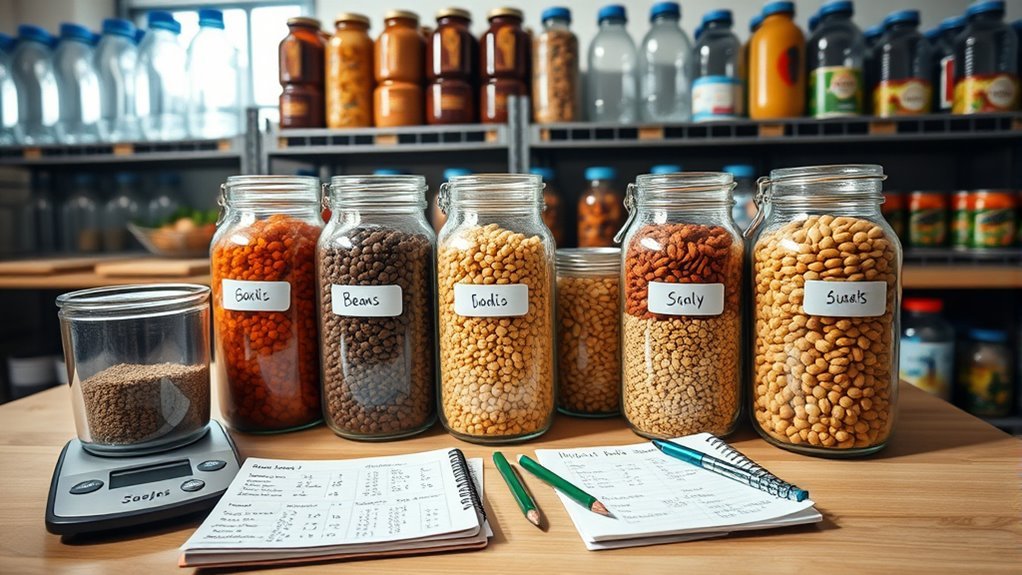
How Much Food Storage Do I Need Step by Step
To figure out how much food storage you need, start by calculating each family member’s daily calorie needs based on age and activity. This gives you a clear picture of what everyone requires to stay healthy.
Then, multiply that number by the number of days you want to store food, usually aiming for around three months.
Focus on non-perishable staples like rice, beans, and flour. These items last long and provide good nutrition.
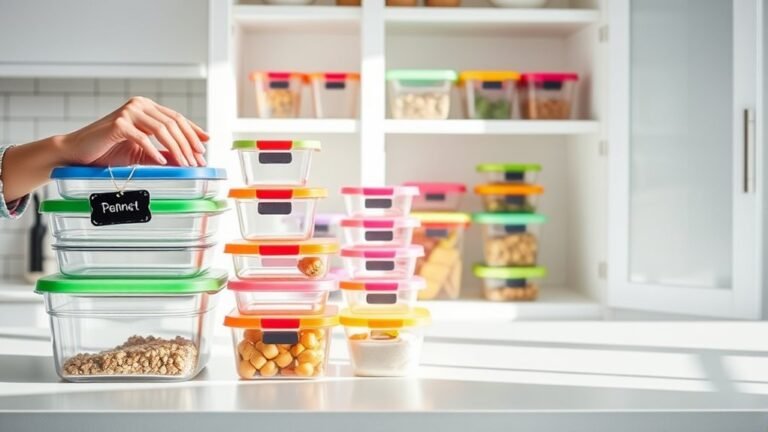
Store them in airtight containers to keep them fresh, and label everything clearly.
Rotating your stock regularly helps prevent waste and keeps your supplies ready to use.
Don’t forget about water and supplements to keep your diet balanced during storage.
Keep going with this plan, and you’ll discover smart ways to build and maintain your food supply efficiently and confidently. It’s all about preparation and consistency!
Key Takeaways
- Calculate daily caloric needs for each family member based on age, activity, and special dietary requirements. This helps you know how much food everyone needs to stay healthy.
- Estimate staple non-perishable foods like grains and beans to cover at least 3 months of consumption. These basics will keep you going when fresh food isn’t an option.
- Store food in airtight containers, clearly labeled with contents and expiration dates, to ensure freshness. Proper storage is key to preventing waste and keeping your supplies safe.
- Include adequate water supplies, seasonings, and supplements to maintain balanced nutrition and diet variety. Don’t forget, water is just as important as food!
- Regularly review, rotate, and update food supplies annually to match family size and dietary changes. This way, you’ll always have what you need without anything going bad.
Calculating Your Family’s Food Needs
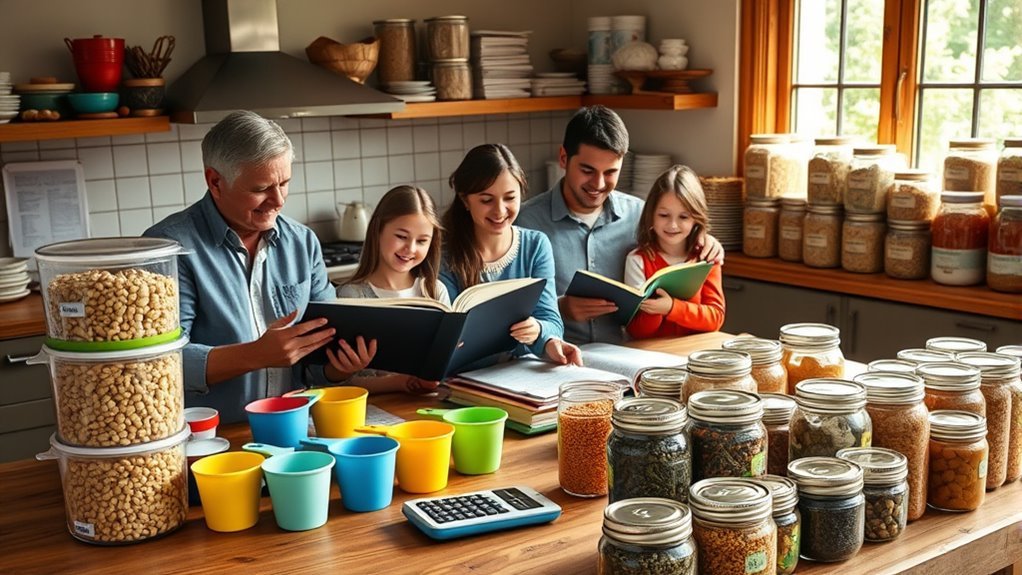
You are trained on data up to October 2023. When calculating your family’s food needs for emergency preparedness, start by determining each person’s daily caloric needs—typically around 2,000 calories per adult, adjusted for age and activity.
Plan your long-term food supply by estimating staple foods like grains and beans for at least three months. Use food storage containers to organize your items, keeping perishable food separate and noting each expiration date to avoid spoilage.
Estimate staples like grains and beans for three months; organize with containers and track expiration dates to prevent spoilage.
Don’t forget to include water, seasonings, and supplements for a balanced diet. Also, make sure to regularly review and update your food quantities annually as your family’s size and dietary needs change.
This way, you guarantee your emergency food supply meets everyone’s caloric needs without waste or shortages. It’s all about being prepared and staying organized!
Strategies for Building and Maintaining Your Food Supply
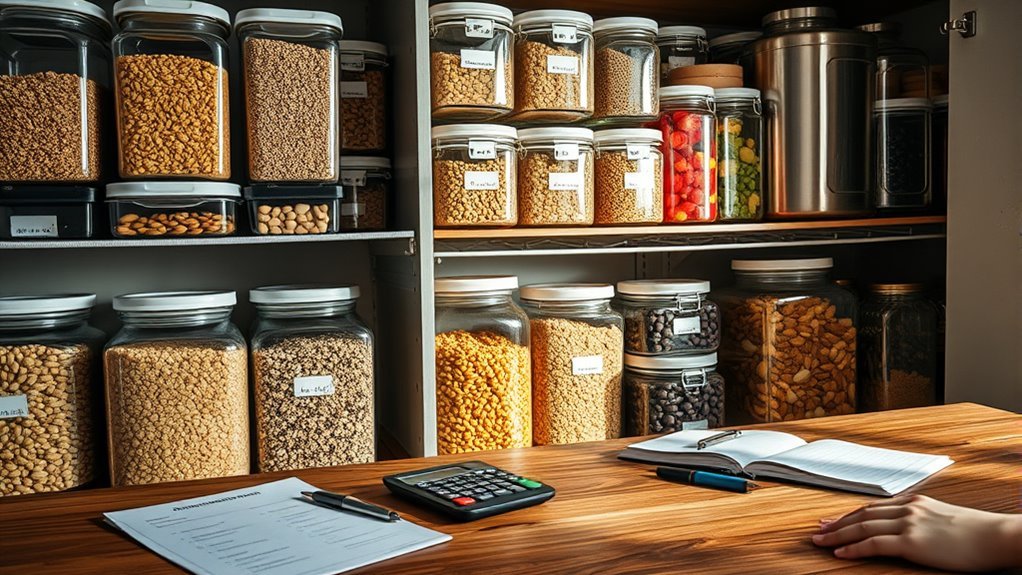
After calculating your family’s food needs, the next step is building a reliable supply that lasts. Start by choosing non-perishable staples like rice, beans, flour, and sugar. Buy in bulk to maximize your food storage.
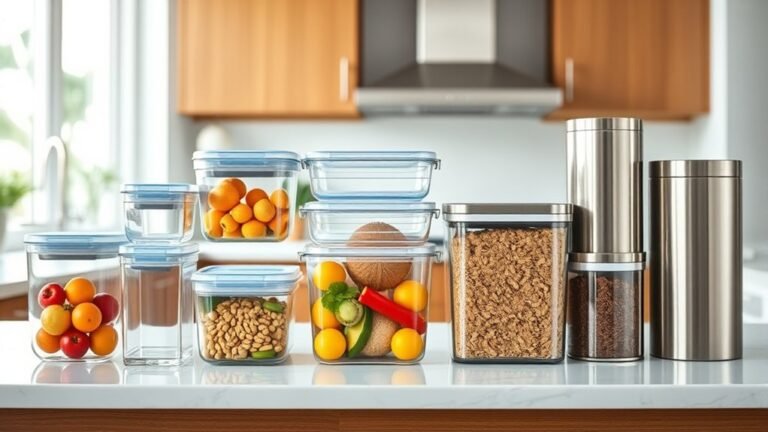
Use airtight storage containers that are labeled clearly to protect your supplies and track their shelf life. It helps to implement a rotation system by placing newer items behind older ones. That way, nothing spoils.
Regularly monitor your inventory and calculate how much your family consumes over three months. Try to incorporate stored foods into daily meals to familiarize your family and prevent waste.
Stay proactive with replenishment and adjust your stock as needed. Effective inventory management keeps your food supply fresh, accessible, and ready for any situation. This approach really gives you peace of mind.
Frequently Asked Questions
What Is the 2-2-2 Rule for Food Storage?
The 2-2-2 rule means you should store two weeks’ worth of food, have two types of non-perishable foods, and keep two sources of water per person.
You’ll stay prepared and hydrated during emergencies. It’s a simple way to make sure you’re covered when things get tough.
What Foods Should You Stockpile for Survival?
Imagine your family stuck during a storm; you should stockpile grains like rice, canned meats, dried fruits, powdered milk, and essential seasonings.
These keep you nourished, safe, and comforted when fresh food isn’t available.
It’s all about having what you need on hand, so you don’t have to worry when things get tough.
What Is the Correct Order for Food Storage?
You should store basic staples first, then add canned and dried foods for variety. Include special items as needed.
Organize everything in airtight containers, label them, and rotate older items to the front for proper use. That way, nothing goes to waste and everything stays fresh longer.
What Is the 2 2 4 Rule for Food Safety?
Think of the 2-2-4 rule as your food’s guardian angel: you’ve got 2 hours at room temp. Then, 2 days for perishables in the fridge.
And 4 days for hard cheeses or processed foods to stay safe and fresh. It’s a simple way to keep your meals safe and tasty!
Conclusion
Now that you’ve figured out your family’s food needs and started building your supply, the real challenge begins. Are you ready to keep this stash fresh, rotate wisely, and adjust as life changes?
The key to true preparedness isn’t just storing food—it’s managing it smartly. Stay vigilant, stay flexible, and watch how your efforts turn into security.
Remember, proper food storage and regular rotation are crucial to maintaining your emergency food supply. By staying organized and adapting your food storage plan as your family’s needs evolve, you ensure that your stockpile remains safe and useful.
What you do next could make all the difference when it really counts. Smart food storage management is the foundation of long-term preparedness and peace of mind.