10 Storage Benefits of Canned Food You Should Know
You’ll appreciate canned foods for their long shelf life, often lasting 1-5 years when stored properly. This makes them a fantastic option for stocking up and reducing frequent grocery trips.
Plus, canned foods preserve nutrients well without harsh chemicals, thanks to heat sterilization and vacuum sealing.
You can count on their convenience during emergencies since they need no refrigeration and resist spoilage. It’s super handy to have ready-to-eat meals or ingredients that won’t go bad quickly.
Their compact, stackable design helps you organize your pantry efficiently while reducing food waste.
Plus, cans are easy to handle and transport, which is great for camping trips or busy lifestyles. Keep exploring to uncover even more advantages that make canned food a smart, reliable choice for your kitchen and storage needs.
Key Takeaways
- Canned foods have a long shelf life of 1-5 years when stored in a cool, dry place with intact seals.
- Heat and pressure sterilization naturally preserve canned foods without chemical additives.
- Airtight vacuum seals prevent microbial contamination, keeping contents safe and fresh for extended storage.
- Compact, stackable cans optimize pantry space and allow easy, organized storage.
- Durable cans resist pests, moisture, and damage, making them ideal for transport and emergency preparedness.
Long Shelf Life of Canned Foods
Although you might overlook them, canned foods offer an impressively long shelf life, typically lasting between 1 to 5 years when stored properly. The airtight vacuum seal inside each can prevents bacteria, mold, and yeast from growing, which helps preserve the food safely over time.
To maximize this shelf life, you should practice proper storage by keeping cans in a cool, dry place away from temperature fluctuations. High acid foods like tomatoes usually have shorter shelf lives than low acid foods such as beans and meats, so checking the expiration date on each can is essential.
Also, regularly inspecting cans for dents or rust can prevent spoilage. By following these steps, you can safely enjoy canned foods even beyond their printed expiration date.
Preservation Without Chemical Additives
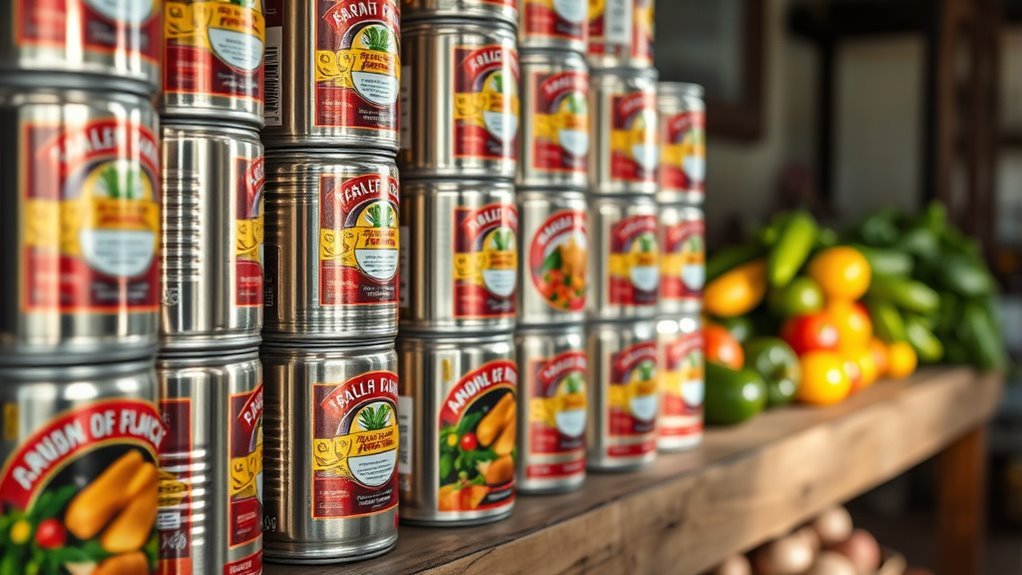
You don’t need to worry about chemical preservatives when it comes to canned foods because heat and pressure do the job naturally. The high-temperature sterilization process kills harmful bacteria and creates a vacuum seal that keeps your food safe.
This method preserves your food without added chemicals, relying on a natural, effective sterilization process. So, it’s a simple and safe way to keep your food fresh!
Heat and Pressure Preservation
When you rely on heat and pressure preservation, canned foods stay safe and fresh without any chemical additives. The canning process uses high heat and pressure to sterilize foods, effectively killing bacteria, yeasts, and molds that cause spoilage.
Temperatures usually reach between 240°F and 250°F, depending on the food’s acidity and method used. This sterilization guarantees that even low-acid items like meats and vegetables are safe by destroying dangerous pathogens such as Clostridium botulinum.
After heating, a vacuum seal forms inside the can, preventing new microorganisms from entering and spoiling your food. This combination of heat, pressure, and vacuum sealing provides long-term safety and shelf stability.
No Added Preservatives
Because canned foods undergo thorough sterilization through heat and pressure, they don’t need any chemical preservatives to stay safe and fresh. Thanks to the sterilization process, canned foods maintain food safety naturally by eliminating harmful bacteria and sealing in freshness.
This means you get products with no added preservatives, relying solely on processing techniques rather than artificial additives. As a result, canned foods offer a healthier storage option without compromising quality.
You can trust that proper sealing combined with heat treatment prevents spoilage effectively, extending shelf life without chemicals. So, when you choose canned goods, you’re opting for convenience and safety while avoiding unnecessary preservatives, making them a smart choice for your pantry.
Natural Sterilization Process
Although canned foods don’t contain chemical preservatives, the high heat applied during canning destroys bacteria, yeasts, molds, and their spores, naturally sterilizing the contents. This sterilization happens inside sealed cans or jars, which helps preserve food quality and safety without adding anything extra.
A vacuum seal forms during the process, stopping new microorganisms from getting in and contaminating the food. That’s why canned foods have such a long shelf life.
You get a preservation method that relies just on heat treatment, making canned foods both safe to eat and shelf-stable.
Here are some key points to keep in mind about this natural sterilization process:
- High heat kills harmful microbes and spores.
- The vacuum seal blocks contamination after sterilization.
- No chemical preservatives are needed.
- Food stays safe until you open the can.
- Using proper canning techniques is essential for it to work well.
Retention of Nutritional Value
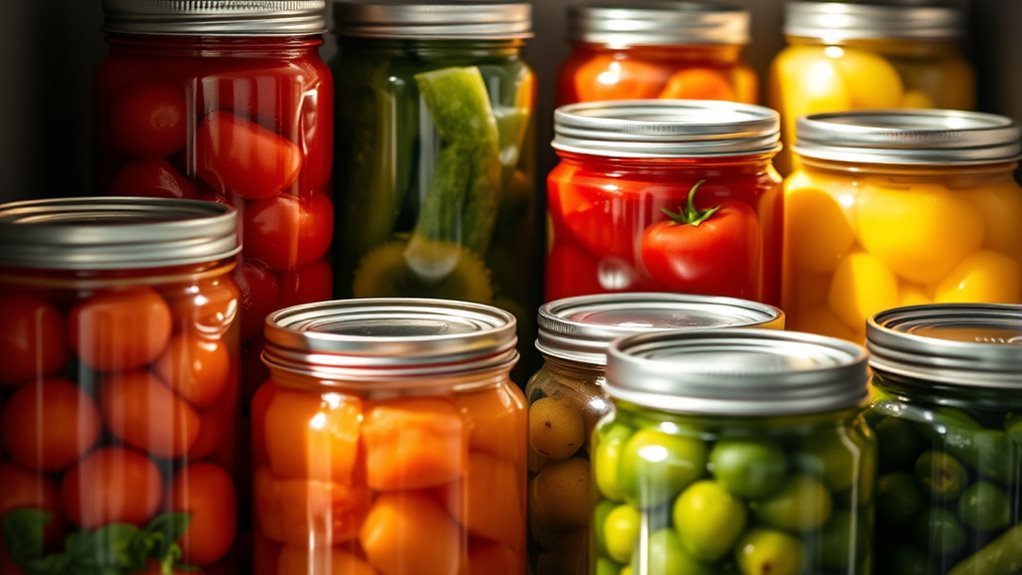
You’ll find that canned foods retain most of their original minerals and macronutrients throughout their shelf life, ensuring they stay nutritionally valuable. While some water-soluble vitamins like vitamin C and B vitamins may decrease slightly due to high-heat processing, they remain present in significant amounts.
Surprisingly, canning can boost the bioavailability of antioxidants such as lycopene in tomatoes, enhancing their health benefits. Nutrient loss is generally minimal, with most vitamins staying stable for 1-2 years when you store cans properly.
To maintain ideal nutritional value, keep your canned foods in a cool, dark, and dry environment. This careful storage helps preserve their vitamins and overall quality, making canned foods a reliable and nutritious option for your pantry.
Convenience for Emergency Preparedness
When emergencies strike, having canned foods on hand can make all the difference. Their long shelf life, typically 1 to 5 years, guarantees you won’t have to worry about food spoiling during critical times.
Canned foods are a cornerstone of emergency preparedness because they remain safe and nutritious without refrigeration. This is thanks to airtight vacuum seals that prevent spoilage and bacterial growth.
Plus, they’re lightweight and easy to transport, making them perfect for emergency kits or evacuation plans. Keeping canned goods stocked means you can prepare quick meals even when power or cooking equipment isn’t available.
- Long shelf life supports extended storage
- Airtight seals maintain food safety
- Lightweight for easy transportation
- No refrigeration needed
- Quick, reliable meal options during emergencies
Wide Variety of Food Options Available
Because canned foods come in a wide range of options—from fruits and vegetables to beans, seafood, and meats—you can easily find ingredients that suit your tastes and dietary needs. This impressive food variety means you’re not limited to just a few staples; you can explore different flavors and meal ideas year-round.
Thanks to advanced food preservation methods, many canned products are sealed at peak ripeness, preserving both flavor and nutritional value. Whether you prefer low-sodium, no-sugar-added, or organic options, there’s something for everyone.
Plus, canned foods come in various packaging types like metal cans, glass jars, and pouches, making it simple to stock up. This variety ensures you’re always ready to whip up a nutritious meal, no matter the season.
Ease of Storage in Small Spaces
You’ll appreciate how canned foods come in compact, stackable containers that fit neatly into small spaces. This makes organizing your pantry a breeze, even when room is tight.
Plus, their long shelf life means you can store them conveniently without constant rotation. It’s really handy when you don’t have a lot of space to work with!
Compact Stackable Containers
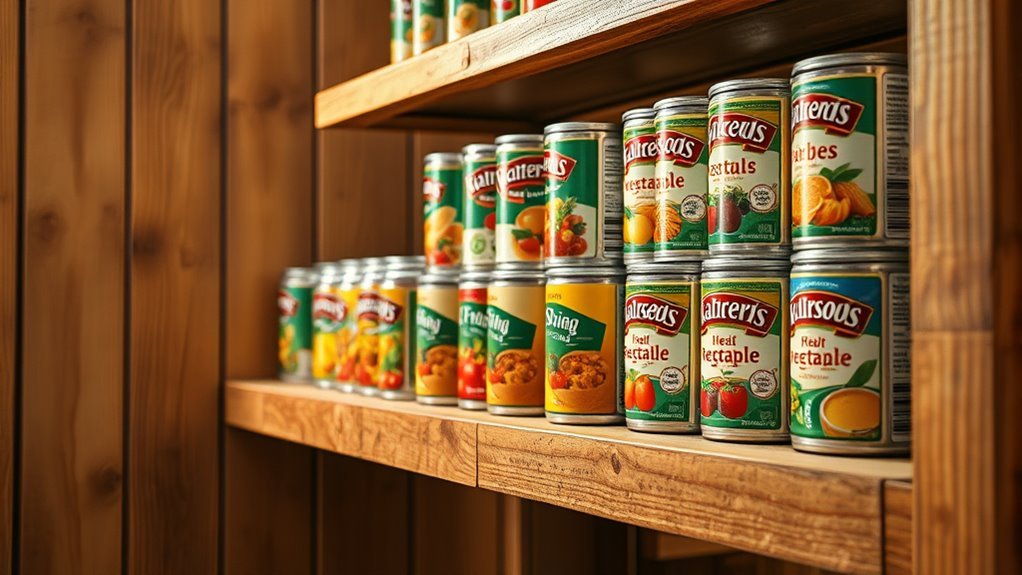
How can you make the most of limited kitchen space? Canned food comes in compact, stackable containers that optimize your storage options. Their uniform size allows you to stack them neatly on shelves, cutting down on clutter and making every inch count.
These sturdy metal cans won’t slip or collapse, so you can confidently build vertical storage. Using stackable containers helps you organize your pantry efficiently, making it simple to access and rotate your supplies.
Here’s why you’ll appreciate stackable canned containers:
- Maximize small kitchen storage
- Keep pantry shelves neat and organized
- Secure stacking without slipping
Plus, they offer easy access and inventory rotation, which is a real time-saver. They’re perfect for emergency kits and compact spaces, too.
Stackable containers truly transform your storage game. Give them a try and see how much easier your kitchen can be!
Space-Efficient Pantry Organization
When you’re working with a small pantry, organizing canned foods efficiently can make a big difference. Cans are compact and stackable, allowing you to maximize storage space without clutter.
Their uniform size and shape make organization straightforward, so you can quickly see what you have and avoid duplicates. You can store metal cans and glass jars vertically or horizontally, adapting to your shelf layout and optimizing every inch.
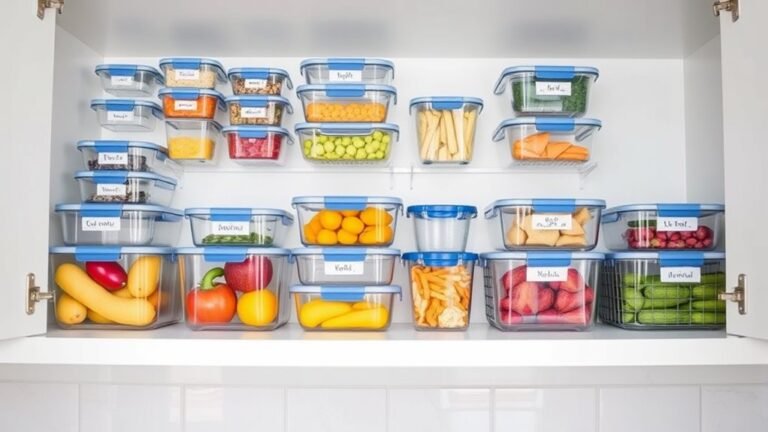
Using labeled, space-saving racks or organizers helps keep everything accessible and neat, even in tight spots. This smart storage approach not only saves room but also makes it easier to manage your inventory, ensuring your pantry stays tidy and functional despite limited space.
Long-Term Storage Convenience
Although long-term food storage can seem challenging, canned foods make it surprisingly simple and convenient. Their compact size and durable design let you store them easily in small spaces like closets or pantry shelves.
Thanks to the airtight seal, cans protect your food from spoilage and contamination, ensuring safety over time. With a typical shelf life of 1 to 5 years, canned goods are perfect for long-term storage needs.
Plus, they resist pests, moisture, and temperature changes, maintaining quality wherever you keep them.
Here’s why canned foods excel in long-term storage convenience:
- Compact packaging fits small spaces effortlessly
- Airtight seal preserves freshness and prevents spoilage
- Resistant to pests and moisture
- Long shelf life supports emergency preparedness
- Durable cans withstand temperature fluctuations without damage
Protection Against Microbial Contamination
Since canned foods undergo high-temperature processing, they effectively eliminate bacteria, yeasts, molds, and other microorganisms that could spoil your food or cause illness. This sterilization process guarantees that harmful pathogens like Clostridium botulinum are destroyed, protecting you from dangerous toxins.
After sterilization, an airtight seal is created, preventing any new microbial contamination from entering and compromising the food. You can trust that as long as the can remains intact and undamaged, the contents are safe for long-term storage.
However, if you notice any bulging or damage, it’s best to discard the can to avoid health risks. Once opened, make sure to refrigerate the food promptly and consume it within a few days to prevent microbial growth and spoilage.
Minimal Food Waste Due to Extended Usability
You’ll appreciate how canned foods last for years, giving you plenty of time to use them before they spoil. This long shelf life helps you prevent waste by keeping your inventory fresh and easy to manage.
Long Shelf Life
When you choose canned foods, you benefit from their long shelf life, which can range from one to five years. Properly stored canned foods stay safe and nutritious, helping you reduce food waste by extending usability.
The canning process uses high heat to kill bacteria and spores, ensuring your food remains edible for a long time. To get the most from your stock, use the FIFO method, which means consuming older items first.
Here’s why canned foods are a smart choice for long-term storage:
- Long shelf life supports emergency preparedness
- Properly stored cans resist spoilage
- Nutritional value stays intact over time
- Peak-ripeness preservation enhances flavor
- FIFO usage minimizes waste and saves money
With canned foods, you can confidently stock up without worrying about quick spoilage. It’s a convenient way to keep your pantry ready for anything.
Prevents Spoilage
Although fresh foods spoil quickly, canned foods drastically cut down on waste by lasting much longer. Thanks to the canning process, sealed cans prevent bacterial growth, which considerably reduces spoilage.
You can store canned foods for 1 to 5 years, depending on the product, extending their shelf life far beyond fresh alternatives. To maximize this, keep your cans in a cool, dry place and regularly check for any dents or damage that could compromise the seal.
Using canned goods within their recommended shelf life helps you avoid unnecessary food waste and ensures safety. By choosing canned foods, you’re effectively minimizing spoilage and making your food supply last.
That not only saves money but also reduces the environmental impact of wasted food. So, canned foods really are a smart choice when it comes to keeping your food fresh longer.
Easy Inventory Rotation
Since canned foods have a long shelf life of 1 to 5 years, you can easily rotate your inventory to reduce waste. By practicing proper inventory rotation, you guarantee older cans are used before newer ones, minimizing spoilage and maximizing freshness.
Keep track of expiration dates with clear labeling, and store your cans in a cool, dry place to extend usability. Regularly inspecting cans for damage helps you avoid contamination and unnecessary waste.
Follow these tips for effective inventory rotation and smarter storage:
- Use the FIFO (First-In, First-Out) method consistently
- Label cans with purchase or canning dates
- Store cans away from heat and moisture
- Check cans periodically for dents or leaks
- Discard any compromised cans promptly
This approach keeps your canned food safe and reduces food waste. It’s a simple way to make sure you get the most out of your supplies!
Simple Handling and Transportation
Because canned foods are lightweight and durable, you can handle and transport them with ease, even over long distances and rough conditions. The airtight seal and sturdy packaging protect the contents from contamination and spoilage during transit.
This means you don’t have to worry about leaks or damage, even when stacking cans tightly to maximize space. Thanks to their extended shelf life, you have flexibility in timing shipments without risking spoilage.
Whether you’re moving them across town or overseas, the sturdy cans ensure your food arrives safe and fresh. This simple handling and reliable transportation make canned foods an excellent choice for both personal storage and commercial distribution, saving you time and effort while maintaining quality.
Suitability for Diverse Culinary Uses
When you reach for canned mushrooms, tomatoes, or beans, you unseal a world of culinary possibilities that fit seamlessly into stir-fries, soups, stews, and salads. Canned foods serve as versatile ingredients that simplify meal prep while enhancing flavor and nutrition.
Their long shelf life guarantees you always have reliable options on hand for any cuisine. You can easily incorporate them into pasta sauces, casseroles, or ethnic dishes like Thai or Mediterranean recipes.
Plus, canned fruits and vegetables make quick snacks, desserts, or smoothies without compromising taste.
- Perfect for quick, nutritious meals
- Enhance diverse recipes effortlessly
- Support international culinary styles
- Ideal for emergency meal planning
- Convenient for everyday cooking
With canned foods, you enjoy flexibility and ease in the kitchen every day.
Frequently Asked Questions
What Are the 5 Healthiest Canned Foods?
The five healthiest canned foods are beans, tomatoes, pumpkin, sardines, and tuna packed in water or olive oil.
You’ll get fiber, antioxidants, and omega-3s without added salt or sugar.
It’s an easy way to boost your nutrition.
What Are 5 Important Food Storage Tips?
You should store canned foods in a cool, dry place, and always check cans for damage before use. Label them with dates so you know when you opened them.
Avoid freezing canned foods, as it can affect their quality. And don’t forget to refrigerate leftovers in airtight containers to keep them safe and fresh longer.
What Are the Best Canned Foods to Stockpile for Prepping?
You should stockpile canned beans, tomatoes, vegetables, and fruits in juice. These are great staples that provide essential nutrients and can last a long time.
Also, don’t forget protein sources like tuna and chicken. They’re super handy for quick meals when fresh options aren’t available.
Including low-sodium soups and stews is a smart move too. They offer balanced nutrition and have a long shelf life during emergencies.
What Are the 6 Healthiest Canned Foods to Keep in My Pantry?
You should keep canned beans, tomatoes, salmon, sardines, pumpkin, and spinach in your pantry. They’re packed with fiber, protein, antioxidants, omega-3s, vitamins, and minerals.
That makes them not only nutritious but also super convenient for any meal. Plus, they have a long shelf life, so you can always have healthy options on hand.
Conclusion
When it comes to storing food, canned goods really are the cream of the crop. You get long-lasting freshness, fewer worries about spoilage, and a wide variety to choose from—all without relying on harsh chemicals.
Whether you’re prepping for emergencies or just want to cut down on waste, canned food makes life easier. So, don’t put all your eggs in one basket; keep some canned essentials handy and enjoy peace of mind every day.
Canned foods offer incredible storage benefits, including durability, convenience, and nutritional retention. They’re perfect for building a reliable food reserve that can last for months or even years. Plus, having canned goods on hand means you’re always ready for unexpected situations like power outages or natural disasters.
In short, incorporating canned food into your storage plan is a smart move for anyone looking to enhance food security and reduce waste. Keep canned essentials stocked, and you’ll enjoy the benefits of long shelf life, easy storage, and consistent freshness anytime you need them.