10 Steps to Prepare Food for Long Term Storage
Start by cleaning and evaluating a cool, dry storage area to prevent spoilage. Choosing the right space is key to long-term food storage success. Make sure it’s free from moisture and pests to keep your food safe.
Next, select airtight, pest-resistant containers to protect your food. These containers help maintain freshness and prevent contamination. It’s a simple step that makes a big difference!
Pick non-perishable, nutritious items like grains, canned goods, and freeze-dried foods. These foods last longer and provide essential nutrients over time. Don’t forget to include special foods for infants or dietary needs too.
Organize supplies with the FIFO method—first in, first out.
Rotate your stock regularly and check expiration dates to avoid waste. Keeping track helps you use older items first.
Maintain an ongoing routine for inventory and replenishment. This keeps your supplies fresh and balanced. Keep following to discover more practical tips for long-term food storage success.
Key Takeaways
– Select non-perishable, nutrient-dense foods and store them in airtight, food-safe containers to prevent spoilage and pest intrusion.
It’s a smart move to choose items that can last a long time without losing their nutritional value.
– Maintain storage environments cool, dark, dry, and between 50°F and 70°F to prolong food shelf life.
Keeping your storage area just right really helps keep your food fresh for longer.
– Label containers with contents and expiration dates, and organize items using the FIFO method for efficient rotation.
This way, you always know what you have and use older items before newer ones.
– Regularly inspect and rotate stock every 3 to 6 months, discarding expired or damaged items promptly.
It might seem like a hassle, but it’s worth it to avoid nasty surprises.
– Establish a routine for replenishing supplies gradually and maintaining an organized, pest-free storage area.
Doing a little bit regularly keeps your stock fresh and ready whenever you need it.
Assess and Clean Your Storage Area
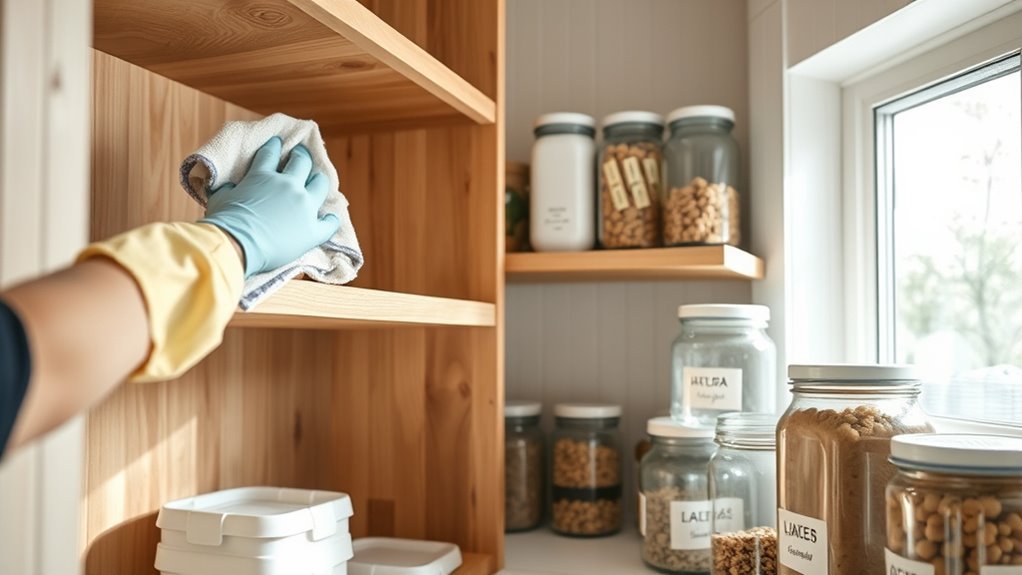
Before you begin storing food long-term, you should empty your storage area completely and discard any expired or spoiled items. Start your cleaning by vacuuming shelves and corners to remove dust, dirt, and any pest debris.
Begin by clearing your storage, removing expired goods, then vacuuming shelves and corners thoroughly.
Next, wash all surfaces with warm, soapy water and let them dry thoroughly to prevent mold growth. Once clean, take a close look around for signs of pests, leaks, or any damage.
If you spot any issues, address them right away—repair damage and seal entry points to keep pests out. Keeping pests at bay and maintaining a clean space is really important for preserving your food’s quality.
Finally, make sure the storage space stays cool, dark, and dry, ideally between 50-70°F. This helps protect your food during long-term storage, so it stays fresh and safe to eat.
Choose Appropriate Storage Containers
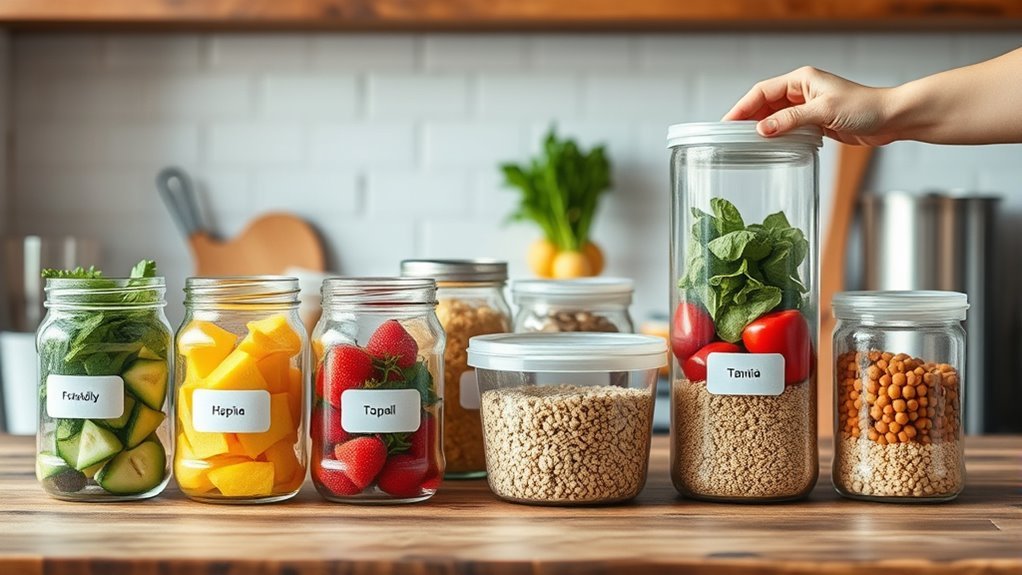
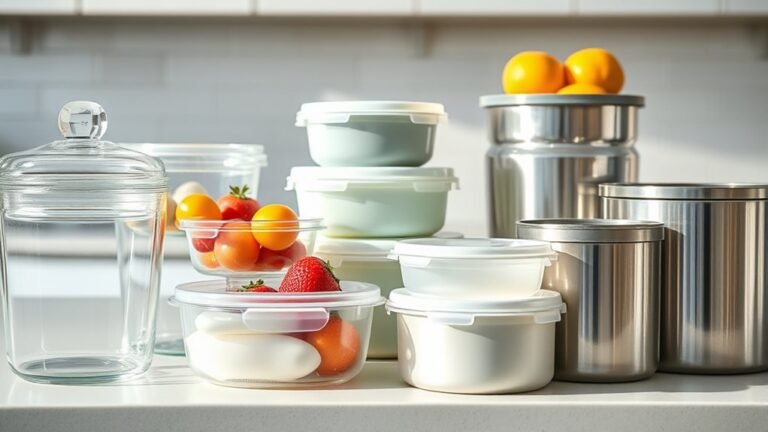
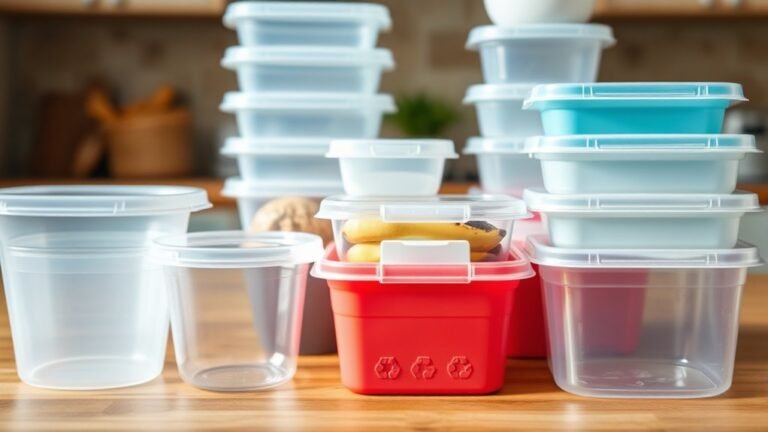
Once your storage area is clean and secure, the next step is to choose containers that protect your food from air, moisture, and pests. Use airtight containers like glass jars, food-grade plastic buckets, or metal tins to keep food fresh.
Make sure your containers are food-safe, durable, and pest-resistant. Properly sealed containers, via vacuum sealers or screw-top lids, help maintain freshness over time. Label each container with contents and expiration dates for easy rotation.
| Container Type | Benefits |
|---|---|
| Glass Jars | Airtight, food-safe, reusable |
| Plastic Buckets | Durable, sealed, pest-resistant |
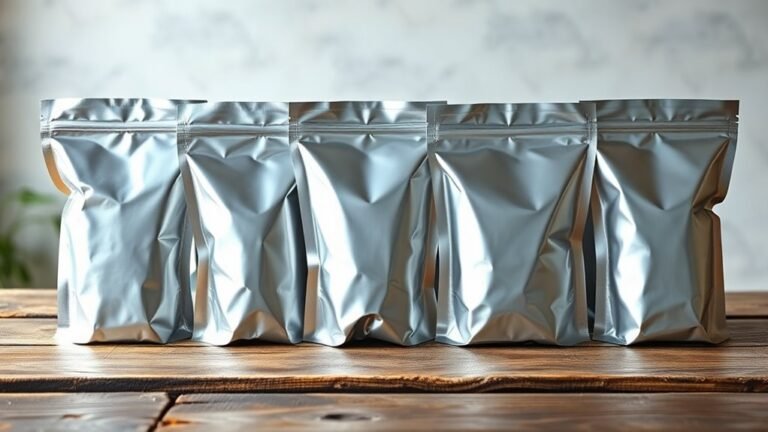
| Mylar Bags | Airtight, pest-resistant with oxygen absorbers |
Choosing the right containers guarantees your stored food stays safe and lasts longer. It’s a simple step that makes a big difference!
Select Foods Suitable for Long-Term Storage
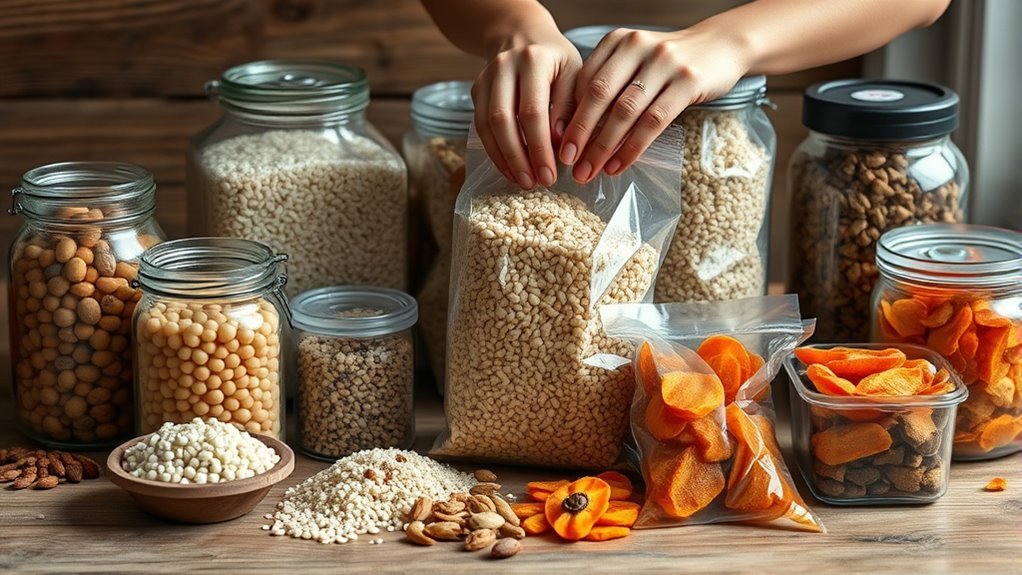
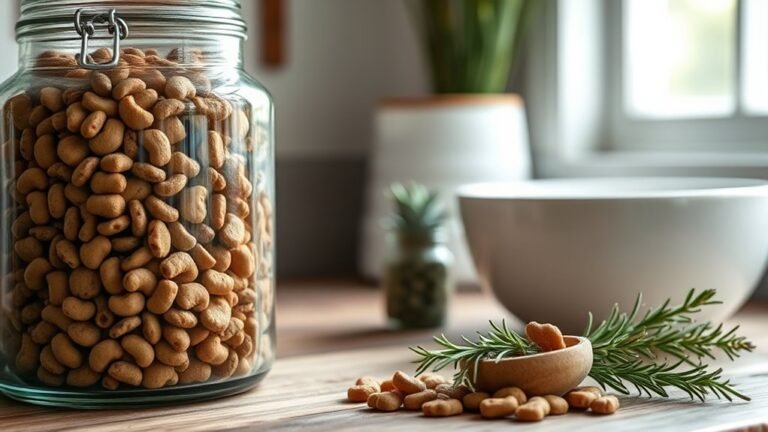
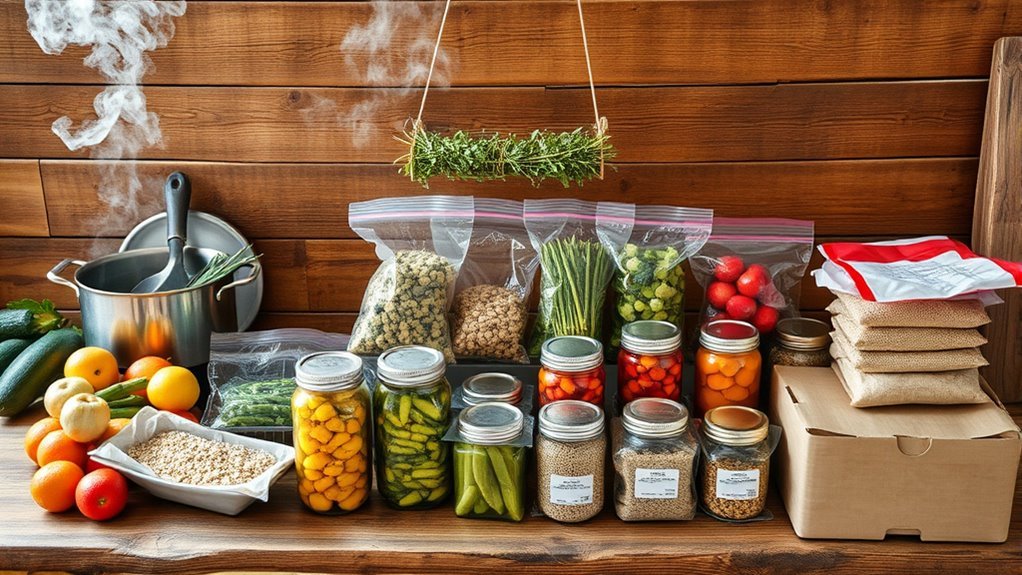
When selecting foods for long-term storage, you’ll want to focus on non-perishable items that stay fresh without refrigeration, like grains, dried fruits, nuts, and canned goods. These types of foods are great because they can last a long time without going bad.
Prioritize foods with a long shelf life, such as white rice, dried beans, and canned vegetables or fruits. It’s smart to choose dried items and canned goods that are nutrient-dense and minimally processed. This way, you keep food safety in check and meet your family’s dietary needs.
Try to avoid perishable foods like fresh dairy or meats that require refrigeration since they won’t last. Also, look for items that are easy to prepare, like pasta and cereals. They make mealtime simpler when you’re relying on stored food.
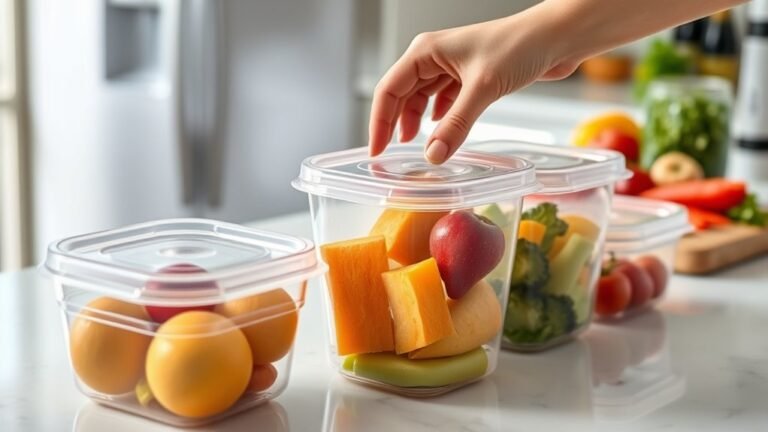
Don’t forget about proper storage containers. They help keep these non-perishable foods protected from moisture and pests. That’s key to making sure your food lasts as long as possible while maintaining quality and safety for your long-term storage needs.
Organize Foods Using the FIFO Method
Although organizing your food storage might seem tedious, using the FIFO (First In, First Out) method guarantees you use older items before newer ones. This helps reduce waste and keeps your supplies fresh.
Start by labeling containers with purchase or canning dates. That way, you can easily track expiration dates and rotate stock effectively.
Place older items at the front or top, and new ones behind them to follow FIFO. It’s a simple step that makes a big difference.
Maintain a clear inventory to monitor quantities and plan your rotation schedule. Plus, regularly check stored foods for spoilage and discard any damaged items.
| Action | Purpose | Tips |
|---|---|---|
| Label containers | Track age | Use clear, durable labels |
| Rotate stock | Use older first | Place new items behind |
| Check inventory | Monitor quantities | Update after restocking |
Store Bulk Staples and Supplement With Variety
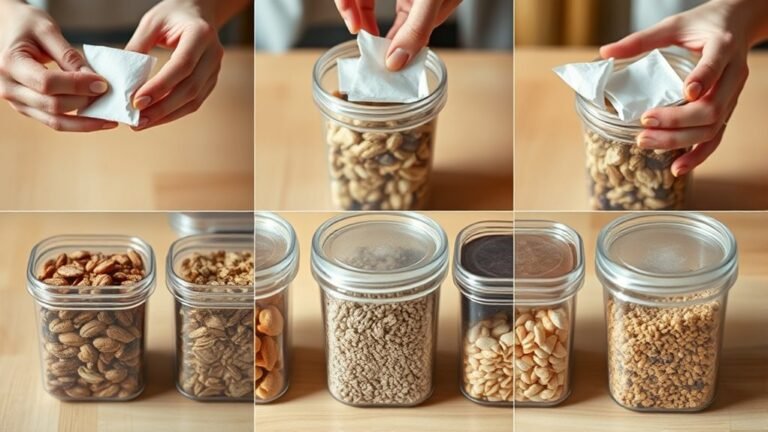
While building your long-term food supply, focus on stockpiling bulk staples like rice, beans, flour, and salt to create a reliable foundation. Store these bulk staples in airtight containers or nitrogen-packed cans to protect them from moisture, pests, and spoilage.
To keep your diet balanced and interesting, supplement your staples with canned meats, dried fruits, cereals, and freeze-dried foods from camping stores. This food variety will help prevent menu fatigue during long-term storage.
Remember to practice rotation by using the oldest items first and replenishing your stock regularly. Proper rotation reduces the risk of spoilage and ensures your supplies stay fresh.
Maintain Proper Temperature, Humidity, and Light Conditions
To keep your stored food fresh, you’ll want to maintain a temperature between 50°F and 70°F. This range helps slow spoilage and microbial growth.
Controlling humidity is just as important—aim for levels below 15% to prevent mold and pests.
Ideal Temperature Ranges
When you maintain a steady temperature between 50°F and 70°F (10°C to 21°C), you substantially extend the shelf life of your stored food.
Consistent temperature, combined with controlled humidity and minimal light exposure, creates ideal storage conditions that slow spoilage and preserve nutrients.
Avoid temperature fluctuations, as they accelerate deterioration.
Here’s a quick guide to keep in mind:
| Factor | Ideal Range | Effect |
|---|---|---|
| Temperature | 50°F – 70°F (10-21°C) | Maximizes food preservation |
| Humidity | Below 15% | Prevents mold & pests |
| Light Exposure | Low or none | Protects nutrients & quality |
Controlling Humidity Levels
Because humidity plays a crucial role in food preservation, you need to keep indoor levels between 50-60% to prevent mold and spoilage. Effective humidity control ensures your food stays fresh longer in the storage environment.
Here’s how you can manage humidity levels:
- Use dehumidifiers or silica gel packs to reduce excess moisture.
- Store hygroscopic foods in airtight, moisture-proof containers to block humidity.
- Keep storage areas well-ventilated and avoid placing containers directly on concrete floors, which can wick moisture.
- Monitor humidity levels regularly with a hygrometer to maintain ideal conditions.
Include Nutritional Supplements and Balanced Meal Options
Although long-term food storage focuses on shelf life, you’ll also want to include nutritional supplements and balanced meal options to maintain your health. Incorporate vitamin, mineral, and protein supplements like multivitamins and powdered protein to guarantee nutritional adequacy during emergencies.
Plan for at least one well-balanced meal daily by storing canned meats, grains, and vegetables that provide essential nutrients. Use dried or freeze-dried foods, which rehydrate easily and add variety to your meals.
Stock a range of whole grains, lean proteins, dairy alternatives, and supplements to cover all your nutritional bases. Effective food preservation means thinking beyond calories to include balanced meal options.
Rotate and Inspect Stored Foods Regularly
To keep your long-term food supply safe and fresh, you should rotate and inspect stored foods regularly. Checking your inventory helps prevent spoilage, pests, and waste.
Follow these steps:
- Inspect all stored foods for signs of damage, spoilage, or pests, and remove any compromised items immediately.
- Rotate your stock using the First In, First Out (FIFO) method—use older items before newer ones to maintain freshness.
- Monitor expiration dates carefully, replacing canned goods or other perishables nearing expiration with fresh supplies.
- Examine storage containers for leaks, rust, or broken seals, and reseal or replace them as needed to protect food quality.
Prepare Special Foods for Infants and Dietary Needs
How can you guarantee your infant’s nutritional needs are met during long-term food storage? Start by storing powdered or canned infant formulas, checking expiration dates regularly, and rotating your stock every 6 to 12 months.
Include shelf-stable baby foods like canned fruits, vegetables, and ready-to-eat cereals to cover essential dietary requirements. Avoid perishable items such as fresh milk or cooked meats, as they spoil quickly without refrigeration.
Use airtight containers to keep baby foods fresh, storing them in a cool, dark, pest-free area to maintain quality. Don’t forget infant-specific vitamin and mineral supplements to ensure your baby receives proper nutrition when relying solely on stored foods.
Develop a Sustainable Food Storage Routine
When you establish a consistent routine for checking, rotating, and replenishing your food storage every few months, you’ll keep your supplies fresh and reliable. Developing a sustainable storage routine guarantees you rotate foods properly and replenish stored foods before they expire.
Here’s how to maintain your system:
- Organize storage space to keep items cool, dry, and pest-free.
- Store bulk food in airtight containers to extend shelf life.
- Check your supplies every 3 to 6 months, rotating older items to the front.
- Replenish foods gradually by buying in bulk or doubling up during regular grocery runs.
Frequently Asked Questions
How to Prep Food for Long Term Storage?
You should choose non-perishable foods, use airtight containers, and store them in a cool, dark place.
Make sure to label everything with dates. This way, you can easily keep track of what you have.
Also, regularly check and rotate your stock to keep it fresh and ready for long-term use. It really helps to stay organized!
What Is the 2-2-2 Rule for Food Storage?
Think of your food as a garden: the 2-2-2 rule tells you to tend it every 2 months. Replace perishables every 2 years, and rotate stocks every 2 years to keep your harvest fresh and safe.
What Should I Stock up on if WW3 Happens?
You should stock up on non-perishable staples like rice, beans, and canned meats. Don’t forget powdered milk, freeze-dried meals, essential spices, oils, and supplements.
Use airtight containers and store everything in a cool, dark place. This will help keep your food fresh for longer.
It’s also a good idea to rotate your stock regularly. That way, nothing goes to waste and you always have something ready to eat.
What Are 10 Foods That Never Expire?
Like treasures in a vault, you’ll find honey, white rice, dried beans, lentils, salt, hard candies, sugar, powdered milk, instant coffee, and dried pasta never truly expire if stored right.
Keep them sealed and dry.
It’s pretty cool to know these foods can last forever, right? Just make sure to store them properly and they’ll be good to go whenever you need them.
Conclusion
By following these steps, you’ll turn your food storage into a well-oiled machine, ready to support you when you need it most. Remember, preparation isn’t just about stockpiling—it’s about creating a balanced, organized system that grows with you.
Keep rotating, inspecting, and planning ahead, and your pantry will become a reliable safety net. With a little effort, you’ll have peace of mind knowing your long-term food storage is as solid as a rock.
Taking time to prepare food for long term storage means you’re investing in your future security and convenience. Proper food storage ensures your supplies stay fresh, nutritious, and ready to use whenever needed.
So, stay consistent and make food preservation a regular part of your routine. This way, your emergency food stockpile will be effective, manageable, and truly dependable.