Plastic vs. Glass: 3 Key Pros and Cons for Food Storage
When choosing between plastic and glass for food storage, it’s important to consider health, environmental impact, and durability.
Plastic containers are lightweight and impact-resistant, making them easy to handle and less likely to break. However, they can sometimes leach harmful chemicals, especially when heated, which might affect your food’s safety.
Glass containers keep your food pure without any toxins and are fully recyclable, making them an eco-friendly choice. On the downside, glass is heavier and more fragile, so it can break if dropped.
Both materials have their pros and cons when it comes to convenience and sustainability.
Understanding these differences will help you pick the best option for your needs. Keep exploring to find the right fit for your food storage.
Key Takeaways
- Glass containers prevent chemical leaching, ensuring safer food storage compared to plastic’s risk of harmful toxin transfer.
- Plastic containers offer better impact resistance and flexibility, making them less prone to breakage during rough handling.
- Glass is fully recyclable without quality loss, supporting environmental sustainability better than difficult-to-recycle plastic.
- Plastic containers may discolor, warp, or become brittle over time, especially with heat exposure, unlike durable glass.
- Glass withstands high temperatures and thermal shock, allowing safe use in ovens and dishwashers, unlike many plastics.
Health and Safety Considerations
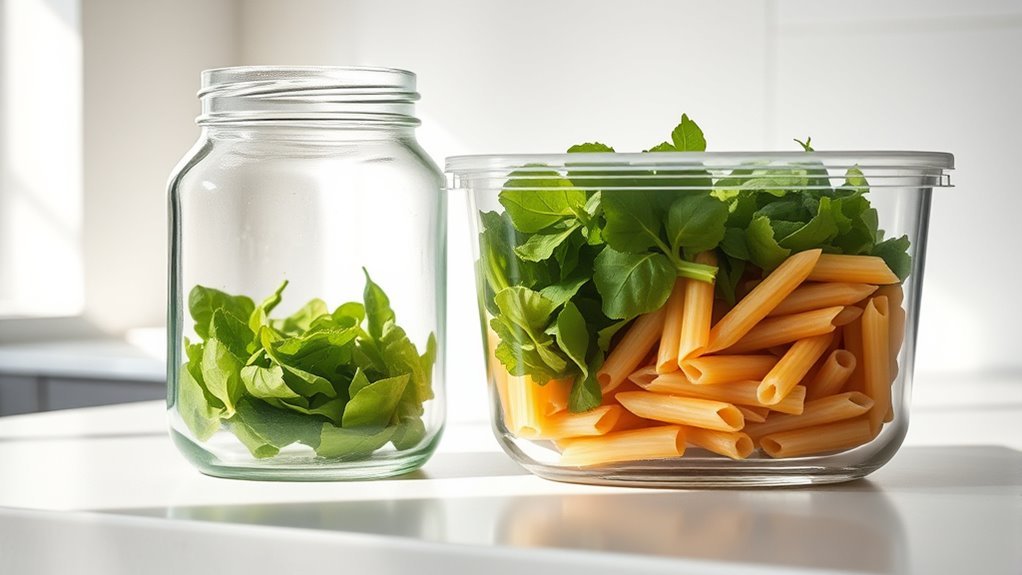
Although plastic containers are convenient, they often contain harmful chemicals like BPA and phthalates that can leach into your food, especially when heated or damaged. This chemical leaching poses significant health risks by transferring toxic substances, including endocrine disruptors and heavy metals, into your meals.
Heat exposure accelerates toxin transfer, compromising food safety and purity. In contrast, glass containers are inert and nonporous, preventing contamination and preserving food purity without the risk of chemical leaching.
Environmental Impact and Sustainability
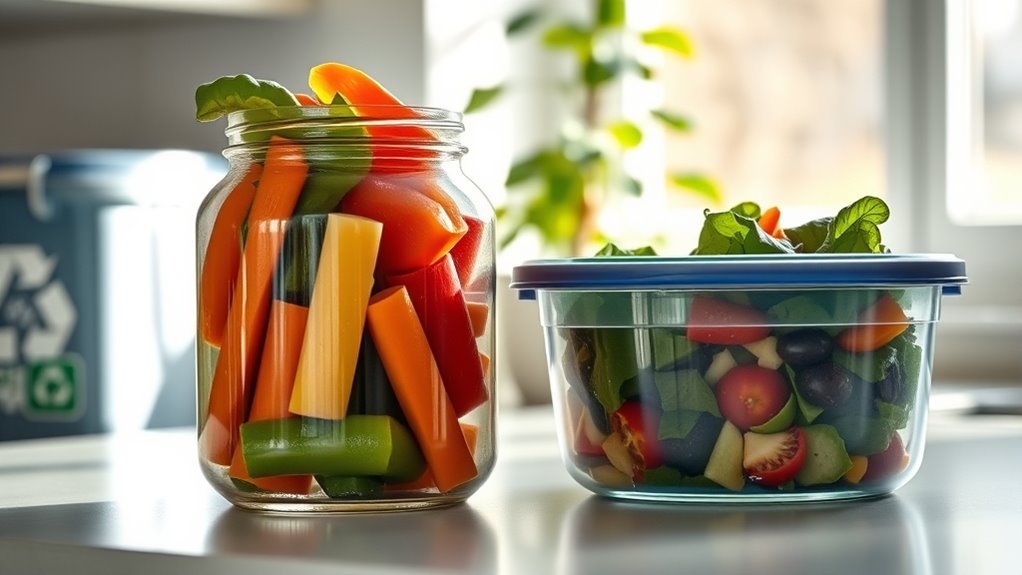
When you choose plastic for food storage, you’re indirectly supporting an industry that consumes over 17 million barrels of oil each year. Plus, it produces waste that rarely gets recycled.
This plastic waste seriously harms the environment because it’s tough to recycle and takes forever to break down. That means more plastic pollution in landfills and oceans. Glass, on the other hand, is a much more eco-friendly choice.
Here are some things to think about when it comes to sustainability:
- Plastic leads to resource depletion and sticks around as pollution for a long time.
- About 91% of plastic waste ends up in landfills, which is pretty alarming.
- Glass fits well with a circular economy since it’s fully recyclable without losing quality.
- There are biodegradable options coming up, but they’re not common just yet.
Practical Use and Durability
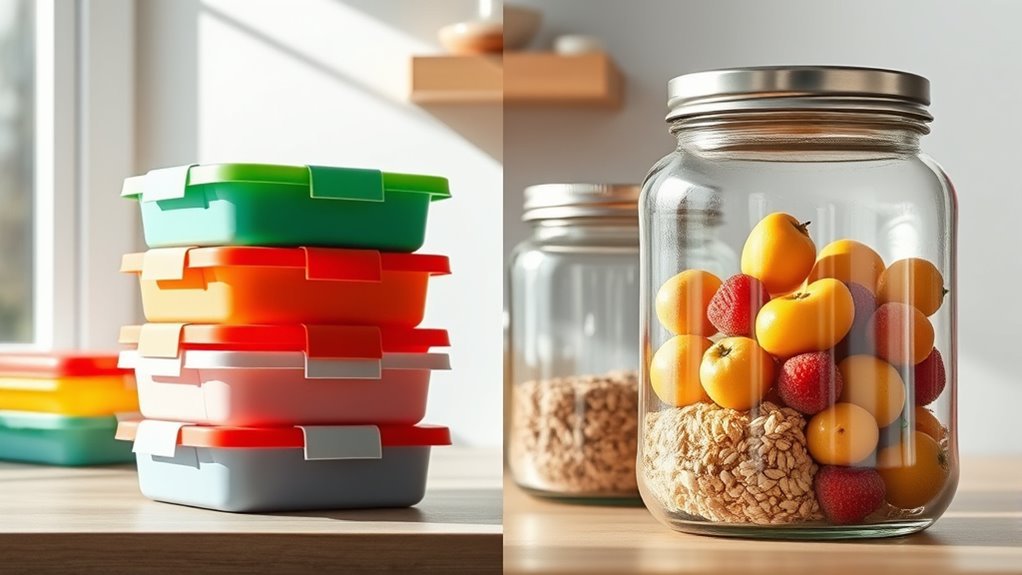
Beyond environmental concerns, you’ll want to think about how plastic and glass hold up in everyday use. Glass offers excellent durability, resisting staining and scratching better than plastic. Plastic often discolors and degrades over time, which can be a downside.
Glass resists stains and scratches well, while plastic tends to discolor and degrade over time.
However, impact resistance varies. Thicker plastic tends to withstand rough handling without breakage, while thinner glass can shatter more easily. So, it really depends on the situation.
Reinforced glass, like borosilicate, excels in thermal shock resistance. It handles temperature changes without cracking or warping, which is pretty handy. Plastic containers, on the other hand, are prone to cracking or warping when exposed to extreme heat or frequent dishwasher cycles. These conditions also cause discoloration and brittleness in plastic.
Ultimately, if you prioritize long-term durability and resistance to staining, reinforced glass is a stronger choice. But if impact resistance and flexibility matter more to you, plastic might suit you better.
Frequently Asked Questions
What Are the Pros and Cons of Glass Food Containers Compared to Plastic?
You’ll love glass containers for being toxin-free, durable, and eco-friendly, plus they’re oven-safe.
However, they’re heavier, breakable, and less portable than plastic, which is lightweight and impact-resistant but can leach harmful chemicals.
Is Glass or Plastic Better for Pantry Storage?
You might think plastic’s lighter weight makes it better, but glass is actually best for pantry storage. It won’t stain, retain odors, or leach chemicals, keeping your dry goods fresher and safer longer.
Plus, glass containers look great and are easy to clean. So, even though plastic feels convenient, glass really wins when it comes to keeping your pantry organized and your food fresh.
What Is the Healthiest Container to Store Food In?
You’ll find glass containers healthiest for storing food since they don’t leach harmful chemicals, resist odors, and stay safe even when heated.
Using glass helps protect your food and supports your long-term health effectively. Plus, they’re easy to clean and look great in your fridge!
What Should You Never Store in Plastic Containers?
Imagine plastic like a sponge soaking up unwanted chemicals—never store hot, acidic foods, oils, or spices in it.
And don’t freeze or use cracked containers; they leak toxins, risking your health every time you eat.
Conclusion
When choosing between plastic and glass for food storage, you’re weighing health, the planet, and practicality. Plastic’s convenience might tempt you, but glass offers peace of mind and sustainability.
Remember, every container you pick tells a story about your values and lifestyle. So, will you choose quick convenience or lasting care?
In the end, the best choice is the one that fits your needs while protecting both you and the world around you. Considering factors like ease of use, environmental impact, and food safety can help you decide. Whether you go with plastic or glass, focusing on mindful food storage means making choices that benefit your health and the planet in the long run.