Is Glass Safe for Food Storage?
Yes, glass is safe for food storage when it’s made from FDA-approved, lead-free materials like borosilicate or treated soda lime glass.
These types of glass resist chemicals, won’t leach toxins, and can handle temperature changes well.
Just make sure the glass you use meets safety standards and avoids harmful substances like lead or cadmium.
With the right glass, you can store food confidently without worrying about contamination.
Keep exploring to understand more about choosing and verifying food-safe glass options.
It’s always good to know what makes glass a reliable choice for keeping your food fresh and safe.
Key Takeaways
- Type I borosilicate glass is safe and FDA-approved for food storage. It offers great durability and resistance to thermal shock.
- When choosing glass for food, make sure it’s lead-free and doesn’t contain harmful substances like cadmium or arsenic.
- You can check the labels or look up the manufacturer’s info to see if the glass meets FDA standards. That way, you know it’s safe for food contact.
- Type II and III glasses aren’t as tough, but they can still be safe if they’ve been properly treated and verified.
- Just a heads-up: avoid using lead crystal glass for food storage. Over time, it can pose toxicity risks.
What Types of Glass Are Food-Safe?
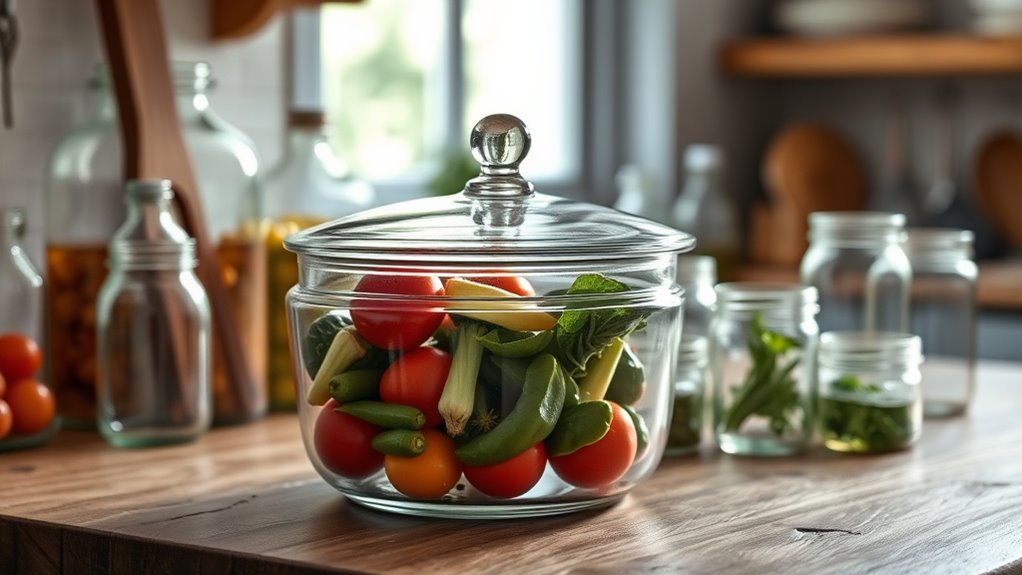
When choosing glass for food storage, you’ll want to know which types are safe to use. The most durable option is Type I glass, also known as borosilicate. This food-safe glass offers excellent thermal shock resistance, making it ideal for food storage containers that go from fridge to oven.
It’s lead-free and meets strict FDA standards, ensuring safety. Type II glass, treated soda lime, has enhanced chemical resistance due to its surface treatment, protecting against water and stains.
Untreated soda lime, or Type III, is the most common and affordable but less resistant to thermal shock. While stainless steel is another durable option, borosilicate glass stands out for clarity and safety, combining durability with chemical stability for everyday food storage.
How To Know if Glass Is Food-Safe
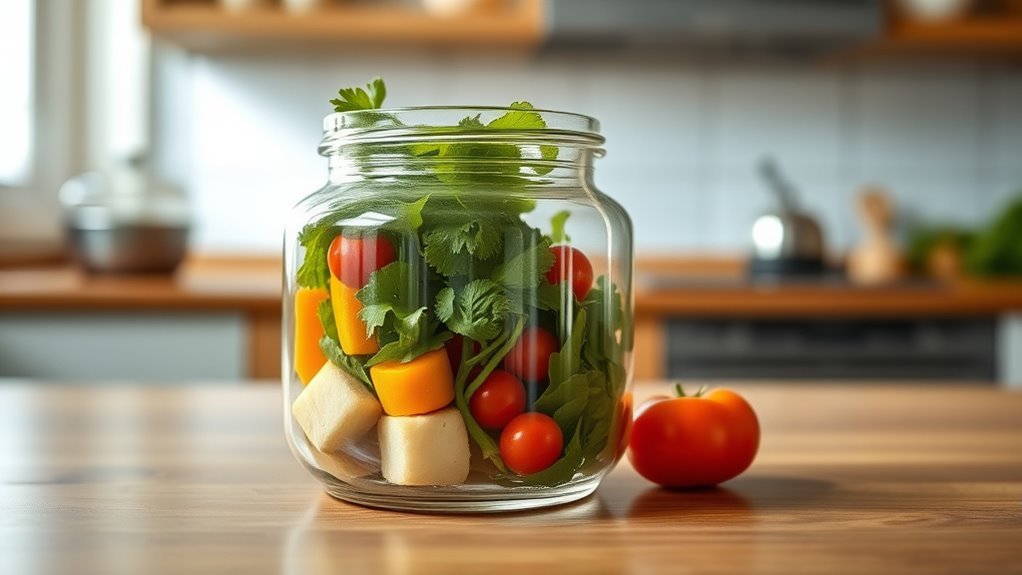
Although glass often looks harmless, you can’t rely on appearance alone to know if it’s food-safe. To be sure, check if the glass meets FDA standards. These require manufacturers to ensure safety verification through lab testing.
The key lies in its chemical composition and manufacturing process—food-safe glass must be lead-free and free from toxic substances like cadmium or arsenic. Always look for labels or documentation confirming regulation compliance for food contact.
If in doubt, contact the manufacturer directly to confirm the glass’s safety. Remember, lead crystal glass isn’t suitable for long-term storage due to potential toxicity.
Frequently Asked Questions
Is It Safer to Store Food in Glass or Plastic?
You’ll find glass safer to store food because it doesn’t leach chemicals, resist stains, and stays nonporous.
Plastic can degrade and release harmful substances, so choosing glass helps keep your food healthier and uncontaminated.
What Is the Safest Glass to Store Food In?
Borosilicate glass boasts the best safety for storing snacks. You’ll love its lasting durability, low thermal shock, and toxin-free traits.
Always check for food-grade labels and FDA approval to guarantee your glass is genuinely secure. That way, you can be confident your food stays fresh and safe.
Is All Glass Safe for Storing Food?
No, not all glass is safe for storing food. You should avoid glass with lead, cadmium, or toxic coatings.
Always check if the glass is FDA-approved or labeled food-safe before you use it for food storage. It’s better to be safe than sorry when it comes to what touches your food!
Do Glass Containers Leach Chemicals Into Food?
Glass containers typically don’t leach chemicals into food if they’re made from food-grade materials like borosilicate. That’s why they’re a popular choice for storing and heating food safely.
But you should avoid glass with lead-based decorations or plastic lids containing harmful chemicals. Especially when you’re heating food, those materials can pose risks.
Conclusion
When it comes to storing your food, choosing the right glass is like picking the perfect puzzle piece—it has to fit safely and securely. You’ll want to stick with food-safe options like borosilicate or tempered glass to avoid any harmful chemicals sneaking into your meals.
By checking for labels or certifications, you can confidently keep your food fresh and worry-free. It’s a simple step that makes a big difference in ensuring your meals stay safe.
Remember, safe glass isn’t just a choice; it’s peace of mind in every bite. Using food-safe glass for storage means you’re protecting your health while enjoying the convenience of reusable containers. So, next time you store leftovers or pack a lunch, opt for glass that’s designed for food use—because when it comes to food storage, safety should always come first.