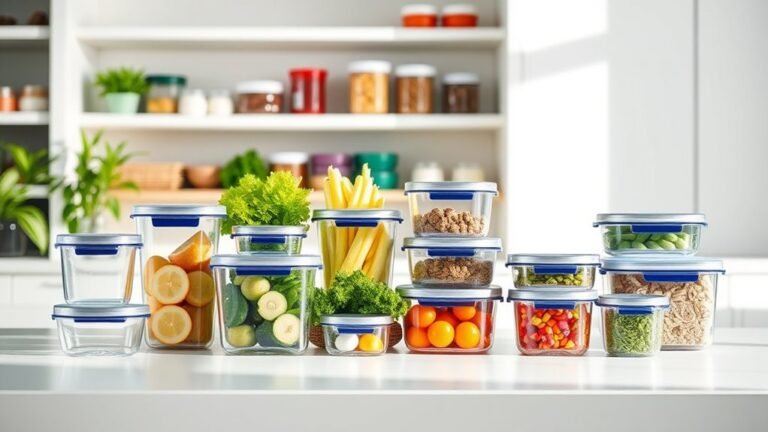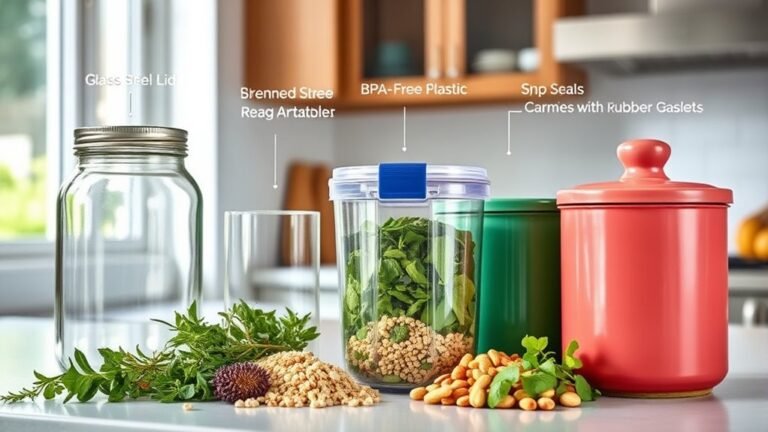
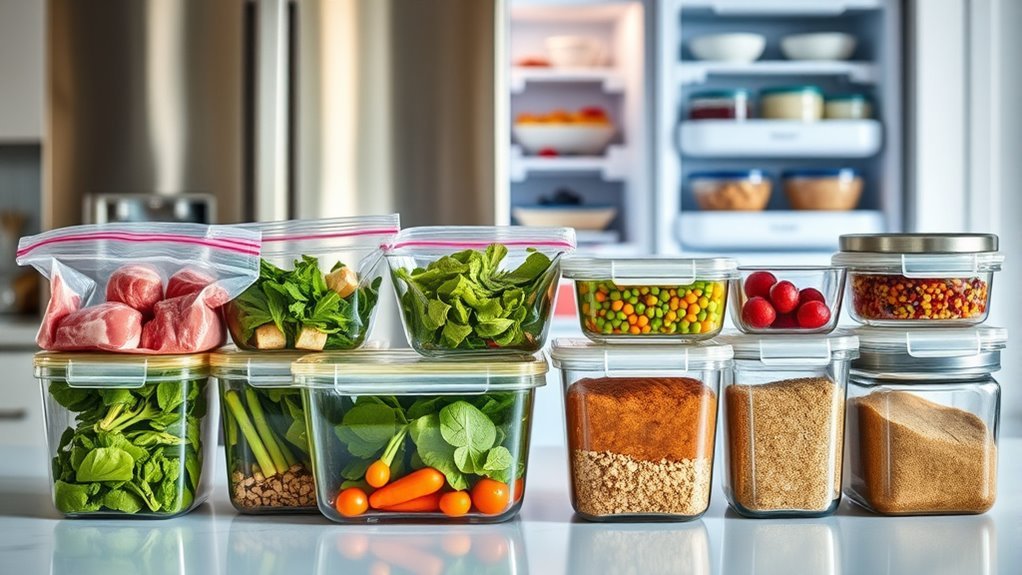
10 Steps for the Best Order Food Should Be Placed Into Storage
First, verify food freshness and check expiration dates before storing. Always make certain proper labeling with clear product names and dates.
Clean and sanitize your storage areas thoroughly.
Organize foods by their temperature needs, keeping raw items below cooked ones to avoid contamination.
Avoid overcrowding to allow air circulation.
Store high-risk foods on lower shelves and use shallow containers for leftovers to cool quickly.
Consistently monitor temperatures for safety.
Follow these steps, and you’ll be set to explore even more food storage best practices.
Key Takeaways
- Verify and label all food items with received and expiration dates before storage. This helps ensure proper inventory rotation and keeps everything safe.
- Store raw high-risk foods like poultry and seafood on lower shelves, and make sure they’re in leak-proof containers. This way, you prevent any cross-contamination.
- Place cooked and ready-to-eat foods on upper shelves. Always keep raw foods below to maintain food safety.
- Maintain proper temperature zones: frozen items at -18°C, refrigerated perishables at ≤4°C, and less perishable items on lower shelves.
- Avoid overcrowding by spacing items out. This allows air to circulate and keeps temperatures consistent throughout storage areas.
Verify Freshness and Expiration Dates
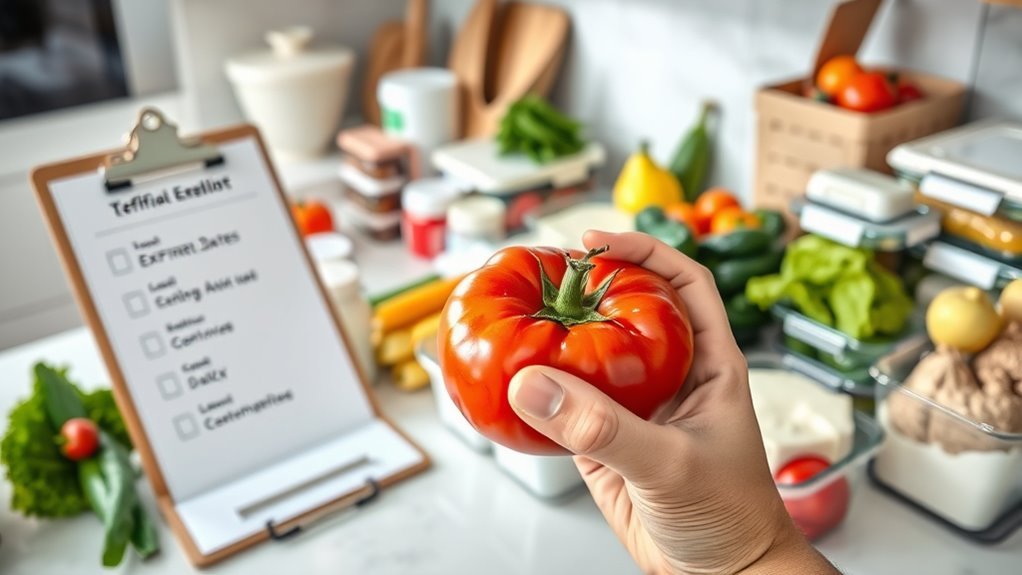
Before placing any food into storage, you should always check its freshness and expiration dates. Start by examining the expiration date carefully, and never keep items past that date to prevent spoilage.
Look for signs like off-smells, discoloration, or damaged packaging, which can compromise food safety. Make sure the packaging is intact and sealed properly to maintain product freshness during storage.
For perishable goods, confirm they arrived at the correct temperature—typically 4°C (40°F) or below for refrigerated items. Proper storage really begins with verifying these details to keep your inventory safe.
Also, record both the arrival and expiration dates to follow FIFO (First In, First Out) practices efficiently. That way, you ensure you use older products before newer ones, which minimizes waste and maximizes food safety.
Check Proper Food Labeling
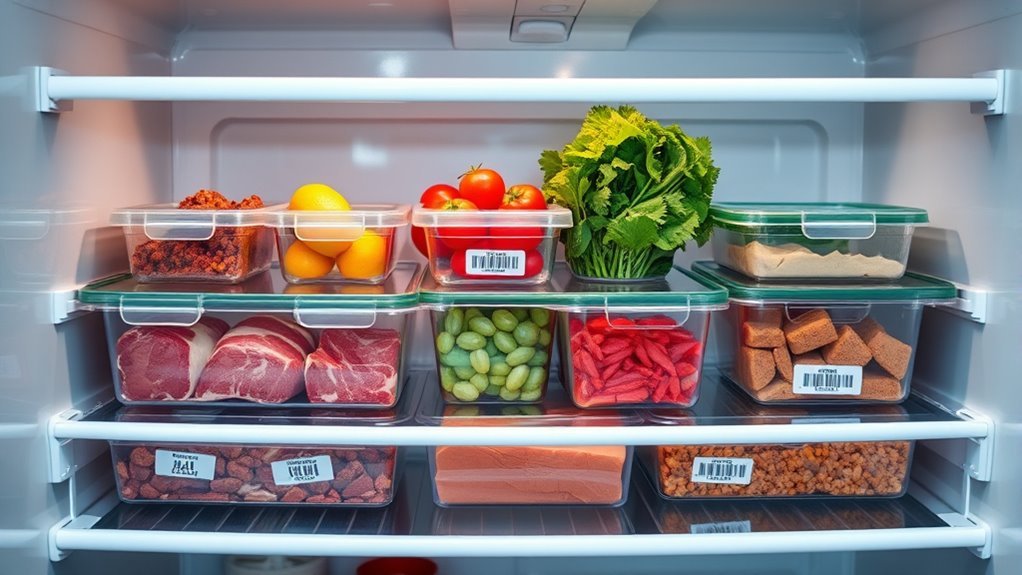
Make sure every food package has accurate labels showing the product name, expiration date, and important allergen info. You’ll want to monitor these dates closely to avoid storing expired items.
Clear labeling helps you handle food safely and keeps your inventory organized. It’s a simple step, but it makes a big difference when you’re managing lots of products.
Label Accuracy Importance
When you guarantee food labels are accurate and visible, you make it easier to track products by name, lot number, and dates. This supports proper inventory rotation and prevents using expired items.
Accurate labeling really boosts food safety by helping staff follow the FIFO system and cutting down contamination risks. Make sure labels include the product name, received date, and expiration date. Also, ensure they’re legible, durable, and placed where they’re easily seen during storage and inspections.
| Labeling Factor | Importance | Risk if Ignored |
|---|---|---|
| Product Name | Identifies item | Confusion, misuse |
| Lot Number | Tracks batch | Recall issues |
| Received Date | Monitors stock age | Improper rotation |
| Expiration Date | Ensures freshness | Food safety hazards |
Expiration Date Monitoring
Since expiration dates are essential for food safety, you should always verify that every item has a clear and accurate date before placing it into storage. Check food labels immediately upon receipt and again before storing to avoid keeping spoiled or unsafe items.
Follow the FIFO method by positioning older products behind newer ones, which helps ensure items are used before their expiration date. If you find any food with missing, unclear, or expired labels, discard it promptly to maintain safety standards.
Regularly audit your storage to confirm labels remain legible and accurate, replacing any damaged or unreadable labels right away. Monitoring expiration dates carefully keeps your storage organized, safe, and efficient, preventing waste and protecting those who consume the food.
Ingredient and Allergen Info
Although verifying ingredient and allergen information might seem routine, it plays a crucial role in safe food storage. Proper labeling ensures you make informed decisions that protect everyone’s health and maintain food safety.
Before placing items in storage, always check labels for clear ingredient lists and allergen information to avoid risks. It’s also important to verify lot codes, expiration dates, and allergen alerts to ensure accuracy.
Store allergen-containing foods separately to prevent cross-contact and contamination. Make sure the label matches the product and is legible for correct handling.
Following these steps helps you comply with regulations and maintain safe storage practices. Paying attention to allergen information and labeling isn’t just smart—it’s indispensable for protecting everyone who consumes the food.
Clean and Sanitize Storage Areas
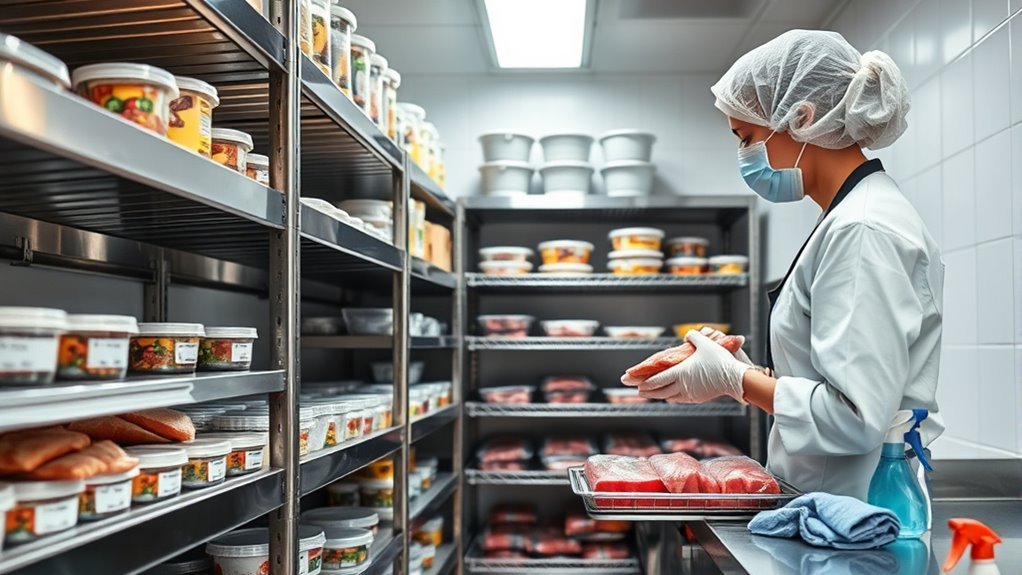
To keep your food safe and fresh, you need to clean and sanitize all storage surfaces thoroughly before placing any items inside. Start by washing shelves, containers, and corners with hot, soapy water to remove dust, food debris, and potential pests.
Thoroughly wash all storage surfaces with hot, soapy water to remove debris and ensure food safety before storing items.
Then, follow up with a food-safe sanitizing solution to eliminate bacteria and mold without leaving harmful residues. Make sure to pay close attention to hard-to-reach crevices where contaminants often hide.
After cleaning and sanitizing, rinse surfaces with clean water and let them air dry completely to prevent moisture buildup that can spoil your food. It’s also a good idea to establish a regular cleaning schedule for your storage areas.
Doing this will help maintain hygiene and keep you in line with food safety standards. This routine ensures your storage surfaces stay safe and ready for fresh food placement.
Organize Foods by Storage Temperature Needs
After you’ve cleaned and sanitized your storage areas, the next step is to organize foods based on their temperature needs. Proper food storage and temperature control are vital for the safe handling of perishable foods. This helps prevent spoilage and contamination.
- Store frozen foods like meats and fish at -18°C or below to maintain quality and safety.
- Keep perishable refrigerated items such as cooked meats and dairy on the top shelves at 4°C or below. This helps avoid cross-contamination.
- Place less perishable refrigerated foods like fruits and vegetables on lower shelves for easy access.
- Separate foods with different temperature requirements to maintain proper temperature zones. This guarantees safe handling.
Separate Ready-to-Eat and Raw Foods
Since cross-contamination poses a serious risk, you should always store ready-to-eat foods above raw items. This prevents raw juices from dripping onto ready-to-eat foods, keeping them safe.
Store raw meats, poultry, and seafood on the bottom shelves in leak-proof containers. Use dedicated or clearly labeled storage for ready-to-eat foods like salads and desserts.
Proper storage separation is key to avoiding bacterial transfer.
| Food Type | Storage Location | Purpose |
|---|---|---|
| Ready-to-eat foods | Top shelves | Prevent cross-contamination |
| Raw meats | Bottom shelves | Avoid drips and contamination |
| Containers | Leak-proof, labeled | Maintain separation and safety |
Keeping ready-to-eat and raw foods separate in storage reduces cross-contamination risks effectively. It’s a simple step that makes a big difference!
Apply the First In, First Out (FIFO) System
Keeping foods properly separated in storage also means managing inventory wisely. Applying the first in, first out (FIFO) system helps you use older items before newer ones. This reduces waste and prevents spoilage due to expiration.
Follow these steps to maintain FIFO effectively:
- Label all food with received and expiration dates as soon as it arrives.
- Store older products at the front of shelves, placing newer items behind them.
- Regularly rotate stock by moving older inventory forward and newer stock back.
- Discard any items past their expiration date or showing spoilage, regardless of placement.
It’s really a simple system once you get the hang of it. Just keep things organized, and you’ll save money and avoid unnecessary waste.
Avoid Overcrowding to Ensure Air Circulation
Although it might be tempting to pack as much as possible into your storage, overcrowding restricts airflow and leads to uneven temperatures that can spoil your food.
Proper air circulation is essential to maintain consistent temperature throughout your storage, preventing bacterial growth and keeping food fresh longer.
Always leave enough space between items to allow cold air to flow freely.
Here’s a quick guide to avoid overcrowding:
| Issue | Effect on Food Storage |
|---|---|
| Overcrowding | Blocks air circulation |
| Poor air circulation | Causes uneven temperature |
| Tight packing | Increases spoilage risk |
Store High-Risk Foods on Lower Shelves
Why should you store high-risk foods like raw poultry and seafood on the lower shelves? It’s all about preventing cross-contamination and maintaining safe temperature control. Here’s why you should:
Raw meat juices can drip, so placing them on lower shelves stops contamination of ready-to-eat foods above. Plus, lower shelves tend to be cooler and more stable, helping you keep within safe storage times.
Keeping raw meat and seafood in leak-proof containers minimizes risks of spreading bacteria. And organizing storage with cooked foods on top and raw high-risk foods below ensures safer handling and reduces health hazards.
Use Shallow Containers for Leftovers
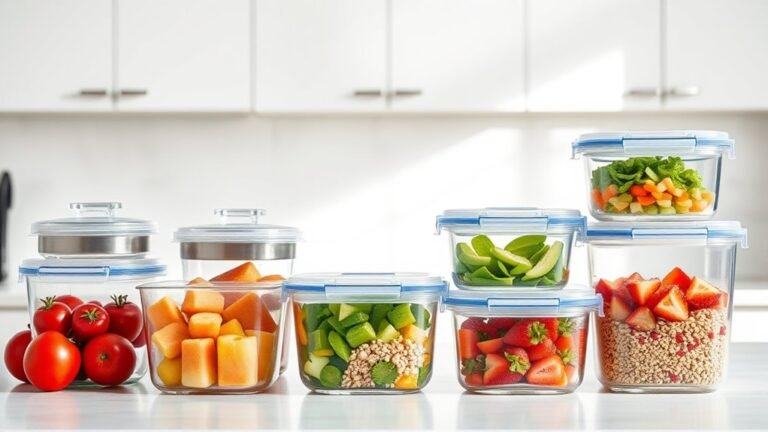
After organizing high-risk foods safely on lower shelves, you’ll want to focus on how you store your leftovers. Using shallow containers is key for food safety and proper storage. They allow your leftovers to cool rapidly, preventing bacteria growth by letting heat dissipate quickly.
Shallow containers also promote even heat distribution when reheating, helping food reach the safe internal temperature of 165°F. Dividing leftovers into these containers supports the recommended 3-4 day storage duration, reducing spoilage.
Plus, properly filled shallow containers improve air circulation inside your fridge, aiding consistent temperature control. To boost food safety further, label each container with the date and contents.
This helps you follow FIFO practices, minimizing waste and ensuring your leftovers are safe to eat.
Monitor and Maintain Appropriate Storage Temperatures
You’ll want to keep your refrigerator at 4°C (39°F) or below and your freezer at -18°C (0°F) or colder to keep food safe. Using a reliable, calibrated appliance thermometer helps you monitor these temperatures accurately.
Make sure not to overload your fridge, so air can circulate and avoid temperature fluctuations. This way, your food stays fresh and safe for longer.
Ideal Refrigerator Temperatures
Although it might seem simple, maintaining the ideal refrigerator temperature is essential to keeping your food safe and fresh. Proper handling of food stored in your fridge depends heavily on consistent temperatures to prevent bacterial growth and ensure food safety.
Here’s how to manage it effectively:
- Keep your refrigerator temperature at or below 40°F (4°C) to slow bacterial growth.
- Store frozen foods at 0°F (-18°C) or lower to preserve quality.
- Avoid overloading shelves to maintain proper airflow and even cooling.
- Place a calibrated thermometer near the fridge’s center, away from the door, to monitor accurate temperatures.
It’s pretty straightforward once you get the hang of it! Just a little attention goes a long way in keeping your food fresh and safe.
Using Appliance Thermometers
When you use a calibrated appliance thermometer, you can accurately monitor your refrigerator’s temperature to guarantee it stays at or below 4°C (40°F). Place the thermometer in the warmest area, usually near the door or center, to get the most accurate temperature reading.
Consistent monitoring is key, so check and record the temperature at least twice daily. If your thermometer shows inconsistent readings or gets damaged, replace or recalibrate it to maintain accuracy.
Also, keep the thermometer probe clean and sanitized to avoid contamination and ensure precise measurements. By regularly using a reliable thermometer, you maintain proper cold storage conditions, helping to keep your food safe and fresh for longer.
Avoiding Temperature Fluctuations
To keep your food safe, maintain consistent temperatures by monitoring and controlling fluctuations in your storage units. Temperature fluctuations can cause bacterial growth, so it’s essential to keep refrigerated foods at or below 4°C (40°F) and frozen foods at or below -18°C (0°F).
Here’s how to avoid temperature fluctuations effectively:
- Use calibrated thermometers placed in various refrigeration areas to monitor temperatures regularly.
- Record temperature readings to track any deviations and address them promptly.
- Avoid opening refrigerator doors frequently or leaving them open too long to maintain stable temperatures.
- Store hot foods above 60°C (140°F) to keep them out of the danger zone and maintain proper hot-holding temperatures.
Just keep an eye on those temperatures and don’t let the fridge doors stay open for too long. It really helps keep your food fresh and safe!
Frequently Asked Questions
What Is the Correct Order for Food Storage?
You should store ready-to-eat foods on top, then cooked items, followed by raw seafood and whole cuts.
Next, place ground meats, and finally raw poultry at the bottom. This helps prevent cross-contamination and guarantees food safety.
What Are the Correct Procedures for Storing Food?
You’ll want to store raw meats below fresh veggies to avoid drips. Keep everything chilled at 4°C or below.
Label foods clearly. Also, practice FIFO—using older items first—to keep your kitchen safe and organized every day.
What Is the Correct Order for Food Storage Hierarchy?
You should store ready-to-eat foods on top, cooked foods next, then raw seafood and whole cuts.
After that, put ground meats below those, and finally raw poultry at the very bottom.
This order helps prevent cross-contamination and keeps everything safe.
It’s a simple way to organize your fridge and make sure your food stays fresh and healthy!
What Are 5 Important Food Storage Tips?
Imagine your chicken drips on veggies, causing illness. You should store raw meat below ready-to-eat foods.
Keep your fridge below 4°C to slow down bacteria growth. Use FIFO – that’s First In, First Out – to make sure older food gets used first.
Check your fridge temperatures regularly to keep everything safe. And don’t overcrowd the fridge; air needs to circulate to keep food fresh.
Conclusion
You might think storing food is as simple as shoving it in the fridge, but if you want to avoid mystery smells and science experiments, following these steps isn’t optional.
By checking freshness, organizing properly, and keeping temps in check, you’re not just storing food—you’re saving yourself from future headaches.
So go ahead, treat your storage like a VIP lounge for your groceries.
Your leftovers will thank you, even if your fridge never does.
When you follow the best order food should be placed into storage, you keep everything fresh longer and reduce waste.
Proper food storage can prevent spoilage, keep flavors intact, and maintain food safety.
Remember, organizing your fridge and pantry the right way isn’t just about neatness—it’s about making sure every bite you take is as delicious and safe as possible.
So, take these 10 steps seriously and enjoy the benefits of well-stored food every day!