What Are Food Storage Containers and How to Use Them
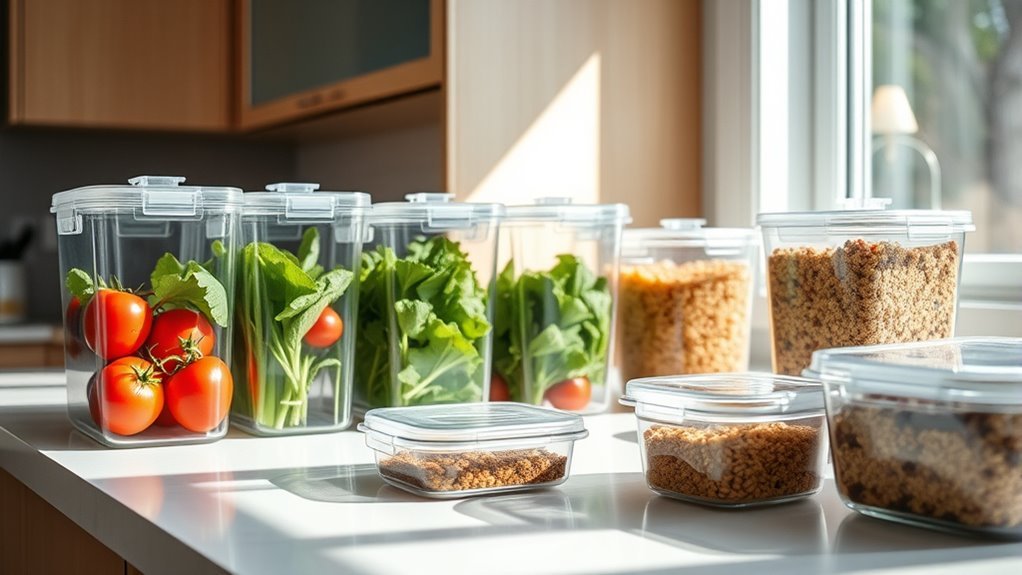
Food storage containers come in plastic, glass, metal, and silicone, each with unique benefits for keeping your food fresh and organized. Choosing the right container can make a big difference, whether you’re storing leftovers, meal prepping, or packing lunches.
You’ll want to think about your lifestyle and how you plan to use them—like if they need to be microwave safe or easy to carry around.
Always check if they’re microwave or dishwasher safe, clean them thoroughly, and replace any damaged ones to maintain food safety. Using the right containers properly can enhance food preservation and kitchen efficiency.
Plus, there’s more to discover about optimizing your food storage to make your life easier and reduce waste.
Key Takeaways
- Food storage containers are vessels made from materials like plastic, glass, metal, or silicone to store and preserve food safely.
- Choose containers based on material benefits: plastic is great for lightweight use, glass works well for reheating, metal offers durability, and silicone provides flexibility.
- Always check if containers are microwave, oven, or dishwasher safe before reheating or cleaning them. This helps keep things safe and working properly.
- Use containers that are just the right size to help food cool faster, reduce waste, and save space in your fridge or pantry.
- Keep your containers in good shape by cleaning them thoroughly and drying them completely. If any get damaged, it’s best to replace them to make sure your food stays safe and your containers last longer.
Understanding Different Types of Food Storage Containers
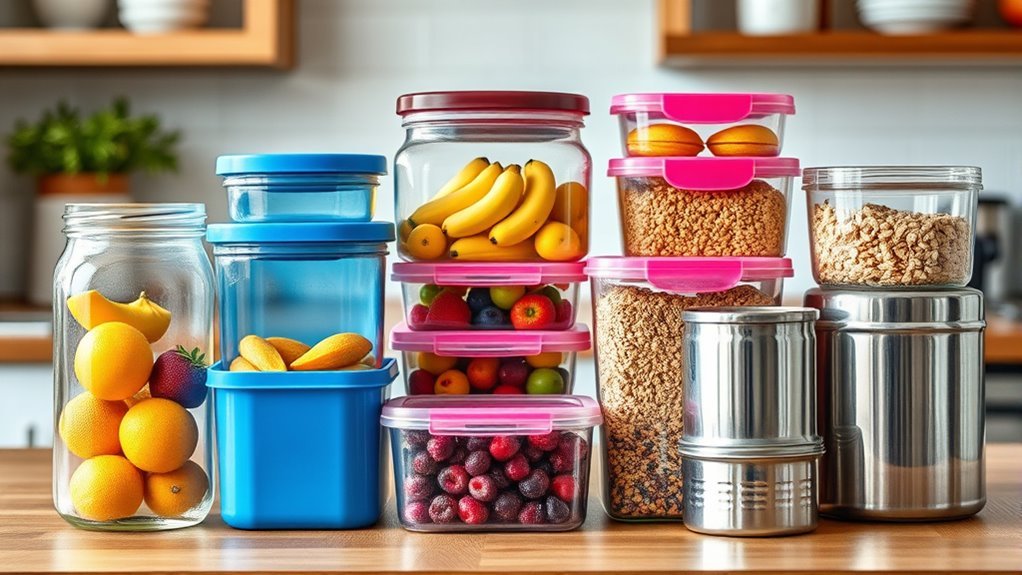
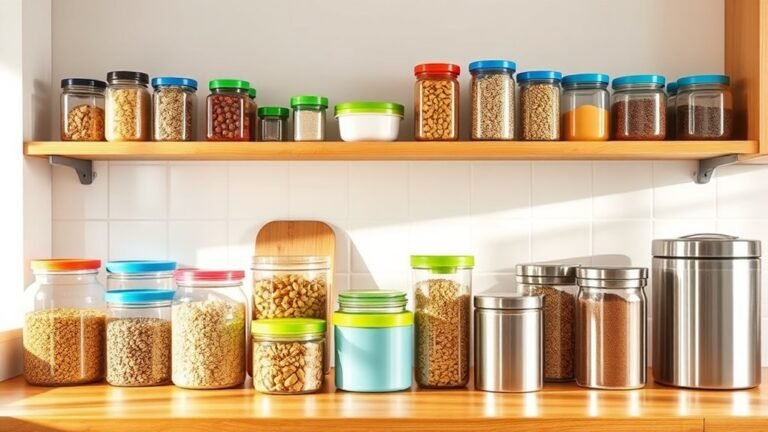
What kind of food storage container works best for your needs? You have several options: plastic, glass, metal, and silicone containers. Plastic containers are lightweight and often come with resin codes (1-7) to help you choose safe and recyclable options.
Choosing the right food storage container means weighing options like plastic, glass, metal, or silicone for your lifestyle.
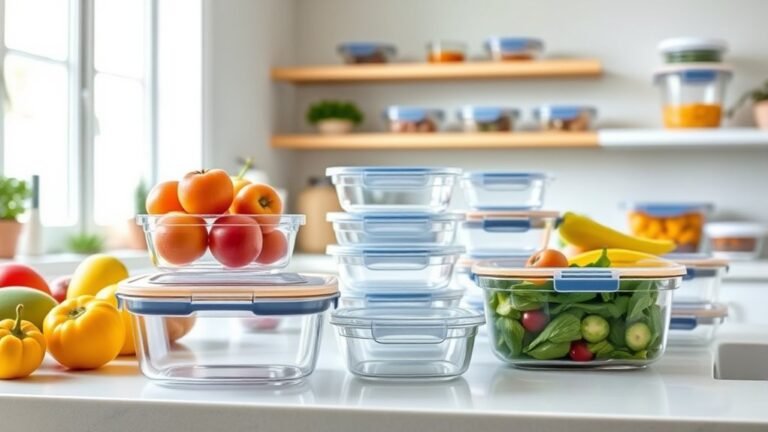
Glass containers resist staining and odors, are oven-safe, and perfect for reheating and long-term storage. If you want durability and portability, metal containers, especially stainless steel ones, are excellent—but keep in mind they’re not microwave-safe.
Silicone containers offer flexibility and microwave safety, ideal for transporting food. Choosing the right container helps reduce food waste by keeping your meals fresh longer.
Understanding these materials assures you pick the best storage solution for your kitchen and lifestyle. It’s all about matching the container to how you plan to use it!
Best Practices for Using and Maintaining Food Storage Containers
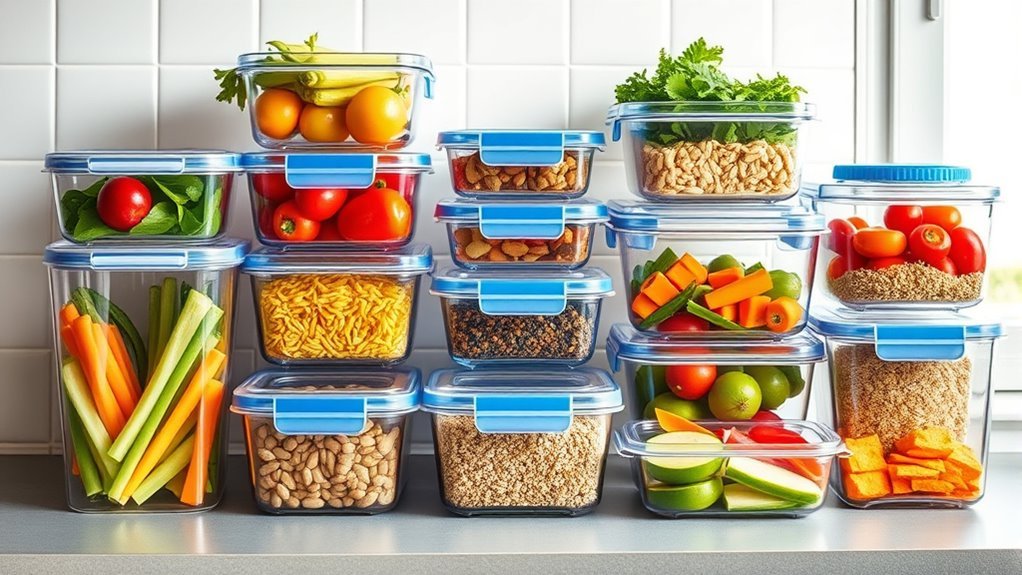
Although choosing the right food storage container is important, maintaining and using them properly guarantees your food stays safe and fresh. To ensure food safety, always practice proper cleaning by washing containers thoroughly between uses to prevent bacterial growth.
Check if your containers are dishwasher safe to simplify cleaning, but follow reheating guidelines carefully. Always confirm microwave or oven safety before use.
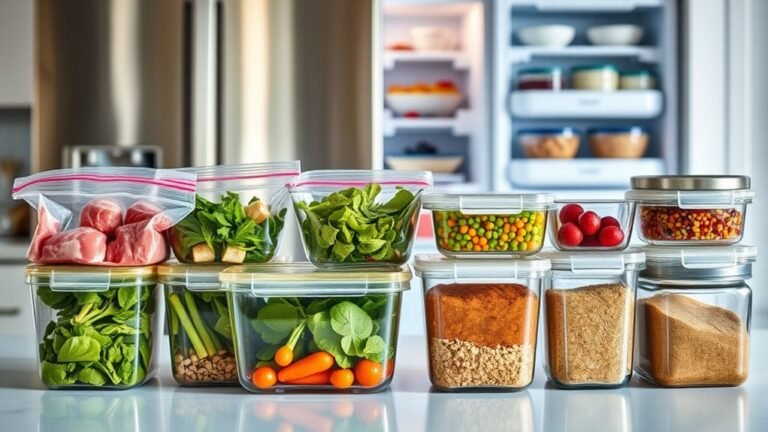
Dry containers completely before stacking to avoid mold and odor development. Good stacking techniques also help with storage organization.
Use appropriately sized containers to promote efficient cooling and save space. Replace any damaged or stained containers to maintain container durability and food safety.
Frequently Asked Questions
What to Avoid in Food Storage Containers?
You should avoid reusing single-use containers and microwaving non-microwave-safe plastics.
Also, steer clear of storing hot food in unsafe containers. It’s not worth the risk!
Try not to use plastics labeled 3, 6, or 7 for food storage.
And definitely avoid keeping cracked or damaged containers. That’s the best way to guarantee your food stays safe.
What Is the Healthiest Container to Store Food In?
Imagine a crystal-clear lake—glass containers are your healthiest choice. They don’t leach toxins, resist stains, and keep your food pure.
Choose glass, and you’ll protect your meals like nature protects its waters, fresh and safe. It’s like giving your food a clean, safe home every time.
Is a 20 Year Old Tupperware Safe to Use?
A 20-year-old Tupperware probably isn’t safe to use. Over time, plastics degrade, seals weaken, and harmful chemicals might leach.
You should inspect it carefully and replace any containers showing cracks, discoloration, or odors.
Honestly, it’s better to be safe than sorry when it comes to old plastic containers. Why risk it? Just get a new set!
What Are the Different Types of Food Storage Containers?
You’ll find plastic, glass, metal, silicone, and composite food storage containers. Each type suits different needs—plastic is lightweight, glass is durable, metal is leak-proof, and silicone is flexible and space-saving.
Choose based on your use. It really depends on what you need the container for and how you plan to use it.
Conclusion
Now that you know the different types of food storage containers and how to care for them, you’re ready to keep your food fresh and safe. Remember, “a stitch in time saves nine,” so taking a little extra care by sealing containers properly and cleaning them regularly will save you from waste and hassle later.
With these simple habits, you’ll make your kitchen more efficient and your meals more enjoyable every day. Proper use of food storage containers not only extends the shelf life of your ingredients but also helps maintain their flavor and nutritional value.
So, whether you’re storing leftovers or organizing your pantry, choosing the right containers and using them correctly is key. Keep your food fresh, reduce waste, and enjoy a smoother cooking experience by making food storage containers a part of your daily kitchen routine.